
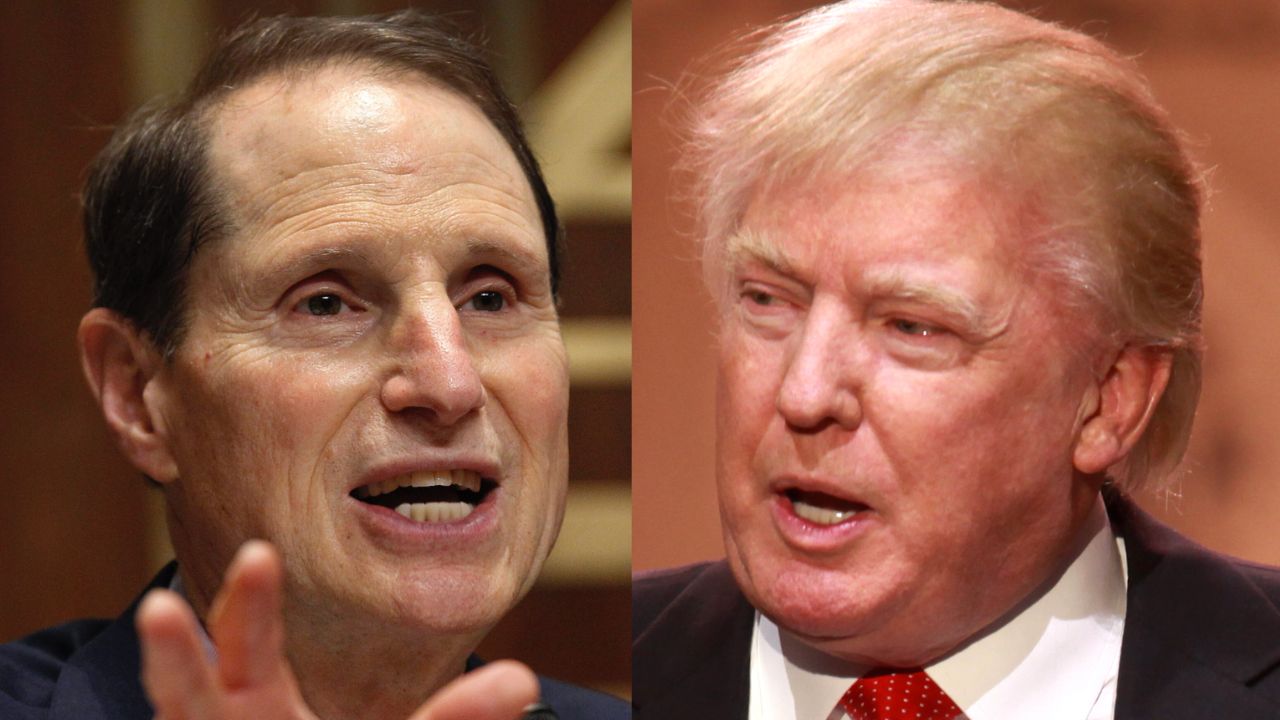
Sen. Ron Wyden, D-Ore., the top Democrat on the Senate Finance Committee, said President Donald Trump’s treatment of allies is strengthening China’s global position. Wyden’s post on X responded to a Reuters report on the European Union’s proposal to grant Canada associate membership status.
Wyden: “Trump Is Making Americans Poorer and Less Safe Every Day”
“The U.S. is getting left behind under Trump’s failed leadership. The more Trump pushes our allies away, the stronger our adversaries and competitors, like China, become. Trump is making Americans poorer and less safe every day,” Wyden wrote.
Von der Leyen Proposed Canada as the EU’s First “Associate Member”
European Commission President Ursula von der Leyen made the proposal during her annual State of the Union address to the European Parliament in Strasbourg, France, on Sept. 16. “I would like to work with you on opening the door for Canada to be the first associate member of the EU,” von der Leyen told lawmakers, saying new partnerships were needed “in the cold fragility of today’s world.” She did not detail what associate membership would specifically entail. EU lawmakers gave the proposal a standing ovation, after which von der Leyen embraced Canadian Prime Minister Mark Carney, who attended as a guest of honor.
Von der Leyen Cited Shared Democratic Values and Overlapping Priorities
“Europe and Canada believe in democracy,” von der Leyen said, according to Reuters’ report on the speech, adding that the two “see the world with the same eyes: from AI to climate change, from the Arctic to geopolitics,” and had “stood together: on Ukraine, on defence, on raw materials and on supply chains.” She said the EU and Canada would “work on intelligent manufacturing,” “create a tech alliance,” “integrate defence industrial bases” and “make the Arctic a flagship joint project.” Von der Leyen separately proposed creating a “European Security Council” including countries such as Britain and Ukraine.
Carney Welcomed the Proposal Without Endorsing Specific Terms
Carney’s office said he welcomed von der Leyen’s proposal for “a far stronger, more ambitious alliance in the future,” adding that “Canada and Europe should secure our strategic autonomy through deep cooperation in the full range of strategic capabilities.” Carney did not use the term “associate membership” in his own remarks.
Trump Called the Proposal “Laughable” and Threatened Tariffs
Trump responded to the proposal by threatening retaliation, calling the prospect “laughable” and describing Canada as a “terrible trade partner.” Speaking to reporters as he boarded Air Force One, Trump said, “If it’s a good intention, that’s fine. If it’s a bad intention, we’ll put very heavy tariffs on Europe, which is a possibility,” and separately told reporters en route to North Carolina, “If they do that, if I think it’s at all a hostile act, I will put very serious tariffs or stop trading with Europe on many things.”
EU Diplomats Expressed Uncertainty About the Proposal’s Substance
The proposal requires approval from EU member states rather than von der Leyen alone, and Reuters reported it left “some EU watchers befuddled.” One unnamed EU diplomat said “nobody really knows what it means,” adding there were concerns von der Leyen “is overpromising and won’t be able to deliver.” Tinatin Akhvlediani, head of EU enlargement at the Center for European Policy Studies, a Brussels-based think tank, said flatly that “associate membership does not exist” as a formally defined status under EU treaties, noting that countries such as Ukraine, Moldova and Georgia instead hold separate “association agreements” with the bloc. Fabian Zuleeg, chief executive of the European Policy Centre think tank, said he did not expect significant economic gains from the arrangement for either side, though he saw potential value in the EU and Canada “standing up together” against Trump’s economic policies, cautioning that unfulfilled promises could ultimately “end up making us weaker rather than stronger.”
Carney Said Canada’s Parliament Would Vote on Any Final Arrangement
Speaking in Strasbourg the day after von der Leyen’s address, Carney said Canadian lawmakers would ultimately debate and vote on whatever final structure emerged from the talks, telling reporters, “there will be debates, plural, not just a single debate, and there will be a vote in the Canadian Parliament. Absolutely, that is clear, but at this particular juncture, we are at the start of a road.” He added that “a stronger, more resilient, more sovereign Canada will be a more effective partner with the United States.” Jonathan Wilkinson, Canada’s ambassador-designate to the EU, said Ottawa was not seeking full EU membership, which would require ceding some sovereignty, but rather wanted to “get as close as we possibly can” to the bloc in a way that strengthens rather than diminishes Canadian sovereignty.
Proposal Follows Collapse of Canada-U.S. Trade Talks
Carney’s European visit came after the collapse of Canada-U.S. trade talks the prior month, which triggered a series of escalating tariff measures between the two countries. Carney has pledged to double Canada’s non-U.S. trade over the next decade as part of an effort to reduce the country’s economic reliance on the United States.
Wyden Has Introduced Legislation to Curb Trump’s Unilateral Tariff Authority
Wyden introduced the Congressional Trade Powers Reform Act in July, which would eliminate certain unilateral presidential tariff authorities and create a bipartisan Joint Committee on Tariffs and Trade to review future tariff proposals before they take effect. “Congress must reassert its authority over trade and tariffs to stop any president from being able to unilaterally change the worldwide economy at the click of a button,” Wyden said at the time. The bill is backed by groups including the Main Street Alliance and the National Taxpayers Union.
Wyden Has Previously Argued Trump’s Approach to China Suffers From Lack of Allied Coordination
Wyden has repeatedly made the case that Trump’s tariff and trade approach toward China has been undermined by strained alliances. In a 2019 statement on earlier Trump-era China tariffs, Wyden said Trump had been “alienating our allies, rather than enlisting them” in confronting China’s trade practices, and made a similar argument at a July 2026 Senate Finance Committee hearing, saying farmers and small businesses were bearing the cost of tariffs while promised new markets and China concessions had not materialized.
Ukraine Said It Was Watching the Canada Proposal Closely
Ukrainian Foreign Ministry spokesperson Heorhii Tykhyi said Ukraine welcomed deeper EU-Canada ties and was “examining what it will specifically entail and how close the integration will be.” Germany had separately proposed associate membership for Ukraine in May as a potential stepping stone toward full EU accession, a proposal that received a lukewarm reception from EU member states.
Trump Has Separately Sought New Unilateral Tariff Authority Through Other Legislation
Wyden and House Ways and Means Committee ranking member Richard Neal, D-Mass., separately opposed provisions in a Russia sanctions bill this year that would have granted Trump authority to impose tariffs of up to 100% on major trading partners and allies, warning in a joint statement that the provision was “a prescription for bedlam and higher tariffs” that Congress would be unable to check once granted.