
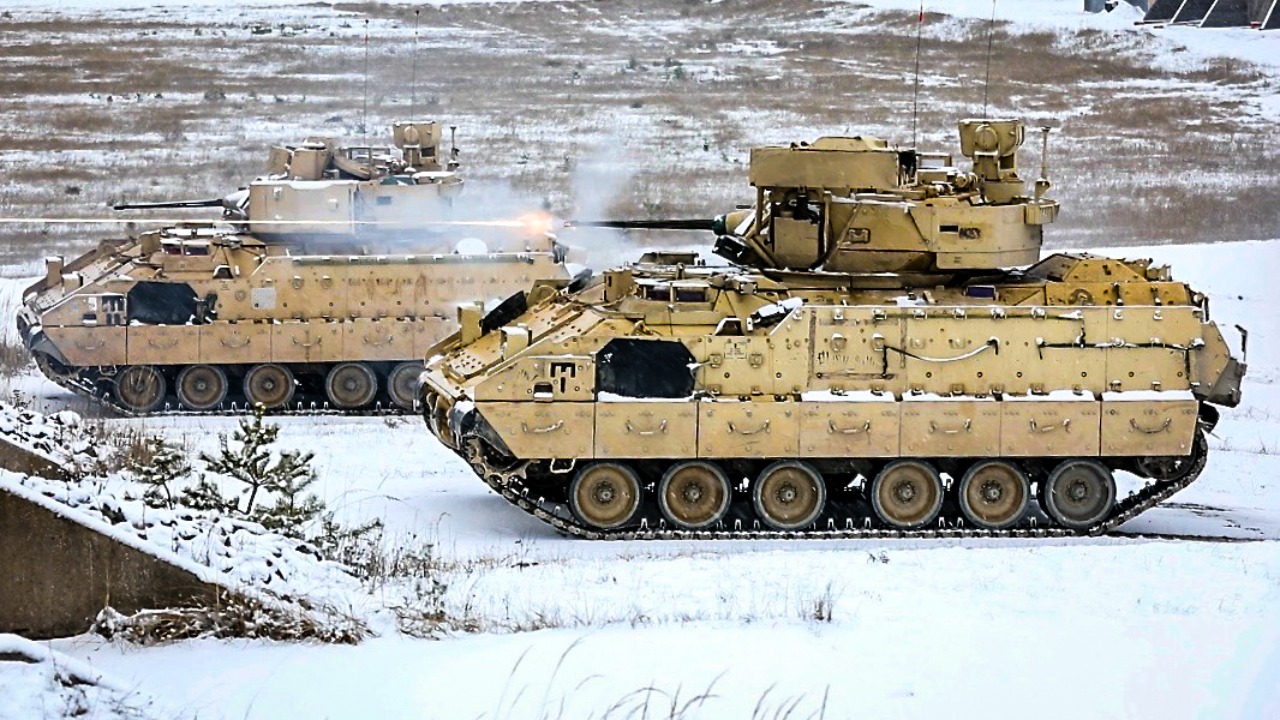
The M2 Bradley was supposed to be a Cold War supporting actor, not the infantry fighting vehicle that keeps stealing the sequel. Yet decade after decade, every attempt to write it out of the script has stalled, imploded, or quietly morphed into another Bradley upgrade. The result is a machine that refuses to retire, not because it is perfect, but because replacing it has turned out to be far harder than anyone in the Pentagon first imagined.
Behind the stubborn survival of the Bradley is a mix of engineering physics, bureaucratic ambition, and battlefield reality that keeps humbling its would‑be successors. The Army keeps asking industry for a leap into the future, discovers that the laws of weight, cost, and transport still apply, and then sends the Bradley back out for one more tour with fresh armor and a new electronics package.
The Cold War workhorse that kept getting upgrades instead of a gold watch
The Bradley began life as a very specific Cold War tool, a fast infantry carrier that could keep up with tanks and fight its way through Soviet armor. Designed to move with heavy formations and still deliver troops to the fight, it was built around speed, firepower, and the ability to operate in the same brutal environments as main battle tanks, a role that The Bradley still performs. The vehicle entered service in 1981 and, instead of fading with the end of the Cold War, found itself starring in conflicts from the Gulf to more recent deployments.
Rather than being replaced, the Bradley was steadily bulked up. Both the infantry and cavalry versions were upgraded in 1988 as the M2A2 and M3A2, gaining new composite armor, improved ammunition storage, and better survivability features that kept them relevant long after their original design window, with reporting noting that both variants were expected to soldier on for at least another decade. Later improvements layered on more protection and electronics, turning what began as a relatively lean infantry fighting vehicle into a heavier, more complex platform that still anchors mechanized formations.
Ambition, “unobtainium,” and the graveyard of Bradley replacement programs
If the Bradley is the actor that will not leave the stage, the Army’s replacement programs are the pilots that never get picked up. The pattern is almost comically consistent: set sky‑high requirements, discover that physics and budgets are not impressed, then cancel and reboot. One early cautionary tale was Future Combat Systems, a sweeping effort launched to integrate new manned and unmanned vehicles into a networked family of platforms, including a next‑generation infantry carrier, that was later scrapped after years of work.
When that collapsed, the Army pivoted to the Ground Combat Vehicle and then to the Optionally Manned Fighting Vehicle, each time trying to leap ahead of the Bradley rather than simply nudge past it. In one telling episode, Defense Secretary Bob Gates cancelled the Future Combat Systems program, including the BAE‑designed Manned Ground Vehicle, after it became clear that the wish list had drifted into what one analysis memorably called unobtainium. The Army wanted a vehicle that was better protected than a tank, lighter than a Bradley, air‑transportable, and packed with advanced sensors, a combination that looked great in PowerPoint and terrible in real engineering reviews.
OMFV: the third time the Army tried to break up with Bradley
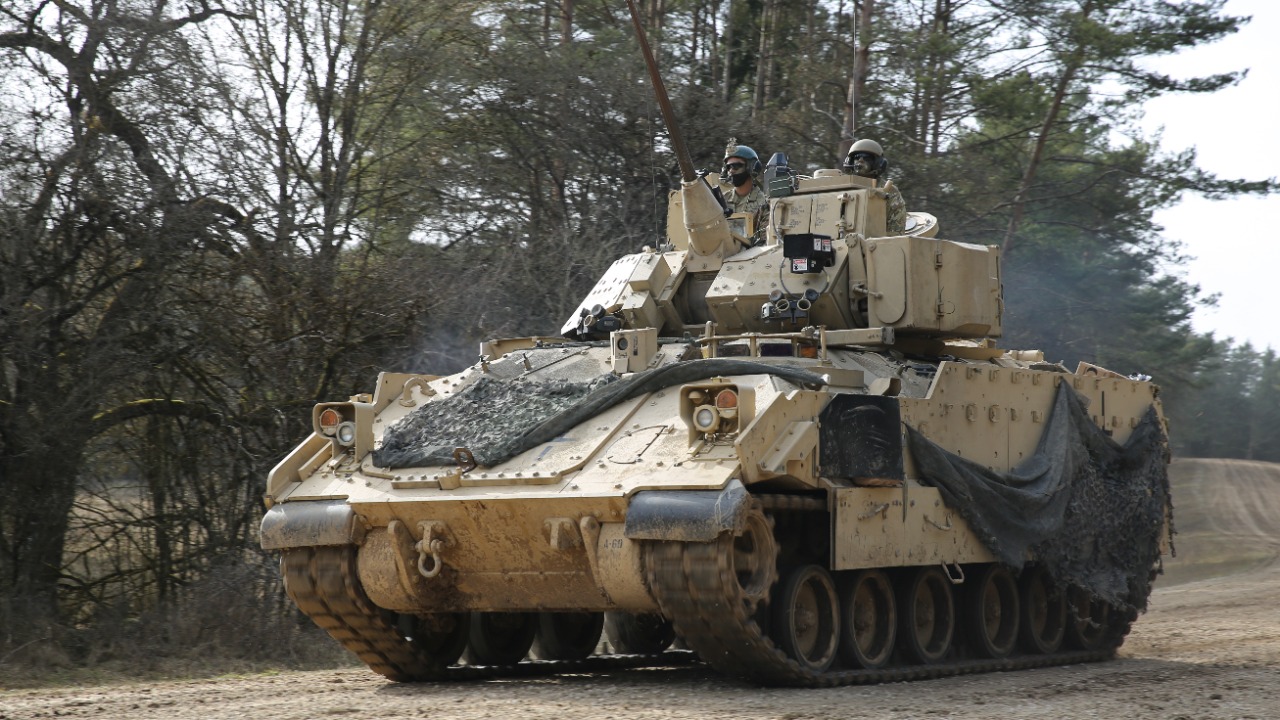
After two aborted efforts, the Army came back with the Optionally Manned Fighting Vehicle, a program that was explicitly billed as the third attempt to replace the M‑2 Bradley infantry fighting vehicle. The idea was to field a new platform that could operate with or without a crew, plug into future autonomous systems, and still carry infantry into high‑threat environments, a vision captured in descriptions of The Optionally Manned Fighting Vehicle. On paper, it would be more survivable, more digital, and more adaptable than the Bradley, without simply becoming a heavier, costlier version of the same thing.
Reality intervened quickly. The Army cancelled its original OMFV solicitation after no company could meet the entry conditions, a problem highlighted when the only prototype could not even make it from Germany to the Aberdeen Proving Grounds for testing, as noted in reporting that referenced the prototype and its travel woes. Two months later, the Army formally pulled the plug on that first solicitation and went back to industry for advice, asking companies to brainstorm more realistic solutions after the initial requirements scared off the field, a reset described in coverage of how the Army sought industry input after Two months of frustration.
XM30: the latest challenger, and why the Bradley still matters
Out of the OMFV reboot emerged the XM30, the Army’s newest attempt to finally give the Bradley a successor. The XM30 is pitched as a modern infantry combat vehicle with advanced sensors, digital architecture, and an active protection system, a package that one detailed explanation of the XM30 Bradley replacement describes as a step change from the analog roots of the M2. The Army has framed the program as a way to move beyond incremental upgrades and into a new generation of networked, survivable vehicles that can handle future threats instead of just patching over past vulnerabilities.
To get there, the service has tried to show it learned from earlier misfires. Officials have emphasized that the new XM30 Mechanized Infantry Combat Vehicle is being developed with more realistic requirements and closer collaboration with industry, a shift captured in a program overview that notes how The Army is confident the latest Bradley replacement will not Stall. Prototype contracts have already been awarded in what has been described as the Army’s biggest combat vehicle buy, with the XM‑30 Infantry Combat Vehicle intended to replace an aging infantry fighting vehicle that has been in service since 1981, as noted in coverage of how Bradley replacement efforts are finally moving into hardware.
Why the Bradley keeps hanging on anyway
Even with the XM30 on the horizon, the Bradley is not exactly packing its bags. Analysts describe it as a battlefield legend that has had a long, difficult journey but is not going anywhere in the interim, a verdict captured in assessments of the Bradley as an IFV that still anchors U.S. formations. The Army continues to rely on it because it is a known quantity, with decades of logistics, training, and combat experience behind it, and because every replacement program so far has either collapsed under its own weight or is still years from fielding in meaningful numbers.
That persistence is not an accident. For more than 40 years the Army has been trying to sort out what exactly it wants from a next‑generation infantry vehicle, a struggle summed up in a recent discussion of what is going on with the Army Bradley replacement that cites that 40 year span of effort. In the meantime, the Bradley M2 and M3 variants remain in use today, as noted in historical overviews of how the Bradley Fighting Vehicle has been modernized instead of retired. The result is a kind of armored limbo: the XM30 is taking shape, the Army insists this time the program will stick, and yet the Bradley keeps rolling, upgraded, battle‑tested, and still stubbornly hard to replace.
The physics, politics, and personality cult of a “temporary” IFV
Underneath the program names and acronyms is a simpler explanation for why the Bradley keeps its parking spot. Replacing it means solving a three‑way puzzle of protection, mobility, and payload that has defeated multiple design teams. The Army has repeatedly tried to demand a vehicle that is lighter than the Bradley for easier transport, better protected than a tank against modern threats, and still able to carry a full infantry squad, a combination that critics in one Comments Section likened to asking for magic. When those demands collide with real armor thickness, engine power, and airlift limits, the result is either a bloated prototype or a cancelled program.
Politics and institutional memory do the rest. The Bradley has survived enough wars and budget cycles to build its own constituency inside the Army, and every time a replacement falters, the default answer is to fund another round of upgrades. Even as the service pushes ahead with the XM30 and touts a more grounded approach to requirements, it is still fielding new improvements to the existing fleet, as seen in ongoing references to the The Bradley even as prototype contracts for its successor are signed. The irony is hard to miss: the more the Army tries to move on, the more it proves why the Bradley has been so hard to replace in the first place.