
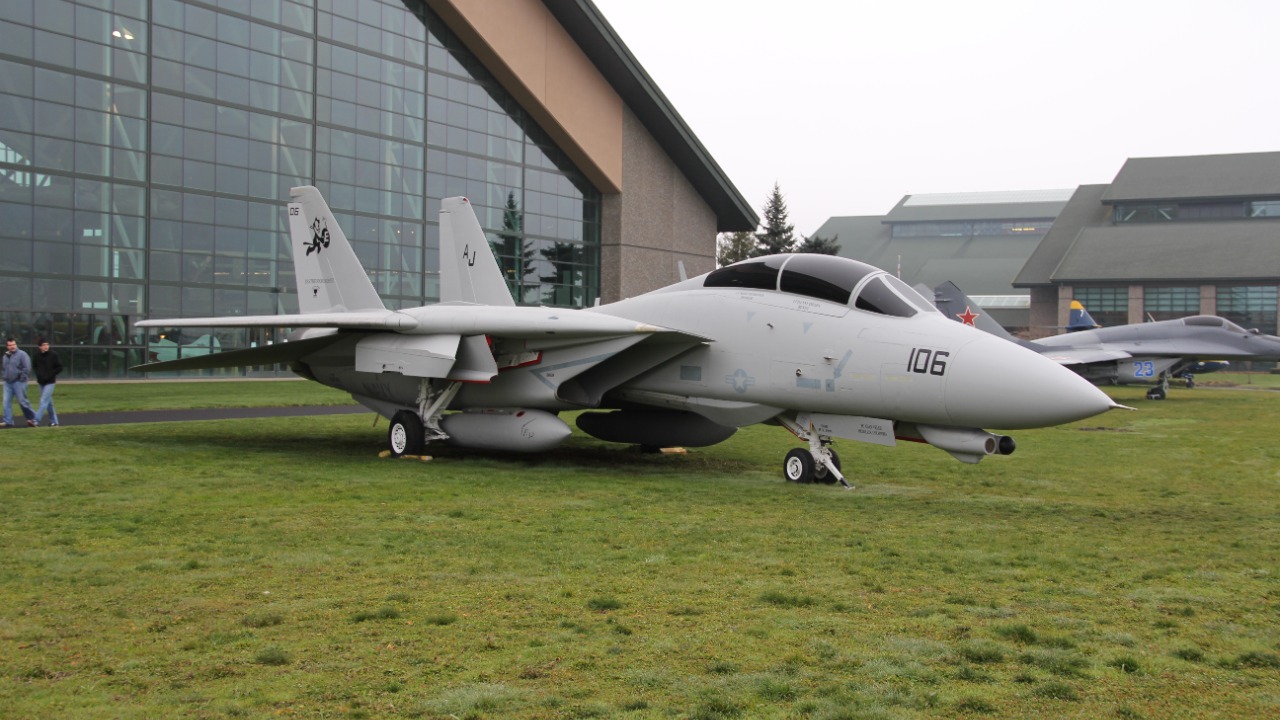
The Grumman F-14 Tomcat was conceived as a long-range fleet defender, built to swat bombers and missiles far from a carrier, not to twist and turn in knife-fight engagements. Yet in service, it earned a reputation as a surprisingly lethal close-in fighter, able to tangle with agile opponents that looked better suited to the job on paper. The story of how a missile truck became a dogfight threat is a case study in design tradeoffs, pilot adaptation, and the way technology built for one mission can be repurposed in combat.
Much of the Tomcat’s success in short-range fights came from features that were never optimized for classic dogfighting but could be exploited by skilled crews. Variable-geometry wings, a powerful radar, a dedicated Radar Intercept Officer, and heavy but flexible weapons loads all combined to give the F-14 options that many opponents lacked. When pilots learned to work around its engine quirks and bulk, the jet could dominate the merge despite its original brief.
Built for long-range interception, not turning fights
The F-14 emerged from late Cold War fears that carrier groups would face waves of Soviet bombers and cruise missiles at long range. Its designers prioritized a big radar, long legs, and heavy missile capacity so it could intercept threats far from the fleet rather than mix it up in tight turning battles. Reporting on the Tomcat’s development notes that many of its innovations were aimed at long-range strike and interception missions, yet those same features later proved unexpectedly useful in close combat, a duality that shaped its reputation once it entered service in numbers, as detailed in Dec coverage that explains how many of the aircraft’s design choices were originally focused on distant engagements.
That strategic focus produced a large, complex fighter with significant weight and a broad fuselage, characteristics that would normally be liabilities in a dogfight. The airframe was optimized to carry big missiles and a powerful sensor suite, not to win sustained turning contests against lighter opponents. Yet the same analysis that highlights how many of the Tomcat’s design innovations were intended for long-range work also shows that those choices created a platform with wide performance margins, especially at higher speeds and altitudes, which pilots could exploit once they understood the jet’s strengths and weaknesses in air combat maneuvering.
Variable-geometry wings and the physics advantage
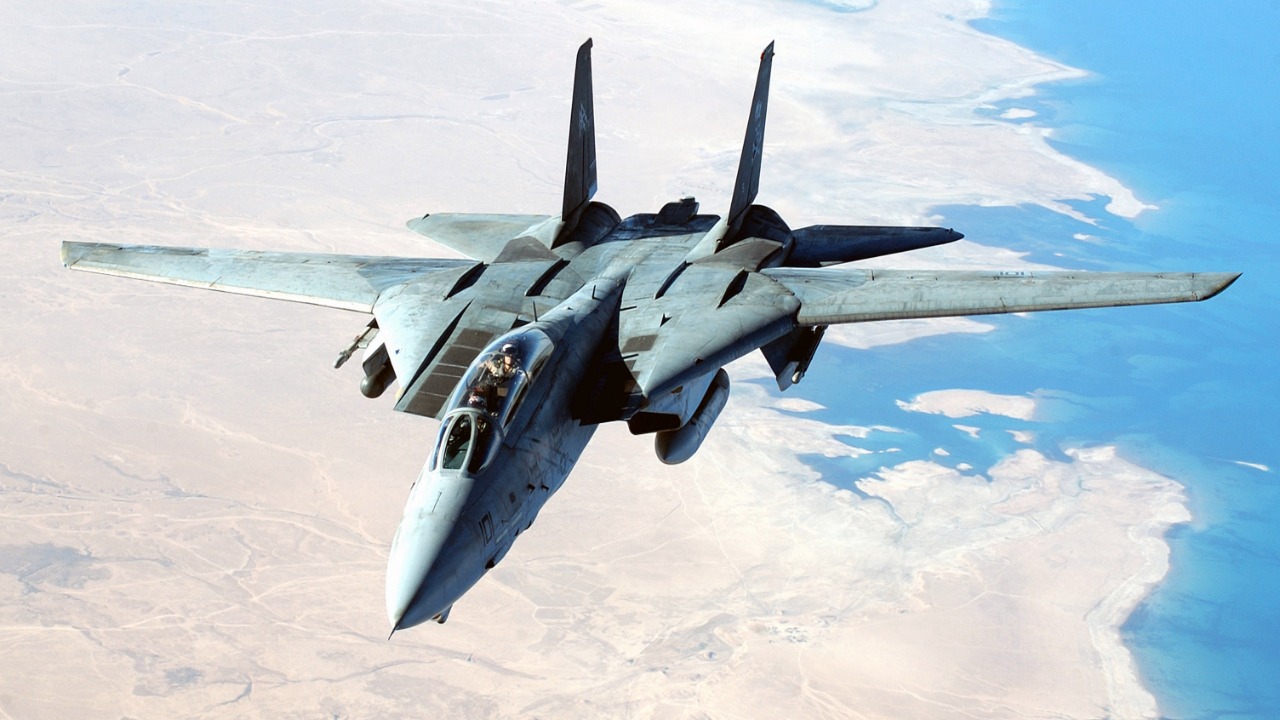
The Tomcat’s most visible feature, its swing wings, was meant to reconcile carrier operations, high-speed dash, and long-range cruise. With wings extended, the F-14 could generate ample lift for low-speed approaches and tight turns; swept back, it could fly fast and efficiently to meet distant threats. In practice, this variable-geometry system gave pilots a powerful tool in a dogfight, letting them trade between turn performance and energy retention as the fight evolved. Analyses of the aircraft’s design explain that many of these innovations, conceived for long-range missions, ended up serving it well in close-quarters maneuvering once crews learned to manage wing sweep and energy carefully.
Former Tomcat crews have described how features like glove vanes and wing sweep schedules, originally optimized for high-speed stability, could influence how the jet behaved in a turning fight. In a detailed question-and-answer session, a former F-14 Radar Intercept Officer explained that the true purpose of the glove vanes often surprised observers and that their role in high-speed performance was more nuanced than simple dogfight aids, a point captured in the discussion that begins with “Well” and goes on to unpack how these systems affected handling. That kind of insider perspective underscores that while the F-14 was not a pure turn fighter, its variable geometry gave it tactical flexibility that opponents with fixed wings could not easily match.
Sensors, the RIO, and information dominance at the merge
Where the Tomcat truly broke from earlier fighters was in its sensor suite and two-person crew concept. The aircraft carried a powerful radar that could detect and track targets at long range, and it paired that system with a dedicated Radar Intercept Officer in the back seat who managed sensors, weapons, and situational awareness. Reporting on the jet’s combat performance notes that the sensors and weapons, plus the two-person crew, were significant assets even in dogfights, because the radar and RIO allowed for superior target tracking and threat management while the pilot focused on flying, a synergy highlighted in Dec analysis of how the Radar and RIO combination shaped the F-14’s combat style.
In close-in engagements, that division of labor meant the Tomcat could maintain a clearer picture of the fight than many single-seat adversaries. The RIO could monitor radar returns, manage communications, and cue weapons, freeing the pilot to concentrate on energy management and positional tactics. Accounts from former crews describe how this teamwork paid off when dogfighting against aircraft like the F/A-18, with the RIO helping to anticipate opponent moves and coordinate missile shots, as reflected in the same “Well” discussion that addresses both retirement and dissimilar air combat training. In effect, the F-14 brought beyond-visual-range situational awareness into the visual arena, turning information into a weapon even when the fight devolved into tight turns and rapid merges.
Engines, handling quirks, and the discipline that made it work
For all its advantages, the Tomcat carried a major handicap into any close fight: its early Pratt & Whitney TF30 engines. These powerplants were prone to compressor stalls and surges when operated at high angles of attack or with rapid throttle movements, exactly the conditions common in aggressive air combat maneuvering. Detailed technical histories note that the TF30, identified explicitly as Pratt & Whitney TF30, could misbehave if the throttle was moved too aggressively, a problem that became notorious among pilots who had to respect the engine’s limits to avoid sudden power loss or asymmetric thrust in the middle of a turn.
Those quirks forced F-14 crews to develop a disciplined approach to dogfighting, emphasizing smooth throttle handling and careful management of angle of attack. Analyses of the Tomcat’s mixed reputation stress that these engine issues were a central reason some observers felt the aircraft never fully lived up to its legend, even as others pointed to its combat successes. By learning to fly within the TF30’s envelope and exploiting the airframe’s strengths, experienced pilots could still make the jet perform impressively in close combat, but the margin for error was smaller than in later fighters with more forgiving engines, a tradeoff that shaped tactics and training throughout the aircraft’s early career.
From legend to legacy: how a fleet defender became a dogfight icon
Over time, the Tomcat’s operational record and public image fused into an aviation legend that often obscured its original mission. Narratives about the F-14’s role in changing air combat emphasize how Cold War urgency and cutting-edge engineering combined to produce a fighter that could handle interception, strike, and air superiority roles, even if it was not optimized for all of them. A widely viewed documentary-style account of the Tomcat’s history describes it as a story that blends Cold War urgency with advanced engineering, portraying the jet as a symbol of a particular era in naval aviation and highlighting how its multi-role evolution reshaped expectations for carrier-based fighters, as seen in the Oct feature on the Tomcat’s impact.
That legacy rests on a paradox: the F-14 was never designed as a pure dogfighter, yet it became respected, and sometimes feared, in exactly that arena. Its variable-geometry wings, powerful radar, two-person crew, and heavy weapons load were all conceived for long-range fleet defense, but in the hands of skilled pilots and Radar Intercept Officers they translated into a formidable presence in close combat. Technical critiques that focus on the Pratt & Whitney TF30’s flaws and the jet’s maintenance burden sit alongside accounts that celebrate its agility and combat record, a tension captured in both the assessments of why it never fully met its reputation and the analyses that argue it was great at dogfighting anyway. Together, those perspectives explain why the F-14 occupies a unique place in air combat history: a fleet defender that, almost by accident, became a dogfight star.