
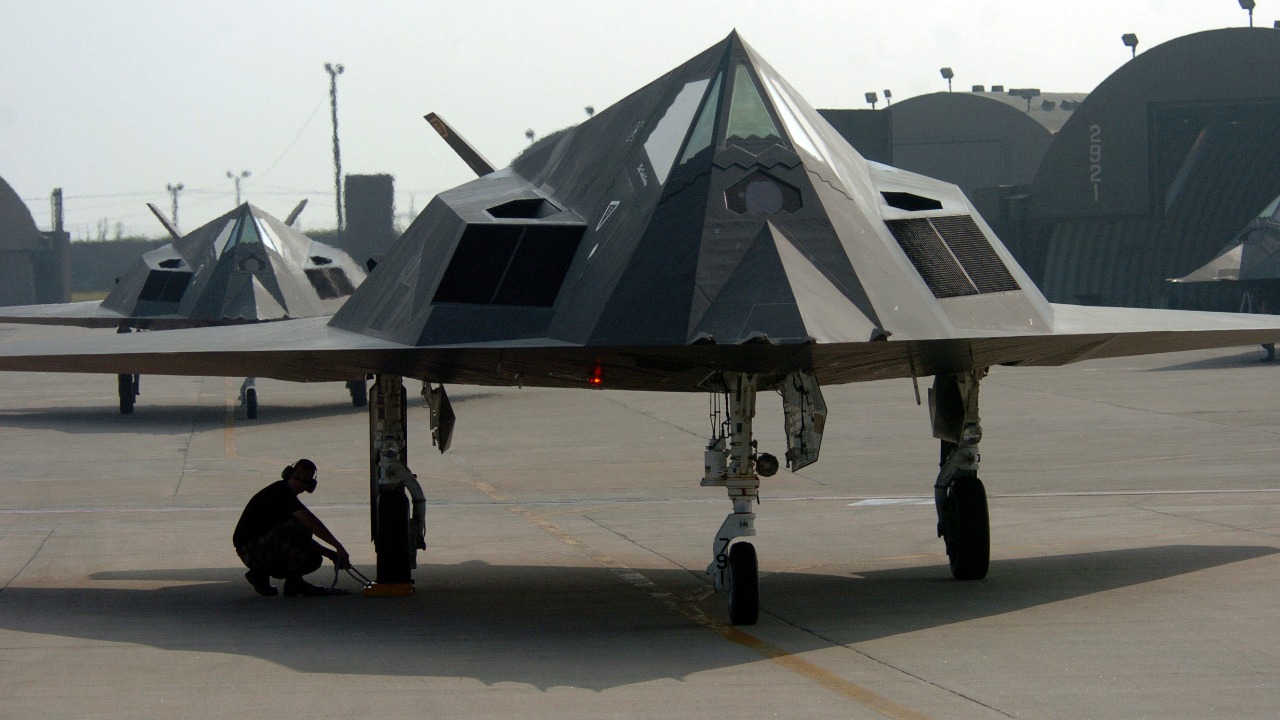
The F-117 was supposed to ride off into the sunset as a Cold War relic, yet air defense crews still treat it like the monster under the radar scope. Officially retired, the angular “stealth fighter” keeps slipping back into the sky, a reminder that some shapes haunt sensor operators long after the production line shuts down. The jet’s survival in a world of newer stealth designs says less about nostalgia and more about how thoroughly it still scrambles the nerves, and the algorithms, of modern air defense networks.
The “retired” jet that refuses to leave the stage
On paper, the F-117 is done, dusted, and parked, but the United States Air Force keeps quietly wheeling it back out like a favorite villain in a long-running franchise. The aircraft was formally pulled from frontline service around 2008, yet reporting shows that several F-117s remain airworthy and continue to fly, a quarter century after their supposed farewell tour, because they still offer “unique capabilities” that newer fleets cannot easily replace. One analysis notes that keeping a jet in service for twenty-six years after retirement is highly unorthodox, which is a polite way of saying the Air Force is breaking its own rules because the Nighthawk still does things that matter to real-world operations.
Those “things” are not just museum flights over the desert. The jets are maintained in what has been described as type 1 flyable storage at a test range, a level of care the Air Force does not lavish on most retired aircraft. Another assessment explains that the F-117s act as “red air” aggressors, giving pilots a live low observable target to train against and helping test advanced technologies like new mirror-like coatings and sensors that must work against stealthy shapes. When a service that can buy almost anything chooses to keep a small, aging fleet alive in this way, it is not sentimentality, it is a backhanded compliment to how much the aircraft still complicates the life of anyone trying to detect or track it.
Why that weird faceted shape still messes with radar
Long before sleek fifth-generation fighters tried to look like flying iPhones, the F-117 embraced the aesthetic of an angry origami project. That jagged look was not a design accident, it was the entire point. Building on the earlier Have Blue program, engineers shaped the jet so that incoming radar energy would be deflected away from the transmitter instead of bouncing straight back, drastically shrinking the radar cross section that air defense systems rely on. One detailed account of the “Secrets of the Black Jet” describes how this shaping, combined with careful alignment of surfaces, turned the aircraft into a geometry problem that traditional radar networks were never meant to solve.
The stealth effect did not stop at the angles. The F-117’s skin was covered in radio-wave absorbing materials that weighed almost one ton and were literally glued to the airframe, an absurd-sounding but very deliberate choice to soak up and scatter radar energy before it could return a clean signal. To keep its low observability intact, the Lockheed F-117 Nighthawk was not equipped with its own radar at all, avoiding the risk of broadcasting its position and relying instead on other sensors and careful mission planning. Early stealth aircraft like this were so aerodynamically unstable that they needed a fly-by-wire system just to stay controllable, yet air defense operators were not laughing, because the tradeoff left them staring at screens that suddenly showed far less than they were used to.
A combat record that still haunts air defense planners
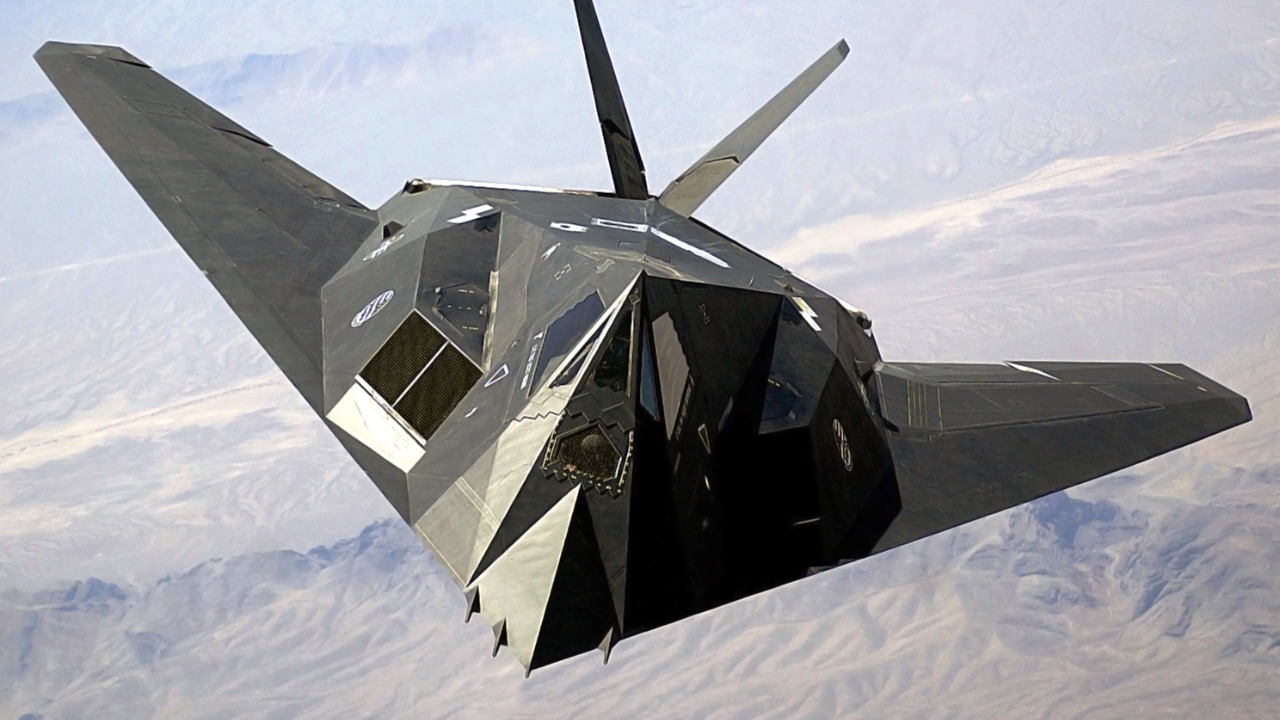
Stealth alone did not make the F-117 a legend, but it did give air defense crews a recurring nightmare. America’s F-117 Nighthawk, often described as the world’s first operational stealth aircraft, built its reputation by slipping through dense integrated air defense systems and delivering precision strikes while radar operators struggled to get a reliable track. Analyses of its combat history emphasize that it was the combination of low observability, disciplined tactics, and mission planning that made the Nighthawk so formidable, not some magical invisibility cloak. In other words, the jet taught air defenders that even a partial reduction in radar visibility, paired with smart employment, could unravel their carefully layered defenses.
The aircraft’s relatively small fleet size only sharpened its mystique. FACT: Only 64 F-117s were ever built, and Each one cost around $42 million, a price tag that reflected how much cutting-edge stealth technology was packed into a limited number of airframes. Contrary to popular belief, the F-117 (Lockhee wording aside) was not a nimble dogfighter, it was a specialized night attack platform that relied on surprise and precision rather than speed or maneuvering. Yet that specialization is exactly what keeps it lodged in the minds of air defense planners, who know that a handful of low observable aircraft, used correctly, can punch holes in systems that look impressive on paper.
The Nighthawk as the world’s most annoying sparring partner
Today, the F-117’s job description has shifted from frontline striker to professional troublemaker for modern sensors and tactics. Reports on its current use explain that They act as “red air” aggressors, giving fighter pilots and ground-based air defense crews a live stealthy opponent instead of a simulator avatar. By flying against operational units, the Nighthawk forces radar operators, missile crews, and pilots to refine their techniques for detecting, tracking, and engaging low observable targets, exposing bad habits and overconfident assumptions that would be costly in a real conflict.
The jet also serves as a flying laboratory for the next generation of stealth and counter-stealth technology. Analyses describe how F-117s are used to test advanced coatings, sensors, and tactics that will be needed as As China and Russia field their own stealthy aircraft and low observable cruise missiles. For U.S. forces, having a repeatable low observable presentation to fly against is essential to keep tactics honest and to validate new detection concepts before they are trusted in combat. For foreign air defense planners watching from afar, the message is not subtle: if the United States is still using a 117-series stealth veteran as a sparring partner, it is because the basic stealth problem it represents has not gone away.
What the F-117 still teaches about the future of stealth
The Nighthawk’s lingering presence is also a quiet tutorial in how stealth warfare has evolved, and why air defense networks still treat it with respect. One detailed history notes that the F-117 would continue to serve until 2008, long enough to see its groundbreaking approach to low observability echoed in newer designs like the F-22 Raptor and F-35 Lightning II. Another assessment comparing the Nighthawk to aircraft such as the Raptor and Russia’s fifth-generation Sukho fighters points out that While the F-117 Nighthawk’s capabilities are no longer cutting edge in every dimension, its core stealth principles remain relevant. The fact that a jet designed around 117-style faceting and heavy radar-absorbing materials still provides valuable training data suggests that the underlying physics of detection have not changed, even if the software has gotten smarter.
Stealth technology itself was always meant to do one thing very well: penetrate dense air defense systems, whether Soviet-era or more modern, to carry out reconnaissance or precision strike missions while minimizing exposure to radar-guided weapons. Classic analyses of stealth describe how such aircraft were built to slip through Soviet or other air defence systems by exploiting gaps in radar coverage and using passive detection to monitor hostile emissions. The F-117 embodies that logic so completely that it has become a benchmark for both sides of the cat-and-mouse game. For air defenders, if a radar, infrared sensor, or networked system can reliably find and track a Nighthawk, that is a reassuring sign. If it cannot, the problem is not the retired jet, it is the very expensive hardware pointed at the sky.
Even the economics of the program still echo in modern planning. With Only 64 airframes built at about $42 m each, the F-117 showed that a small, specialized fleet could have outsized strategic impact if it could reliably open corridors through hostile defenses. That lesson is not lost on designers of both stealth aircraft and air defense networks today. The Nighthawk may no longer be the sharpest knife in the drawer, but as long as it can still slip into the training schedule and make sophisticated sensors sweat, air defense operators will keep treating it less like a museum piece and more like a recurring boss fight that refuses to stay beaten.