

Internet gun culture loves a good spreadsheet fight, but the targets in the real world are stubbornly unimpressed by forum arguments. The promise of practical ballistics is simple: stop worshipping numbers on a screen and start caring about what actually happens when a bullet leaves the barrel and meets bone, hide, or drywall. When I stack the online hype against real-world performance, the data keeps siding with boring fundamentals over the latest “game‑changing” caliber or calculator.
When “perfect” numbers meet imperfect reality
On paper, theoretical ballistics is a beautiful thing, all clean equations and ideal trajectories. In practice, the wind does not care about your spreadsheet, your heart rate does not care about your ballistic coefficient, and your target definitely does not care that your rifle is “sub‑MOA” in a lab. Applied ballistics, in the technical sense, is about taking those neat equations and forcing them to live in the messy world of changing temperatures, inconsistent positions, and human error, which is exactly how Applied ballistics is defined.
That distinction matters because the internet loves to obsess over the tiniest theoretical edge, while serious practitioners talk about “practical accuracy” instead of chasing a thousandth of an inch. One well known long‑range voice flatly notes that they are “not going to talk about a thousandth of an inch” and instead focus on what can actually be guaranteed in the field, a point echoed in an Aug clip about real‑world performance. When you are trying to hit steel at 800 yards or a deer at 300, the difference between a mathematically perfect trajectory and a practically reliable one is the difference between a hit and a very expensive dirt sample.
Ballistics are not tactics, and MOA is not a personality
If internet comments were combat power, half the gun world would be special operations by now. Instead, we get endless arguments about MOA, muzzle velocity, and dwell time, as if reciting those terms out loud will cause bad guys to surrender. A widely shared training post bluntly reminds shooters that “BALLISTICS ARE NOT TACTICS” and that the internet obsession with MOA and velocity is no substitute for decision‑making, movement, and communication, a point driven home in a Dec breakdown of how many shooters pass the hardware test but fail the “software” check.
The same pattern shows up in hunting circles, where some people treat a new cartridge like a moral upgrade. In one discussion of 6.5 Creedmoor performance, a commenter spells out the “Lesson” that “bad hunters think extra firepower can compensate for bad fundamentals” and that the fix is “Practice, practice, practice and learnin[g]” instead of buying more recoil and marketing copy, as laid out in a Feb thread. In other words, your new wonder round will not make up for flinching, poor wind calls, or the tactical genius of standing in the open because you were busy checking your dope card.
Marketing hype vs “Truth In Performance”
Nothing fuels caliber wars like marketing departments discovering adjectives. Every few years, a new solver or cartridge arrives promising to “redefine” long‑range shooting, usually by being 3 percent flatter and 97 percent louder on social media. The backlash from serious ballistic researchers has been sharp, with one detailed forum critique of a high‑profile solver describing a “Truth In Performance” effort by Applied Ballistics that explicitly calls out “false information to promote products.” When the people who live and breathe drag models start using phrases like that, it is a hint that the brochure might be overselling things.
Even within niche technical debates, experienced voices warn that hype can outrun evidence. In a discussion of 7mm Practical twist rates, one researcher flatly opens with “Unfortunately, I appear to be the only researcher going against the hype,” then walks through how chasing a concept without understanding all the variables leads to bad choices, as laid out in a Jun thread. When the people doing the math are telling you to calm down, it might be time to close the tab and go shoot instead of arguing about the fourth decimal place of your G7 BC.
Gel tests, energy charts, and other misunderstood toys
Ballistic gel is the YouTube star of the gun world, a translucent celebrity that has launched a thousand slow‑motion thumbnails. Used correctly, it is a powerful tool for comparing bullet performance. Used the way the internet often uses it, it becomes a Rorschach test for confirmation bias. One detailed guide on interpreting gel tests warns that “Where we see a lot of confusion” is when informal testers assume that dramatic disruption in gel equals identical damage in real tissue, even though gel is less elastic and tears more easily, as explained in a Where-focused analysis.
Professional testers and trainers have been trying to reset expectations for years. One widely shared video on why gel works and why caliber arguments are “dumb” walks through how controlled tests are meant to compare loads, not crown a single magic bullet for every scenario, a point laid out in an Apr discussion. The same problem shows up with energy charts, where shooters obsess over foot‑pounds without understanding what they actually measure. A muzzle energy guide notes that “Ballistic specifications for specific cartridges are based on measurements from tests performed using SAAMI specifications” in a controlled lab, which is a polite way of saying that your backyard chronograph session is not the final word on physics, as explained in a Ballistic and SAAMI-driven breakdown.
Energy, penetration, and the myth of the magic number
Once the charts come out, the arguments about “stopping power” are never far behind. The problem is that energy and momentum are not interchangeable, and pretending they are leads to some very confident but very wrong conclusions. A detailed discussion of impact physics points out that “While at first glance energy and momentum seem to be very closely related (or even the same) they are in reality two very different concepts,” especially when you factor in bullet construction and velocity, as explained in a Jan breakdown.
That nuance is exactly what gets lost when someone posts a screenshot of a calculator and declares a winner. Real‑world performance depends on how a bullet expands or holds together, what it hits on the way in, and how well the shooter put it where it needed to go. The applied ballistics literature explicitly separates this practical side from the idealized math, noting that “Unlike theoretical ballistics, which deals with the idealized motion of projectiles, applied ballistics incorporates real-world variables” like bullet design and shooter technique, as laid out in an Unlike-focused explanation. The magic number you really need is “good hit,” and unfortunately there is no app that will do that part for you.
Cartridge hype vs context: 6.5 Creedmoor, 308, and 300 BLK
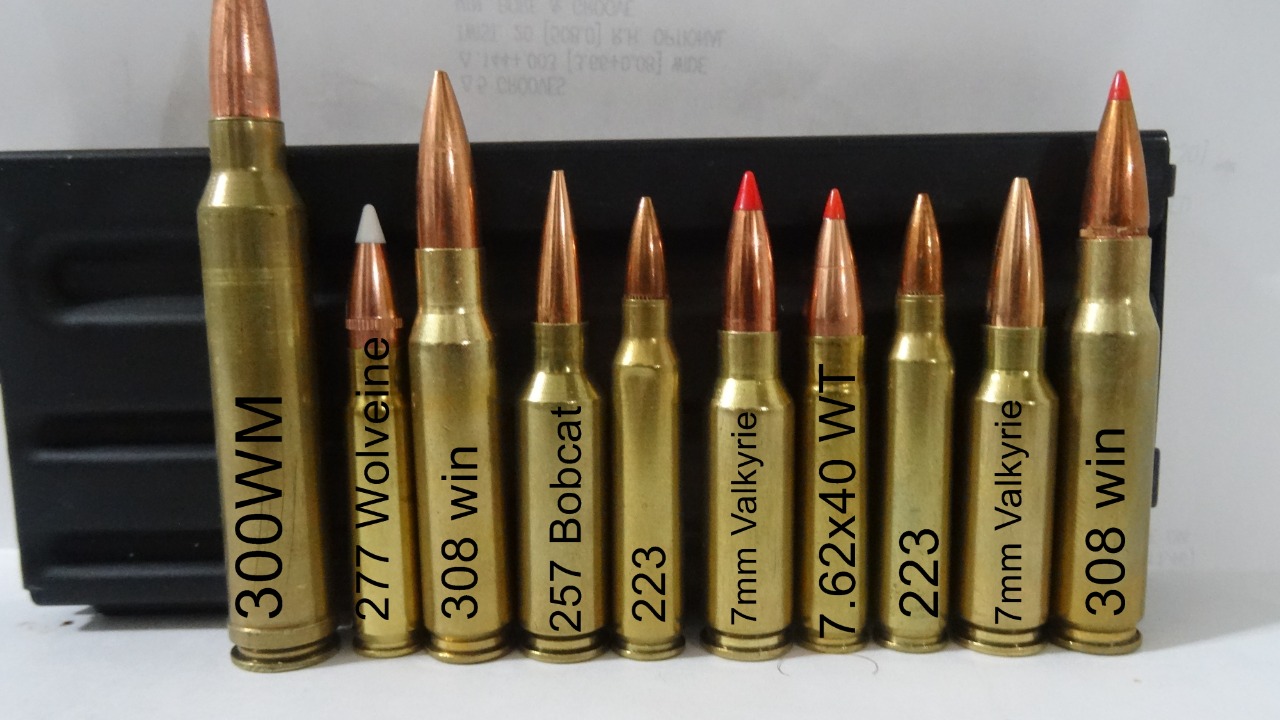
Few things light up a comment section like mentioning 6.5 Creedmoor and 308 Winchester in the same sentence. The internet has turned that comparison into a kind of ballistic culture war, but the practical differences are more boring and more useful. One detailed comparison notes that “While bullet drop is easy enough to calculate for a given target distance, the at least 30% flatter trajectory of 6.5 Creedmoor” makes range estimation errors less painful, especially at distance, as laid out in a While-anchored analysis that also highlights the “6.5” advantage.
At the same time, older work on classic rounds reminds us that the 308 Winchester and the 30‑06 Springfield are “as similar to each other ballistically speaking” as other close cousins, which is a polite way of saying that arguing about them like rival religions is a bit much, as one Aug discussion of the “308” and its peers points out. The same sanity check applies to 300 Blackout. One user asking why they “don’t get the hype” gets a grounded answer: you get a short, usually light rifle that with subsonics is “100%” hearing safe and still has “rather good ballistics” in its lane, as explained in a Dec reply that starts with “Basically.” Another thread on its history notes that 300BLK is a speciality cartridge designed not as a “5.56 SBR replacement” but more like a suppressed alternative to pistol calibers such as .45ACP and 9mm, as laid out in a SBR-focused and But-qualified discussion. None of these cartridges are magic, they just solve different problems, which is a much less exciting headline but a much more useful way to pick one.
Hardware, handling, and the part where you actually shoot
Even when the cartridge choice is sensible, the internet has a habit of ignoring how the rifle actually handles. Barrel profile debates are a prime example. One detailed guide to AR‑15 barrels points out that there are far more profiles than just “skinny” and “heavy,” and that a design with a heavier section under the handguard and a “skinny profile near the muzzle” can produce a “well‑balanced” rifle that is easier to run, as explained in a Handling Characteristics discussion. That balance matters a lot more when you are moving, shooting from awkward positions, or trying to hold a sight picture for longer than it takes to screenshot your group.
Professional training systems are quietly baking this reality into their design. The Army’s replacement for its old MILES “laser tag” gear, for example, lets instructors input the actual ballistics of a weapon and then factors in environmental conditions so simulated hits and misses reflect real trajectories, as described in a MILES-focused report. When the people whose job is to train soldiers are building systems around applied ballistics instead of meme ballistics, that is a hint about which approach actually matters when the targets shoot back.
Flat trajectories, real wind, and the limits of “easy mode”
Trajectory is another place where internet hype and practical reality part ways. Magnum fans love to talk about “flat‑shooting” cartridges, and they are not wrong that higher velocity means less drop. A long‑range guide notes that “This is the reason many magnum cartridges are described as ‘flat‑shooting.’ They possess a higher velocity and, therefore, their trajectory is flatter than that of a slower cartridge,” as explained in a They-anchored overview. That flatter path does buy you some forgiveness on range estimation, which is why 6.5 Creedmoor’s “at least 30% flatter trajectory” than typical 308 loads shows up so often in long‑range comparisons.
The catch is that gravity is only half the story. Wind, shooter error, and inconsistent positions will happily erase the advantage of a flatter trajectory if you do not train. That is why applied ballistics texts keep hammering the point that real‑world shooting must account for outdoor conditions, bullet design, and shooter technique, not just drop tables. When you zoom out, the pattern is clear: the internet keeps trying to buy its way out of fundamentals with new cartridges and clever acronyms, while the people who actually hit things keep circling back to the same boring advice. Learn your rifle, understand your load, and then, as that 6.5 Creedmoor “Lesson” put it, “Practice, practice, practice.” The hype will still be there when you get back from the range, but at least then you will have something more persuasive than a screenshot.