
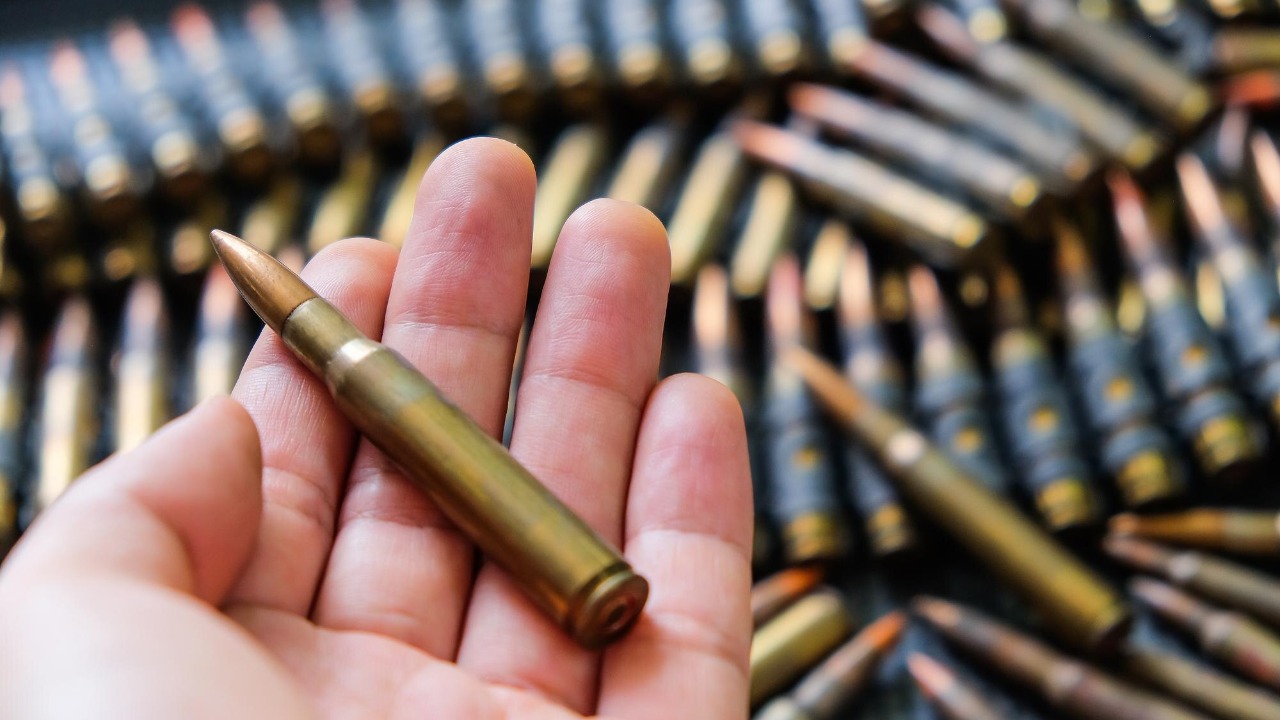
Professional shooters, from police armorers to precision competitors, are ruthlessly practical about what they carry. If a cartridge is hard to find, awkward to shoot, or offers no clear advantage over what is already on every shelf, it quietly gets voted off the island. That is why some calibers become global standards while others, despite passionate fan clubs, never quite graduate beyond the hobby rack.
When you look closely at what the pros actually use, a pattern emerges: a few workhorse rounds dominate, and the rest fight over scraps of market share. The cartridges that never catch on usually fail the same tests of availability, performance, and logistics, even if they are perfectly capable of putting meat in the freezer or steel plates in motion.
Pros want ammo they can actually buy twice
The first reason certain calibers never make it into professional holsters or rifle racks is brutally simple: you have to be able to buy the stuff, not just once, but over and over. A cartridge can be ballistically brilliant, but if it only appears on store shelves in odd years and leap years, no department armorer is going to stake training and duty readiness on it. Reporting on calibers that disappear from shelves notes that some rounds simply fade as demand shifts and the rifles chambered for them vanish from catalogs, which is not the kind of long term support a police chief wants to explain at budget time.
Professionals also care about how easy it is to keep ammunition pipelines flowing in a crisis. If a cartridge is only produced in boutique runs, or depends on a single manufacturer’s goodwill, it is a nonstarter for agencies that need pallets, not conversation pieces. Once a caliber starts to slip from regular production, it becomes a vicious cycle: fewer guns are sold, so less ammo is made, so fewer people train with it, and eventually it is relegated to the “Some calibers” curiosity bin that collectors love and procurement officers avoid.
Performance without a clear edge is not enough
Even when a cartridge is available, it still has to justify its existence against entrenched rivals. The 9mm Luger is the poster child for this problem, because it sets such a high bar for balance that many challengers look redundant. Analysis of why the 9mm Luger is so dominant points to its mix of manageable recoil, adequate power, and high magazine capacity, all in a cartridge that manufacturers can load in endless variations. When one round already does almost everything well, a newcomer has to offer a dramatic improvement, not just a slightly different flavor of “pretty good.”
You can see the same dynamic in the self defense space, where cartridges like the .380 family try to carve out a niche. Technical comparisons of Power and Penetration note that the . 380 Auto and the 9mm Luger use projectiles of the same diameter, yet the . 380 ACP gives up velocity and penetration. If a professional can carry a similar size handgun in 9mm Luger, with more energy and deeper performance, there is little incentive to standardize on 380 for duty use. Calibers that cannot clearly beat the incumbent on power, controllability, or capacity tend to be admired on internet charts, not on qualification ranges.
Legacy rifle rounds that never became institutional
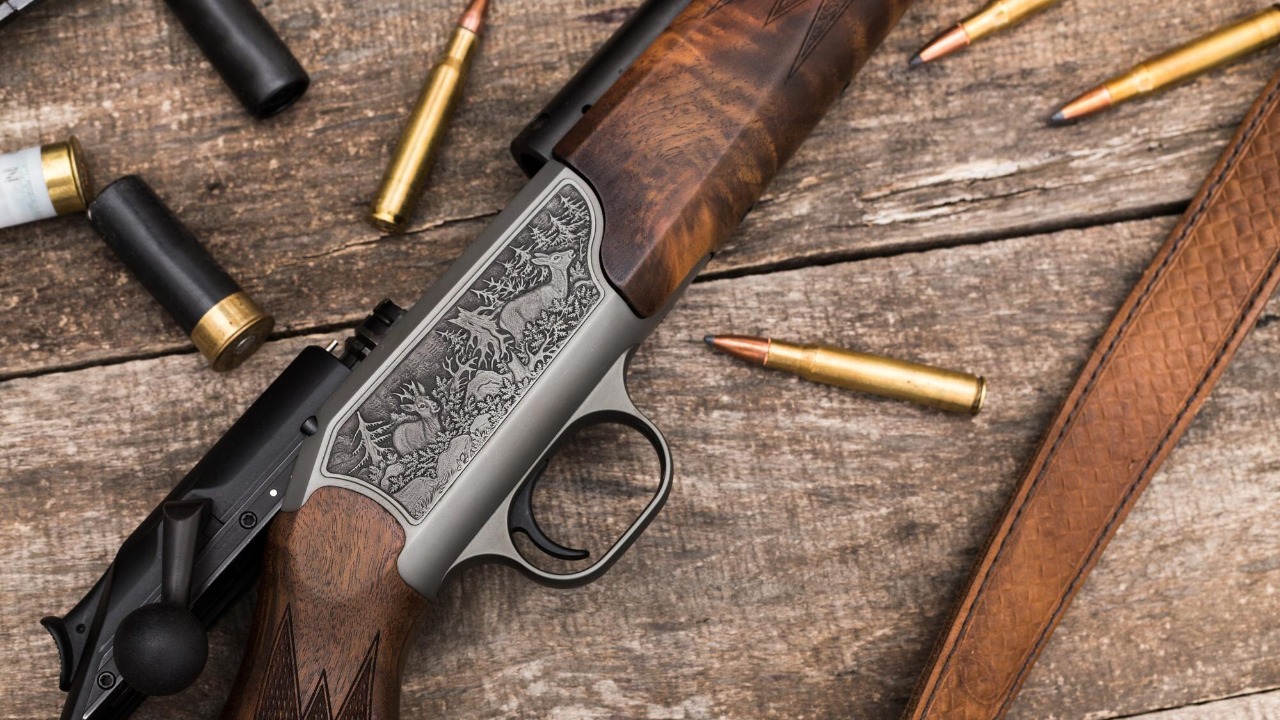
Rifle history is full of cartridges that work beautifully in the field but never quite win institutional backing. The 6MM Remington is a classic example of a round that hunters respect but agencies ignore. Reporting on dying rifle calibers notes that the 6MM Remington, once called the 244 Remington, was based on a necked down version of the 257 Roberts. That lineage produced a flat shooting, effective cartridge, yet it never displaced more common options in police marksman rifles or military inventories.
Part of the problem is that institutions tend to rally around a few standard rifle rounds and then stick with them for decades. The same reporting that highlights the 6MM Remington also points to the staying power of a military round that still survives, which underscores how much weight history and logistics carry. Once a cartridge like 244 or 257 is pigeonholed as a hunting specialty, it rarely gets the volume, training doctrine, or long term contracts that would make it a professional staple, no matter how cleanly it drops deer or coyotes.
What the precision crowd actually runs
If you want a reality check on which calibers truly earn professional trust, look at competitive precision rifle circuits where shooters are paid in trophies and embarrassment. Data on what the pros use shows that even in a field obsessed with tiny groups and ballistic coefficients, familiar workhorses still show up. Three of these guys were running a 308 Win with a Hornady 176 gr load, a combination that would have looked perfectly at home in a police sniper rifle twenty years ago.
The lesson is that professionals will absolutely experiment at the margins, but they do it from a base of proven cartridges that have deep support from companies like Hornady and a long track record of performance. Exotic chamberings that promise a few percent less wind drift or a slightly flatter trajectory might win a niche, yet they rarely displace 308 or similar standards in large organizations. When your job or your ranking depends on repeatable hits, you pick the round that has mountains of data, factory match options, and a global supply chain, not the one that requires a treasure hunt every time you need a fresh case of ammo.
Why some “underrated” rounds stay that way
Every shooter I know has a pet cartridge they swear is criminally underrated, and I am no exception. The problem is that professional adoption is not a merit badge for ballistic charm, it is a brutal spreadsheet of cost, logistics, and risk. When analysts describe calibers that disappear from shelves, they are really describing what happens when a round never crosses that threshold into institutional demand. Without police departments, militaries, or major competitive circuits buying in, a cartridge is forever one production lull away from scarcity.
On the handgun side, the gravitational pull of 9mm Luger and a few close rivals leaves little room for oddballs to grow up. The same technical comparisons that highlight how the . 380 Auto and the 9mm Luger share bullet diameter, while the . 380 ACP gives up performance, also hint at why more obscure small calibers struggle. If a round cannot beat 9mm on power, match 380 on concealability, or offer some unique advantage in training or recoil, professionals will keep walking past it to the calibers that already have holsters, magazines, and duty loads stacked in the armory.
Rifle cartridges face the same reality, just with longer barrels and more expensive brass. The 6MM Remington and its 244 and 257 relatives show that being effective on game is not enough to win a badge on a uniformed belt. Precision competitors leaning on 308 Win with Hornady 176 g bullets demonstrate how much weight history and manufacturer support carry when the stakes are high. In the end, the calibers that never catch on with professionals are not failures, they are simply specialists in a world that rewards generalists, and the market quietly shelves them accordingly.