

Long-range shooting has never been more crowded with gear, gadgets and opinions, yet the rifles topping scoreboards and filling freezers still tend to run on a very old idea: you, a bolt handle and gravity. Semi-automatic platforms keep getting better, but when the job is threading tiny groups into distant steel or a small vital zone, the simplest mechanism keeps winning. The promise is not nostalgia, it is repeatable hits at distance, and that is where bolt guns still quietly run the table.
Mechanical simplicity, repeatability and that locked-up feel
When I talk about why bolt rifles dominate precision work, I start with the least glamorous word in the shooting vocabulary: consistency. A bolt action locks the cartridge into the chamber and keeps everything closed until the bullet is gone and the pressure has dropped, which means the barrel and receiver are not being jostled by a cycling mechanism while the shot is still happening. That locked-up stability is exactly what long-range shooters are chasing when they obsess over tiny groups, and it is why experienced competitors describe bolt actions as the easier path to repeatable, precision placement of each round in the chamber rather than a magic accuracy trick.
With a semi-automatic, gas or recoil energy has to peel the action open and start moving parts before the bullet has fully exited, which introduces more timing variables and more opportunities for the system to nudge the rifle off its perfect alignment. Even shooters explaining the difference in casual forums tend to frame it as a precision and consistency advantage, not a mystical accuracy aura, pointing out that the closed chamber of a bolt action keeps pressure contained and movement minimized at the critical moment of ignition. That same logic shows up in more formal breakdowns of why the bolt action rifle out performs semi autos in precision work, where the locked bolt throughout the firing cycle is treated as a core design advantage rather than a romantic throwback.
Why long-range competitors still drag bolts to the firing line
On paper, semi-automatic rifles should own practical long-range matches: faster follow-up shots, higher capacity and ergonomics borrowed from modern service rifles. In reality, when match scores are tallied, you are unlikely to see a semi-automatic in the top tier of long-range competition results, even when those semis are high quality builds. The shooters who live and die by hit percentage at distance keep gravitating to bolt guns because they want every mechanical variable working in favor of consistency, not speed, and they are willing to run the bolt between shots to get it.
That preference shows up across disciplines that prize first-round impacts, from the Precision Rifle Series to other long-range games where stages demand precise hits from awkward positions. Competitive shooters who pair long-range gear to specific activities routinely slot bolt rifles into the roles where pure precision matters most, while reserving semi-automatics for multi-gun matches and closer, higher-volume stages. The pattern is not an accident: when the course of fire rewards tiny groups and clean wind calls more than split times, the rifles with a locked bolt and fewer moving parts keep ending up on the podium.
Snipers, hunters and the quiet virtues of reliability
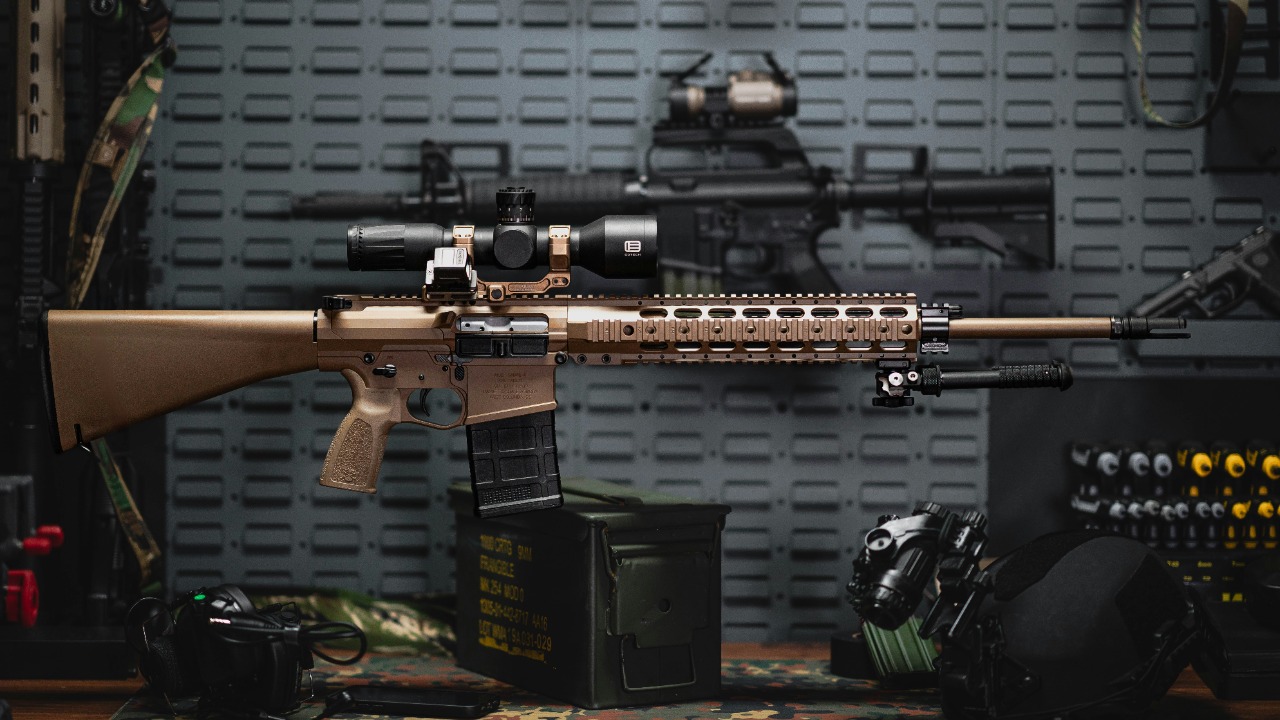
Military and law-enforcement snipers are not in the business of spraying rounds, they are in the business of making one shot count, and that job description lines up neatly with the strengths of a bolt action. A manually operated bolt gives them a closed chamber at the moment of firing, which helps contain pressure and reduce the number of moving parts that could shift the rifle as the bullet accelerates down the bore. That same closed, simple system is also easier to keep running in mud, sand and bad weather, which is why explanations of sniper rifle design keep circling back to the bolt as the default choice when reliability and precision matter more than rate of fire.
Hunters have quietly reached the same conclusion, just with more camouflage and fewer spotters. Big game and predator hunters tend to favor bolt-action rifles for a short list of reasons that sound almost boring until you are miles from the truck: reliability, accuracy, manageable weight and the ability to handle powerful cartridges without turning the rifle into a boat anchor. Guides explaining why hunters like these rifles point to that mix of traits as the reason bolt actions are still relevant for modern hunters, and training resources that cover bolt-action shotguns lean on the same logic, noting that fewer moving parts translate to less wear and tear and a lower risk of mechanical failure in the field.
The market data backs up that gut-level trust. When hunting in Canada, bolt-action rifles continue to dominate the scene in 2025, described as the go-to choice for hunters across the country because they are known for unmatched reliability and accuracy in harsh conditions. Even in more casual hunting discussions, shooters note that bolt actions are almost always lighter than comparable semi auto or AR-style rifles, which matters when you are climbing ridges instead of shooting off a concrete bench. The pattern is clear: whether the mission is a high-stakes overwatch or a cold morning in a deer stand, people who cannot afford a malfunction keep reaching for a bolt handle.
Weight, balance and the human factor behind precision
Long-range precision is not just a math problem, it is a human stability problem, and bolt guns quietly help the shooter side of the equation. By skipping gas systems, buffer tubes and other semi-auto hardware, a bolt rifle can be built lighter or, more importantly, have its weight concentrated where it helps stability instead of being scattered across moving parts. Hunters comparing platforms point out that bolt actions are almost always lighter than semi auto or AR-style rifles, which makes them easier to carry all day and simpler to steady on improvised rests when the only shooting bench in sight is a tree branch.
That simplicity also affects how recoil feels and how quickly a shooter can get back on target. In a semi-automatic, the action starts cycling as the rifle moves under recoil, which can create a more complex impulse for the shooter to manage, especially from awkward positions or barricades. In contrast, a bolt action sends the recoil straight into the shooter without additional parts slamming around, which experienced competitors describe as easier to predict and easier to build a stable position around. Training guides that walk shooters through pairing long-range gear to specific activities consistently treat bolt rifles as the default for precision-focused roles, precisely because their handling characteristics make it easier for real humans, not just ballistics calculators, to deliver consistent hits.
Why “old tech” still wins in a high-tech shooting world
From the outside, it can look odd that a mechanism older than the Ford Model T keeps beating rifles that share DNA with modern service weapons, but the pattern is familiar in other industries. In heavy industry, domestic bolts are still the preferred choice for most applications because they offer reliable performance, safety and cost efficiency, even when flashier fasteners exist on paper. The shooting world has landed in a similar place: when the stakes are high and the margin for error is small, people default to the simplest tool that does the job with the fewest moving parts and the least drama.
That is why, even as semi-automatic rifles improve and high quality builds close some of the gap, long-range competitors, snipers and hunters keep voting with their wallets and their match entries for bolt actions. Precision-focused breakdowns of bolt versus semi-auto rifles keep returning to the same core points, that the bolt is locked for the entirety of firing, that the system has fewer moving parts to fail and that the design makes it easier to achieve repeatable, precision placement of each round. In a sport where tiny inconsistencies grow into big misses by the time a bullet reaches distant steel or a far hillside, those advantages are not romantic, they are practical, and they are why the humble bolt gun still owns the far end of the range.