
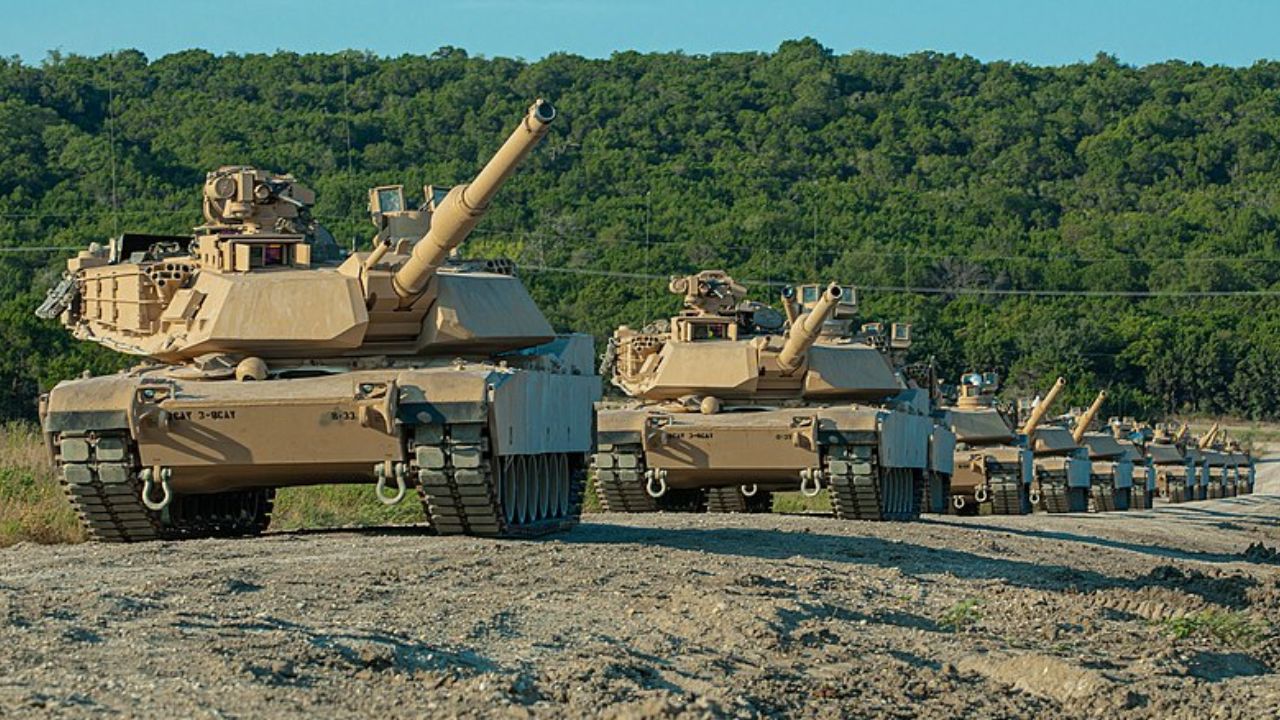
On modern battlefields, the gear that keeps showing up is not always the sleek prototype that looks good in a defense expo video. It is often the scuffed, slightly unfashionable hardware that logisticians understand, crews trust, and adversaries have already learned to fear. The paradox is simple: the weapons that have survived real combat tend to outlast the flashier newcomers because they work predictably under pressure, even when everything else is falling apart.
From artillery duels to aerial combat, the pattern repeats. Militaries talk about “next generation” systems, then quietly keep the “previous generation” in service for decades, upgrading software and swapping components like a devoted owner nursing a 1998 Toyota Hilux. The result is a world where battlefield-proven weapons keep hogging the spotlight long after the tech world would have declared them obsolete.
Combat is a stress test that labs cannot fake
Every weapons program promises “lethality,” but in practice that word is less about raw power and more about how a system behaves when the enemy is jamming, the weather is awful, and the logistics chain is held together with duct tape and sarcasm. One detailed analysis of modernization notes that lethality is really a function of several factors, including precision sensing, targeting, survivability, and the ability to operate in contested environments, not just the newest hardware on a spec sheet. In other words, a weapon is only as deadly as its weakest supporting link, and battle-tested systems have already had those weak links exposed and patched.
That is why older platforms that have been refined over years, sometimes decades, can outperform newer rivals that are still working through their teething problems. A report on the F-35A, for example, points out that early issues in a “brand-new weapons system” are common for complex designs and are typically ironed out over long periods of iterative improvement. The same logic applies across the arsenal: once a system has survived repeated deployments, its quirks are documented, its maintenance routines are realistic, and its crews have developed the kind of muscle memory that no simulator can fully replicate. Battlefield veterans, whether human or mechanical, tend to be more reliable than fresh graduates.
Old hardware, new tricks: when “obsolete” wins the day
On paper, “obsolete” weapons should be museum pieces. In practice, they keep showing up in war zones like that one colleague who never quite retires. Discussions among military analysts and practitioners often highlight that older systems can still give one side an edge when they are used in large numbers, integrated smartly, or paired with modern targeting and communications. One widely cited comment notes that the advantage depends heavily on context, including doctrine and how the system is employed, rather than on the calendar age of the hardware itself.
History is full of examples where supposedly inferior technology proved effective because it fit the doctrine and industrial base behind it. One study of American military technology points out that while the Sherman tank lacked the raw armor and gun power of its German counterparts, it benefited from numbers, reliability, and the doctrine that supported it. The lesson is not that old is automatically better, but that “good enough, in bulk, with a clear concept of use” can beat “individually exquisite, in small numbers, with no coherent plan.” That logic still shapes how commanders think about whether to keep proven systems in the field.
Complexity is a feature, and also a bug

Modern weapons are increasingly software-defined, sensor-heavy, and networked, which is wonderful until something breaks. Research on missile systems notes that as complexity increases, service life expectations stretch out, and maintenance requirements are supposed to shrink, sometimes even to “maintenance free.” The catch is that predicting the lifetime of such complex systems based on field data becomes harder, and any hidden design flaw can lurk for years before revealing itself at the worst possible moment.
Engineers wrestling with new aircraft frames describe a similar problem. One technical discussion points out that older airframes were often “over-designed somewhat,” which gave them generous safety margins and long lives, even if standards at the time were lower. Those same airframes are now being pushed far beyond what their designers imagined, yet they keep flying because their structural behavior is well understood. New designs, by contrast, are optimized to the edge, which saves weight and cost but leaves less room for unknowns. In combat, that tradeoff can make a rugged, slightly overbuilt veteran platform more attractive than a cutting-edge design that has not yet proven how it fails.
Fragile brains, sturdy bodies: the AI and autonomy problem
The newest weapons often promise “smart” autonomy, but the smarter the brain, the more ways it can be confused. A detailed critique of military artificial intelligence warns that AI systems have “foundation-level fragility” that can become a catastrophic flaw in warfighting. Small changes in data, unexpected inputs, or adversarial manipulation can cause systems to misclassify targets or fail silently, and those failure modes are often invisible to operators until something has gone badly wrong. That is not the kind of surprise any commander wants in the middle of a firefight.
Autonomous systems also depend heavily on the electromagnetic environment, which is exactly what adversaries try to disrupt. Analysis of airpower after recent conflicts notes that if autonomous features rely on GPS, they become vulnerable to jamming, spoofing, or attacks on the underlying space infrastructure. Another assessment of autonomous systems in combat frames them as either a “key or a curse,” depending on how well they are integrated into doctrine and how resilient their communications and control links are. When the network is fragile and the enemy is actively trying to break it, a simpler, semi-manual system with fewer dependencies can look surprisingly attractive.
Logistics, ammo, and the tyranny of production lines
Even the most advanced weapon is just an expensive paperweight if it runs out of ammunition or spare parts. Recent fighting between Russia and Ukraine has underlined that modern war is as much a contest of industrial systems as of tactics. High-tech precision munitions are devastating, but they are also hard to produce at scale. Cheaper, older artillery shells and rockets, by contrast, can be manufactured in large quantities and fired in the kind of sustained barrages that grind down an opponent over time.
Western support to Ukraine has also exposed the headaches of mixing many different advanced systems in one theater. Reporting on how Russia has adapted to NATO equipment highlights Incompatibility between various NATO systems and Limited ammunition supplies for Western weapons. Each new platform brings its own training pipeline, spare parts catalog, and political constraints, which is great for PowerPoint slides and less great for a brigade trying to keep its guns firing. Older, standardized systems that share ammunition and components can be easier to sustain, even if they lack some of the bells and whistles of their successors.
Doctrine, data, and the human factor
Technology does not fight by itself, and the most advanced hardware can underperform if doctrine and training do not keep up. One analysis of military power argues that conceptions of technology are tightly bound to doctrine, and that weapons like the Sherman tank were effective because they fit a broader operational concept rather than because they were individually superior. In online debates about hardware, experienced voices often stress that the “concept” behind a system can be transformative even before the technology fully matures, as long as commanders understand how to use it and are willing to adapt.
Modern militaries are also wrestling with how to feed data to the field without drowning units in complexity. A senior Pentagon official has emphasized that units in combat need updated tactical data in hours or minutes, delivered in ways that can directly cue sensors and precision strike systems. That demand for rapid, reliable data flows favors architectures that are modular and upgradable, rather than monolithic. A separate assessment of defense acquisition notes that Today modularity is prized because it lets militaries refresh software and components on existing platforms instead of starting from scratch. That is one reason older airframes and hulls keep getting new sensors and weapons bolted on: the human and organizational systems around them are already in place.
Industrial age logic in an information age war
For all the talk about cyber and space, the logic of industrial capacity has not gone away. One strategic assessment bluntly states that War and the competition just below open conflict are now battles between industrial systems, where the ability to produce and sustain equipment at scale can be decisive. That reality favors designs that can be manufactured quickly, repaired with existing tooling, and supported by current supply chains. Shiny prototypes that require exotic materials or boutique factories struggle to compete when the shooting starts and everyone suddenly remembers how long it takes to spin up a new production line.
Even in domains like nuclear weapons, where the technology is highly specialized, the underlying logic is similar. Analysts who track nuclear arsenals note that the “lethality” of the United States stockpile, defined as the probability that weapons will destroy their targets, has increased significantly compared with the 1980s. That improvement did not come from throwing away everything old and starting over. It came from incremental upgrades, better accuracy, and refined targeting concepts layered onto an existing force. The pattern repeats across the military: proven platforms get smarter and more precise over time, while brand-new systems must survive their own awkward adolescence before anyone trusts them fully.
Why the “Swiss Army Knife” weapon keeps disappointing
There is a persistent temptation to build one platform that does everything, from air superiority to close air support to dog walking. In cybersecurity, a field that faces its own arms race, experts warn that while the Swiss Army Knife approach sounds ideal, the best tools tend to be specialized and refined over years of focused use. The same logic applies to weapons: multi-role platforms are valuable, but when they try to do everything at once, they risk doing nothing particularly well, especially in the early years.
Specialized, battle-proven systems, by contrast, have had time to sharpen their one main job. In military aviation, long historical surveys note that In Military aviation, the pace of change has been intense, yet certain airframes and roles have persisted for decades because they fill specific niches that no generalist can quite replace. The result is a force mix that looks messy on a whiteboard but makes sense in combat: a blend of old and new, specialists and hybrids, with the veterans sticking around because they have already proven they can survive the worst day a commander can imagine.