
Iran has spent years turning its missile and drone forces into a dispersed, layered system built to survive even the most sophisticated air campaigns. Precision airstrikes can thin that arsenal and raise the cost of every launch, but they cannot reliably hunt down every launcher before it fires.
From buried “missile cities” to cheap kamikaze drones, Iran’s approach exploits geography, concealment, and sheer volume. The result is a contest in which air power can manage risk but cannot promise a clean elimination of the threat.
Scale, geography, and the limits of surveillance
Any effort to neutralize Iran’s launch network begins with a basic constraint: size. Iranian officials themselves describe the national territory of roughly 1.6 m square kilometers, a vast expanse of deserts, mountains, and urban sprawl that complicates continuous monitoring.
Satellites provide exquisite imagery, but as William Meinert, who studied History and Military Science at the University of Georgia, points out, they are moving sensors with gaps between passes. Launchers can roll out, fire, and withdraw between overflights, while cloud cover or camouflage can further degrade detection.
Air forces add crewed jets and drones to plug those gaps, yet even intensive patrols leave blind spots. Reporting on recent operations notes that the Air Force has flown dozens of sorties against Iranian targets to expand air superiority, yet officials still warn that Iranian airspace remains exposed.
Losses underline the cost of such coverage. At least 16 United States military aircraft, including 10 MQ 9 Reaper drones, have been destroyed in the conflict with Iran, a reminder that hunting launchers from the air is itself a contested mission.
Missile cities, mobility, and decentralized control
The backbone of Iran’s deterrent lies underground. Analysts describe extensive “missile cities” excavated inside mountains, where launch rails and storage tunnels are protected from most conventional strikes and often hidden from satellites. One assessment notes that these facilities are designed precisely to prevent preemptive attacks on Iran’s arsenal and to keep pressure on bases that host United States forces.
Video reports describe how, beneath Iran’s mountains, a shadow arsenal waits hidden from satellites and shielded from air strikes, ready within minutes for decades, with commentators warning that nobody should expect Iran to show restraint in the face of aggression and invoking Article 51 of the UN Charter to justify retaliation.
At some bases, Tehran has reportedly decentralized authority for firing missiles so that local commanders can launch even if central command is disrupted. One account describes a missile base north of Kermanshah in Iran, where this model is in effect, complicating any strategy that aims to paralyze the system by targeting leadership nodes.
Iran’s own lessons from past conflicts have reinforced this approach. According to one report, according to Iranian assessments, highly centralized systems collapse quickly once leadership is removed, which is why authority is now spread across multiple units.
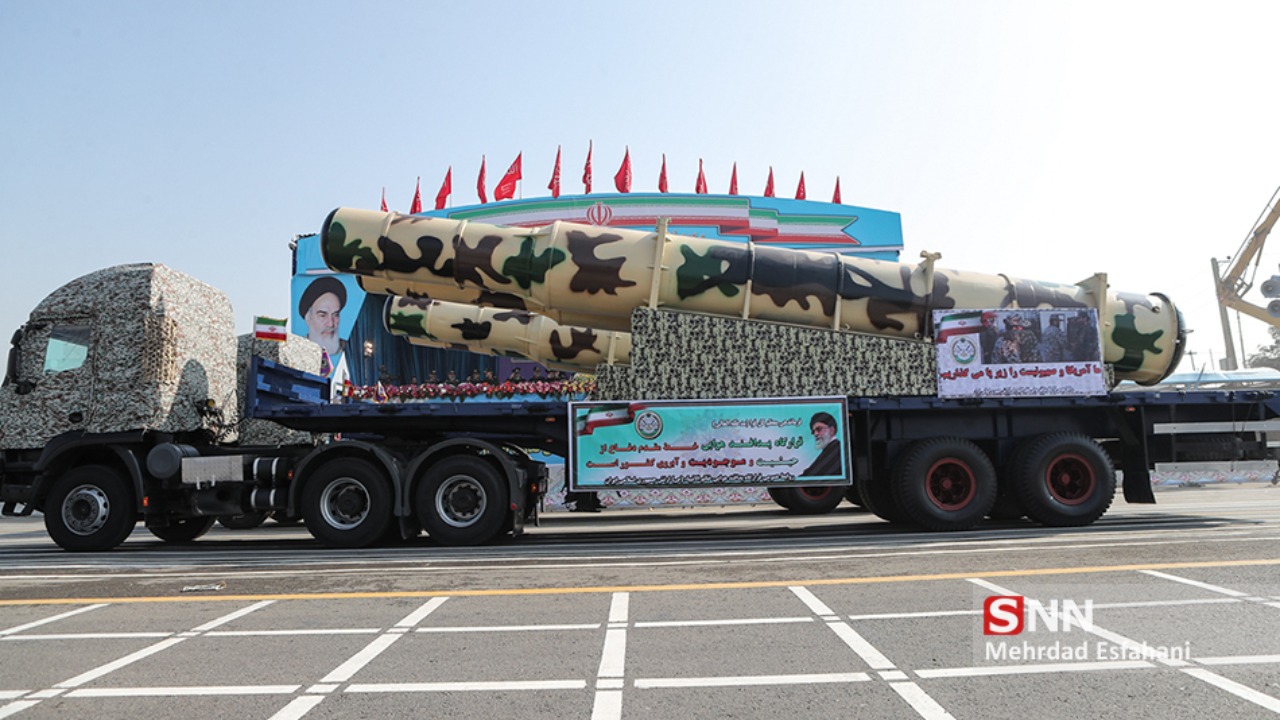
Tehran has also invested heavily in mobility. Many ballistic systems are mounted on road-mobile transporter erector launchers that can move along highways, hide in garages, or shelter in remote valleys before firing. Analysts describe how Iran deploys a large share of its ballistic missiles on such platforms, which can be dispersed quickly and then concentrated for a salvo.
Research on Iran’s passive defense measures indicates that the country has tried to import and develop domestic production capabilities for heavy-duty truck chassis and other support vehicles, based on evidence of procurement efforts that go back years. Each additional chassis can become a launcher or decoy, multiplying the number of potential targets that air forces must track.
Iran’s doctrine incorporates three types of ballistic missile launch systems: fixed, mobile, and underground. Reporting on this multi-layered launch system explains that Iran uses this diversity to ensure that, even if fixed pads are destroyed by Israel or Gulf states, mobile and underground assets can continue to fire.
The result is a launch architecture in depth. Fixed sites provide volume and training, mobile batteries offer flexibility, and tunnels give survivability. Air power can damage each layer, but no single strike package can reach them all at once.
Camouflage, decoys, and passive defense
Iran has systematically hardened its launch infrastructure against detection. Analysts describe a portfolio of visual and infrared camouflage, decoys, and false infrastructure intended to confuse reconnaissance and soak up precision munitions. One assessment lists Iran’s use of fake missile silos, dummy transporters, and concealed entrances to underground facilities.
Underground “missile cities” themselves are often fronted by modest surface structures that resemble warehouses or civilian depots. A video investigation describes how, beneath Iran’s mountains, a shadow arsenal waits hidden from satellites, with entrances that are difficult to distinguish from natural rock formations or ordinary tunnels.
Iran’s propaganda has also highlighted industrial groups that support this arsenal. The Hemat Group, for example, specializes in liquid-fuel missiles that require hours of preparation and fueling before launch, which in theory makes them more vulnerable to preemption. Yet by fueling inside tunnels and rolling out only at the last moment, operators can reduce that window of exposure.
A detailed study of Iran’s missile and drone forces notes that, despite generally limited accuracy, the large payloads and ranges of its medium-range ballistic missiles make this arsenal one of the most dangerous in the region. That assessment of Iran’s evolving capabilities stresses how quantity and survivability can offset weaknesses in precision.
Drones, saturation, and the air defense dilemma
If underground missiles are the anvil, drones are the swarm. Individually, Shaheds should be easy to bring down, although operators sometimes use tactics like skimming along at wave-top height to avoid radar, and Iran has increased the number it can produce each month. One analysis warns that Individually Shaheds become a serious problem when launched in mass volleys.
Technical studies describe how The Shahed is built from lightweight radar-absorbing materials, such as plastic and fibreglass, and cite a 2023 RUS paper that links these stealth features to difficulties for aerial defense systems. Their small size and low flight profile let them slip through gaps that high-altitude radars might miss.
On the defensive side, systems such as Iron Dome have shown how interceptors can act independently and complete their mission even if they lose communication with the ground, thanks to onboard sensors that can track the target and adjust course. Reporting on Iron Dome explains how this autonomy lets each interceptor engage even if command links are jammed.
Every interception, however, consumes an expensive missile, while each Shahed is relatively cheap. When Iran fires smaller volleys more frequently, as some reports describe, defenders must decide whether to engage every object or accept some leakage. One assessment of recent barrages notes that all the air activity over Iran designed to thwart launchers makes it difficult for operators, yet every launcher destroyed will not be replaced quickly, which is precisely why Iran spreads fire over time.
Why air power alone cannot finish the job
Senior officers and analysts increasingly argue that no amount of bombing can erase Iran’s missile and drone capability. One former commander told an interviewer that it is not just a question of destroying every single missile that the Iranians possess, but also affecting their ability to use them, and that this is only partially possible with air power. That assessment of the Iranians’ arsenal has led some to discuss the prospect of ground raids to secure critical sites.
Even intensive air campaigns have limits. One report on earlier strikes against Iranian infrastructure notes that, despite significant damage, Iranian air defenses were replaced after combat with Israel and that airspace remains exposed, in part because of Air defense gaps and reliance on Cold War-era aircraft.
On the offensive side, Iran has demonstrated that it can keep firing despite sustained bombardment. Analysts ask how Iran is still launching missiles at Israel after repeated airstrikes and point to its multi-layered launch system, which relies on redundancy, mobility and underground storage to ride out attacks from Israel and other adversaries.