
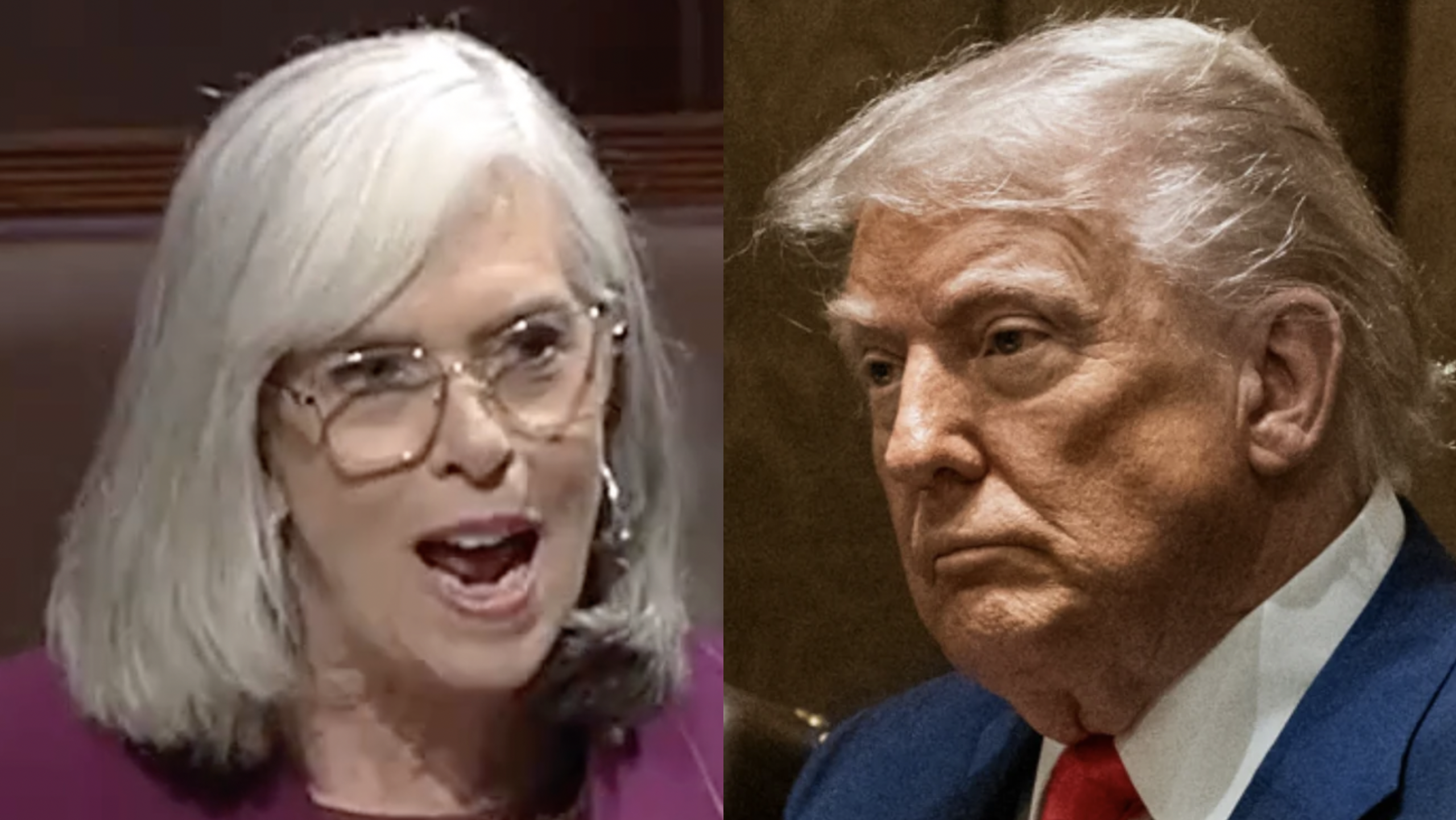
House Democratic Whip Katherine Clark put a number on her party’s ambitions Sunday morning, telling supporters on X that Democrats will retake the House of Representatives within 100 days and use that power to confront the Trump administration head-on. The post, published to her official account at 7:20 a.m. on July 26, 2026, framed the coming election as a fight over the cost of living and accountability in Washington, and it landed as prediction markets continue to show Republicans on defense heading into November’s midterms.
Clark’s full statement read: “Democrats are fighting for an affordable America. In 100 days, we’ll win back the House and deliver for working families. Our agenda: lower costs, affordable healthcare, and holding the crooks accountable.”
As the second-ranking House Democrat and the party’s chief vote-counter, Clark has spent much of 2026 delivering a consistent message built around affordability, health care costs, and accusations of corruption against the Trump administration, and Sunday’s post continued that pattern rather than introducing a new line of attack. It also arrived roughly 100 days before Election Day, November 3, 2026, giving her post the feel of a countdown-clock declaration aimed at rallying the party’s base heading into the final stretch of the campaign.
The messaging traces back to House Democrats’ own framing of the election cycle. At the party’s 2026 Issues Conference in February, held under the banner “Fighting for an Affordable America,” Clark told attendees that Democrats were showing the American people that they deserve better, pointing to a better economy, better schools, better health care, and a more affordable future, according to a transcript published on her official House website. She used that same appearance to argue that Trump had promised to lower costs on his first day in office, a promise Democrats have repeatedly said went unfulfilled.
The “affordability” framing has anchored Democratic messaging for the better part of a year. In a February 27, 2026 session of that same Issues Conference focused on the cost of caregiving, Clark called the care economy a defining issue for the 2026 elections that would be carried by candidates with real solutions, according to reporting on the event. That statement reflected a broader effort by House Democratic leadership — including Leader Hakeem Jeffries, Caucus Chair Pete Aguilar, and DCCC Chair Suzan DelBene — to build a unified platform around health care, child care, and elder care costs ahead of the midterms.
Clark has also used her platform to directly challenge President Trump’s record on the economy. Following Trump’s February 2026 State of the Union address, which Clark skipped, she told CNN that the president had described a “golden age” that really only applied to Donald Trump himself, adding that he was the only one truly benefiting economically from his presidency. That interview reinforced the “crooks” language featured in Sunday’s post, tying personal enrichment allegations to the broader affordability argument Democrats have carried into the election year.
Health care has been a particular flashpoint. In December 2025, as Affordable Care Act tax credits faced a lapse, Clark joined Jeffries and Aguilar to demand that then-Speaker Mike Johnson schedule an immediate vote on an extension, and she separately criticized a Republican health care proposal for hiking premiums, providing fewer options, and attacking reproductive freedom after months of what she called empty promises. By January 2026, House Democrats had forced a floor vote on extending those tax credits, which Clark’s office touted as a victory in the broader fight to lower health care costs.
Clark has extended similar criticism beyond domestic policy. In late February 2026, after Trump ordered a military operation against Iran, Clark issued a statement accusing the president of breaking his campaign promise of “no new wars,” saying he had launched a massive military operation against Iran under the cloak of night, without congressional authorization or a clear rationale. In January 2026, she also pushed back on the administration’s actions toward Venezuela, saying that while Nicolás Maduro was an illegitimate leader who had brutally oppressed the Venezuelan people, Trump had not acted in defense of democracy and had lied repeatedly and shamelessly to the American people while preparing for the operation.
The political backdrop for Sunday’s post is a midterm cycle that has moved sharply in Democrats’ direction over the past year, at least according to prediction markets. Kalshi’s midterm forecasting hub currently prices Democrats’ chances of winning House control at 84 percent, with Republicans at 16 percent — figures that closely track the numbers Clark’s office is almost certainly watching as it plots its 100-day strategy. That represents a significant swing from where the market stood immediately after the 2024 election, when Democrats’ odds of retaking the House sat closer to 60 percent, before climbing above 80 percent for much of 2026 amid economic anxiety and a government shutdown fight last October.
Other market data points in the same direction. As of June 2026, Kalshi and Polymarket both priced House control in the high 70s to low 80s for Democrats, with the shift partly attributed to a drop in consumer confidence following a Supreme Court ruling that spring and to President Trump’s approval rating, which statistician Nate Silver put at 38.8 percent in late June 2026. Kalshi has also launched a dedicated Midterms Hub combining live market odds, polling averages from VoteHub, and campaign fundraising data, noting that Democrats’ House odds peaked near 86 percent in April 2026 before settling closer to the current mid-80s range.
The Senate picture, by contrast, remains far tighter. Kalshi’s combined-outcome tracker shows a full Democratic sweep of both chambers as the single most likely result at 50 percent, followed by a Democratic House paired with a Republican-held Senate at 36 percent. A complete Republican sweep sits at roughly 15 percent, while a Republican House with a Democratic Senate is considered the least likely outcome of all, at around 1 percent. CNN data analyst Harry Enten has described the House as having been viewed as a likely Democratic pickup across pretty much every historical market, prediction market, and polling indicator, even as the Senate race has tightened into something closer to a coin flip.
If the current odds hold and Democrats do retake the House in November, the practical consequences for Washington would be substantial. A Democratic majority would strip Republicans of their ability to set the floor agenda, control committee gavels, and advance legislation without bipartisan buy-in, effectively ending unified Republican control of Congress and the White House that has existed since Trump’s return to office in January 2025. It would also hand Democrats subpoena power and committee chairmanships — tools Clark has signaled the party intends to use for oversight, given her repeated references to “holding the crooks accountable.” A Democratic-controlled House would additionally serve as a check on further legislative efforts to alter health care subsidies, funding levels for programs like Medicaid and Social Security, and any future authorization requests tied to military action abroad, all areas where Clark and House Democratic leadership have already staked out opposition.
A House flip would not, however, guarantee Democrats the ability to pass their own legislative priorities into law. With the Senate still rated as close to a toss-up and Trump holding veto power through the remainder of his term, a Democratic House majority would likely function primarily as a gatekeeper and investigative body rather than a vehicle for enacting sweeping policy changes on affordability, health care, or other items in the party’s stated agenda.
Sunday’s post did not include new policy specifics beyond the broad pillars Clark has repeated throughout 2026 — lowering costs, protecting or expanding affordable health care, and pursuing accountability for what she and other Democratic leaders have characterized as corruption within the Trump administration. It functioned instead as a rallying message, placing a concrete 100-day timeline on goals the House Democratic Caucus has been building toward since at least early last year, when Clark used her election to Whip to promise a party message centered on affordable child care, health care, reproductive rights, and clean air and water.
Whether that message translates into actual seats will not be determined until Election Day on November 3, 2026, roughly 100 days after Clark’s post. Until then, both her office and national prediction markets appear to be converging on the same underlying signal: a political environment that, for now, favors Democrats reclaiming the House even as control of the Senate remains genuinely contested.