
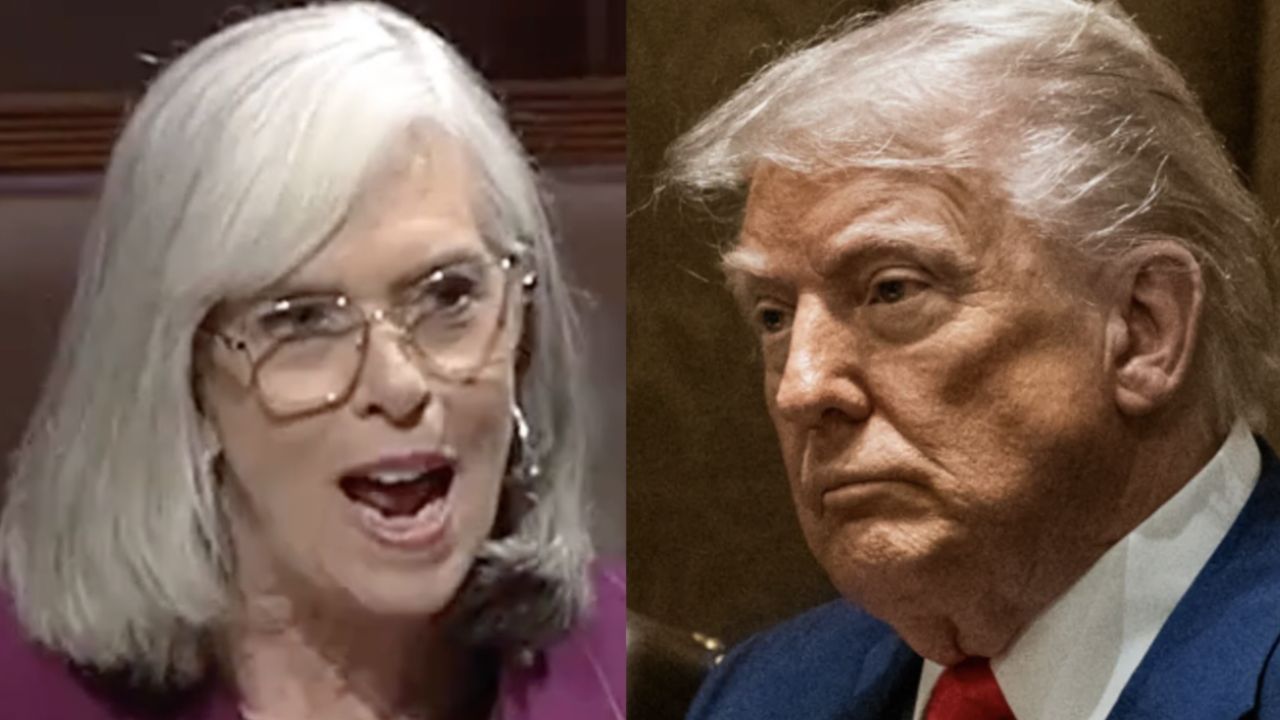
Hours after federal data showed inflation climbing for the second straight month, House Democratic Whip Katherine Clark used a three-sentence post on X to deliver a verdict on the Republican economy and a promise about the midterm elections. Clark, the No. 2 Democrat in the House, has spent months tying the rising cost of living to President Donald Trump’s war with Iran. Her message on Wednesday was the most compact version of that argument yet.
The Post
Clark, a Massachusetts Democrat, published the message on Oct. 14, 2026, at 8:49 a.m. Her full post read:
“The GOP economy is a failure.
Inflation remains too high, as families struggle to afford the basics.
House Democrats are ready to win in November and stop this mess.”
What the Data Showed
The post followed the September Consumer Price Index report from the U.S. Bureau of Labor Statistics, released at 8:30 a.m. Eastern. The report said consumer prices rose 0.6 percent in September on a seasonally adjusted basis after a 0.4 percent increase in August. Over the past 12 months, the all-items index rose 3.7 percent, up from 3.4 percent for the 12 months ending in August.
Gasoline drove the increase. The bureau said the gasoline index rose 9.1 percent in September and accounted for more than half of the monthly rise in all items. The energy index climbed 5.2 percent for the month and 20.4 percent over the year, with gasoline up 34.2 percent over twelve months. Food prices were unchanged in September, and the shelter index rose 0.4 percent.
Clark attached an ABC News report on the data to her post. That report described inflation as reaching a four-month high, slightly above economists’ expectations, and well above the 2.4 percent rate recorded in February, before the war began. It noted that a preliminary peace agreement had eased prices over the summer, but that the tentative accord expired in August and attacks on oil infrastructure and ships continued. The national average gas price remains above $4.30 a gallon, against less than $3 before the war, and diesel stands at $6.29 a gallon.
The wider economy is also showing strain. The U.S. Bureau of Labor Statistics reported earlier this month that employers added 29,000 jobs in September, down sharply from 162,000 in August. Federal Reserve Chair Kevin Warsh said last month that inflation is “too high and has been for too long,” after the central bank raised interest rates a quarter point, its first increase since 2023. The Fed meets again Oct. 28, days before the election, and market pricing puts the chance of another quarter-point increase at about 45 percent.
From the First Strikes to the Price Spike
Clark’s focus on the war’s cost dates to its first day. On Feb. 28, she said Trump had campaigned on “no new wars” and then launched a major operation against Iran “under the cloak of night” without congressional authorization. She wrote that families want a reasonable cost of living and do not want their children placed in harm’s way, and she called on Speaker Mike Johnson to bring the House back to vote on a bipartisan War Powers Resolution. She added that House Democrats would force a vote if he did not.
Her first statement on prices came on March 5, after House Republicans blocked that resolution. Clark said the unauthorized war was already raising gas prices by 22 cents and had claimed the lives of six service members. She accused the GOP of “raising costs” while letting the war proceed without a strategy, objectives or an exit plan.
By spring, her floor speeches centered on money. On April 16, she urged Republicans to reject what she called blind loyalty to Trump, citing spending of $2 billion a day on the conflict. She said Americans were seeing out-of-control gas prices, rising grocery costs and a fertilizer shortage. On May 13, she told the House that the nation had been at war for two and a half months with “no victory,” no strategy and no stated objective, and her release carried the headline “The Single Fastest Way to Bring Down Costs is to End This War.”
Democrats finally prevailed on June 3, when the House passed a war powers resolution 215 to 208 with four Republicans joining them. Clark said the next day in a radio interview that the vote showed lawmakers “listening to the American people” and that the war was costing taxpayers $50 billion. She said 13 service members had been killed and that the conflict had “made everything more expensive.” She also argued that Iran’s use of the Strait of Hormuz as a weapon had raised the cost of gas, fertilizer and other goods. Trump called the vote meaningless and said it came during his final negotiations with Iran.
On June 18, after Trump announced a deal to end the fighting, Clark said he had “lost a reckless war that he started.” She criticized the agreement for lifting sanctions on Iranian oil sales and providing $300 billion for reconstruction, and she said more than $100 billion had already been wasted. She closed that statement with a line that foreshadowed this week’s post, saying Democrats “are ready to win back the House, lower costs, and be a check on this out-of-control administration.”
The House passed a similar measure again on July 23, with four Republicans in support. On Sept. 15, it passed a third, sponsored by Rep. Seth Moulton, by 220 to 204, with seven Republicans voting yes. The Senate has also approved a war powers resolution, 50 to 48, the first time it had done so. The measure is largely symbolic and would likely face a veto.
Counting the Cost, and the Political Stakes
Economists have put a dollar figure on the strain. Mark Zandi, chief economist at Moody’s Analytics, estimated this week that the war has cost the average American household about $2,000, including roughly $1,100 in higher fuel and heating costs. Researchers at Brown University’s Watson School have estimated that Americans paid an additional $133.3 billion for gas and diesel from Feb. 28 through the latest tracking. A White House spokeswoman, Taylor Rogers, has said Trump wants pump prices to fall and has taken “historic measures” to ease what she called temporary disruptions.
Clark’s pledge arrives with Democrats favored to flip the chamber. Polymarket put the odds of a Democratic House at 91 percent on Wednesday. Republicans hold a razor-thin majority, and Democrats need a net gain of only a handful of seats. Affordability is among voters’ top concerns heading into the Nov. 3 election.
A Democratic majority would hold the gavels on every House committee, and with them subpoena power and the ability to compel testimony and documents. Rep. Jamie Raskin of Maryland is widely expected to lead the Judiciary Committee, and Rep. Robert Garcia of California is in line to lead Oversight. Rep. Gregory Meeks of New York, the top Democrat on Foreign Affairs, has said that panel plans to investigate Trump’s international dealings, including those around the Iran war. Democrats are also bracing for an administration that may ignore subpoenas.
The House’s control of spending may matter even more. The Pentagon is seeking roughly $80 billion in supplemental funding tied to the war, and Democrats would gain leverage over it and over broader funding bills. The congressional Budget Office estimated the war had cost the Pentagon about $38 billion by Aug. 1. The stopgap spending law signed Sept. 2 is reported to expire Dec. 11, setting up a fight in the lame-duck session.
There are limits to what a House majority alone could do. Bills Democrats pass to constrain Trump would likely die in the Republican-led Senate or be vetoed. Analysts say a Democratic House could limit war funding but could not end the war on its own, and that any effect on fuel prices would be indirect. House Democratic Leader Hakeem Jeffries has said of impeachment that “we haven’t ruled anything out,” and “we haven’t ruled anything in.”
The next inflation report, covering October, is scheduled for Nov. 10, a week after Election Day. Voters will cast their ballots before they see it, and Clark’s post makes clear which number she expects them to have in mind.