
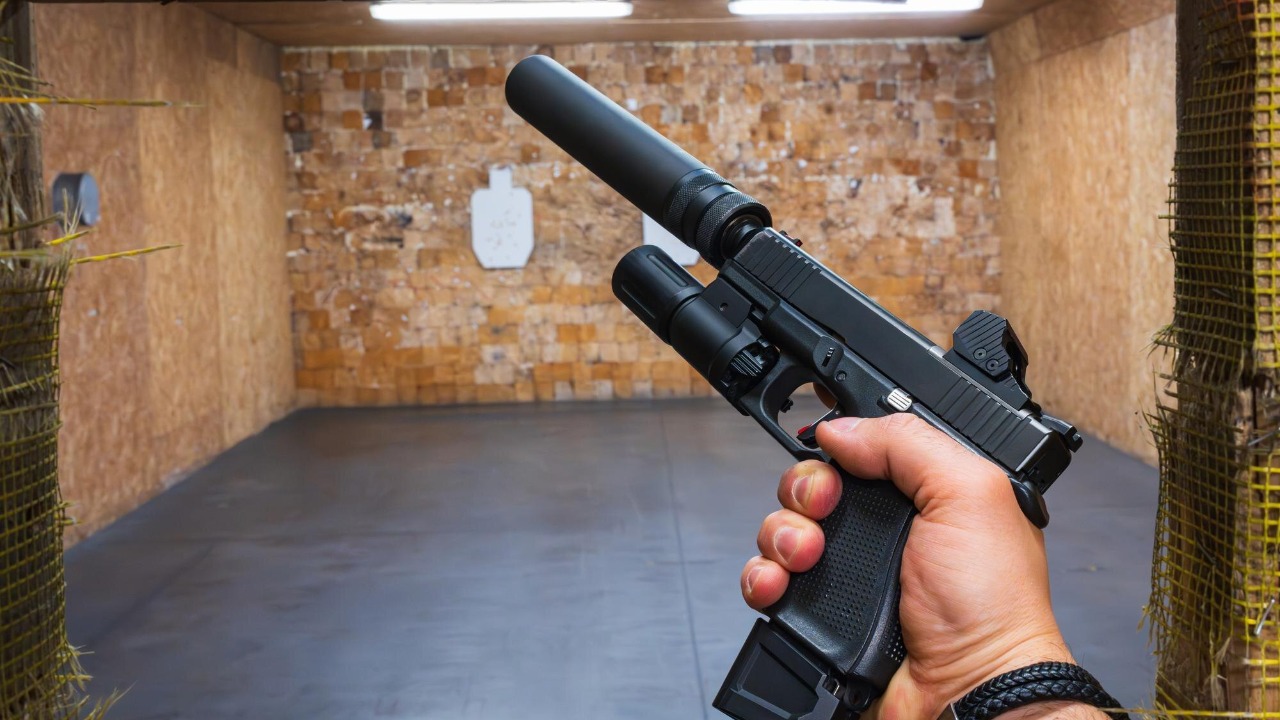
Modern shooters face a choice that feels deceptively simple: a glowing red dot or a pair of plain metal posts. In reality, that decision shapes how fast you see the target, how you handle stress, and how much you trust your gear when conditions turn ugly. The real question is not which system wins in the abstract, but when a red dot truly saves your shot and when traditional irons still deliver the cleaner result.
I have watched that balance shift on crowded indoor ranges, in low light classes, and on windy outdoor bays where gear gets punished. The pattern is clear. Red dots reward good fundamentals with speed and precision, while iron sights keep proving that simplicity, durability, and a trained eye can still carry the day.
Speed, alignment, and what your eye is really doing
When I compare the two systems, I start with what the eye has to process under pressure. With iron sights, the shooter must align the rear notch, the front blade, and the target in a straight line, which means juggling three focal planes at once. That cognitive load is exactly what advocates of optics try to remove, and it is why many instructors now describe simplifying alignment as the core advantage of a dot. A single illuminated point that you place on the target is easier for the brain to manage than a front post that must be centered and leveled every time.
That simplification pays off in speed. With a red dot, I can stay target focused, keep both eyes open, and let the optic project the aiming point into my field of view. Training material on red dot sights stresses that you no longer need to work as hard to align the sights, which is why many shooters see faster hits once they learn to present the gun consistently. Guidance on why red dot notes that target acquisition is typically quicker than with irons or magnified scopes, and that matches what I see when timers come out on the range.
Where red dots genuinely shine
Red dots are at their best when speed and situational awareness matter more than tiny groups. On carbines like an AR-15, they excel in close to medium range work where the shooter needs to move, see, and shoot without losing the bigger picture. Training guides point out that red dot sights in tactical scenarios and some competitive shooting, because they let you track targets and transitions without the tunnel vision that often comes with magnification. When I run a dot on a rifle in a dynamic course, I can keep both eyes open and still maintain a clear aiming reference.
The same logic is creeping onto pistols. On handguns, a dot can stretch your effective distance, especially once you understand how to manage the draw and find the window. Material on co-witness sights notes that red dot optics on pistols have earned a reputation for being well suited to longer distance work around 25 yards and beyond, where a crisp aiming point helps you call shots more precisely. A separate overview of how red dot sights highlights their clear illuminated point and faster target acquisition in varied lighting, which is exactly what I see when students move from bright bays into dim indoor lanes.
Why iron sights still win in harsh reality
For all that, iron sights keep a firm grip on real world credibility. They do not need power, they shrug off weather, and they rarely fail in ways that leave you helpless. Technical breakdowns of iron sights benefits stress that no batteries are required, which removes one entire category of failure that can plague electronics. A separate look at rifle systems notes that iron sights remain in service because they handle harsh weather and keep working without any external power source, and that durability is not theoretical when you are crawling through mud or working in freezing rain.
Longevity also matters. A well cut set of steel sights can last decades, while electronics have finite service lives and more points of failure. One training resource frames this bluntly, noting that both is better but that longevity and simplicity are major reasons to keep irons in the mix. Another comparison points out that there is no doubt an expert marksman with irons can still shoot extremely well, and that the lack of electronics means fewer things to break compared with the LED in a reflex sight. When I watch experienced shooters run battered duty pistols with stock irons, the lesson is simple. Skill and robust hardware still beat gadgets that are not maintained.
Learning curves, beginners, and the myth of instant speed
One of the most persistent myths I hear is that a red dot will instantly make a new shooter faster and more accurate. In practice, the learning curve is steeper than the marketing suggests. A detailed guide on iron sights and training for beginners notes that at 5 meters, aligning iron sights can be slower, but that does not mean a dot is automatically better if the shooter has not yet learned to present the gun consistently. The same source cautions that a dot does not fix poor fundamentals and that speed only appears once the draw and index are solid, a point reinforced where it states that not necessarily every beginner should start with optics.
Experienced voices echo that caution. One law enforcement veteran with 34 years of work on irons describes how difficult it can be to transition to a dot after building decades of muscle memory, and notes that adding an optic also adds multiple potential failure points. Another instructor who explains why they prefer red dot still emphasizes learning the basics with irons first, then moving to optics once the shooter can manage recoil, trigger control, and sight tracking. Even advocates of dots for duty and concealed carry tend to agree on this sequence. Fundamentals first, technology second.
Blending systems and choosing what saves your shot
In my own shooting, the most honest answer is that I want both tools available and I want to know when each one gives me the edge. On rifles, that often means running a dot with backup irons that can be flipped up if the optic fails. On pistols, it can mean a slide mounted optic with tall irons that co witness through the window. Training material on iron sights and systems stresses that both have roles and that the best choice depends on distance, lighting, and the shooter’s skill. Another overview of red dot versus notes that you can see a red aiming point in low light where irons might be hard to pick up, which is why many defensive shooters now favor dots for night work while still keeping irons as a fallback.
Real users also remind me that preference is personal. One concealed carrier described how, after shooting their pistol at the range with a dot installed, they decided to stick with irons for daily carry because they only saw a slight difference in accuracy and valued the slimmer profile. Other training resources on both eyes open shooting point out that low magnification optics can behave like red dots while still allowing rapid engagement, which further blurs the line between categories. When I weigh all of this, I come back to a simple rule. Let the mission decide the sighting system, use target focused dots when speed and low light dominate, and trust rugged irons when conditions are brutal and batteries are a liability.