
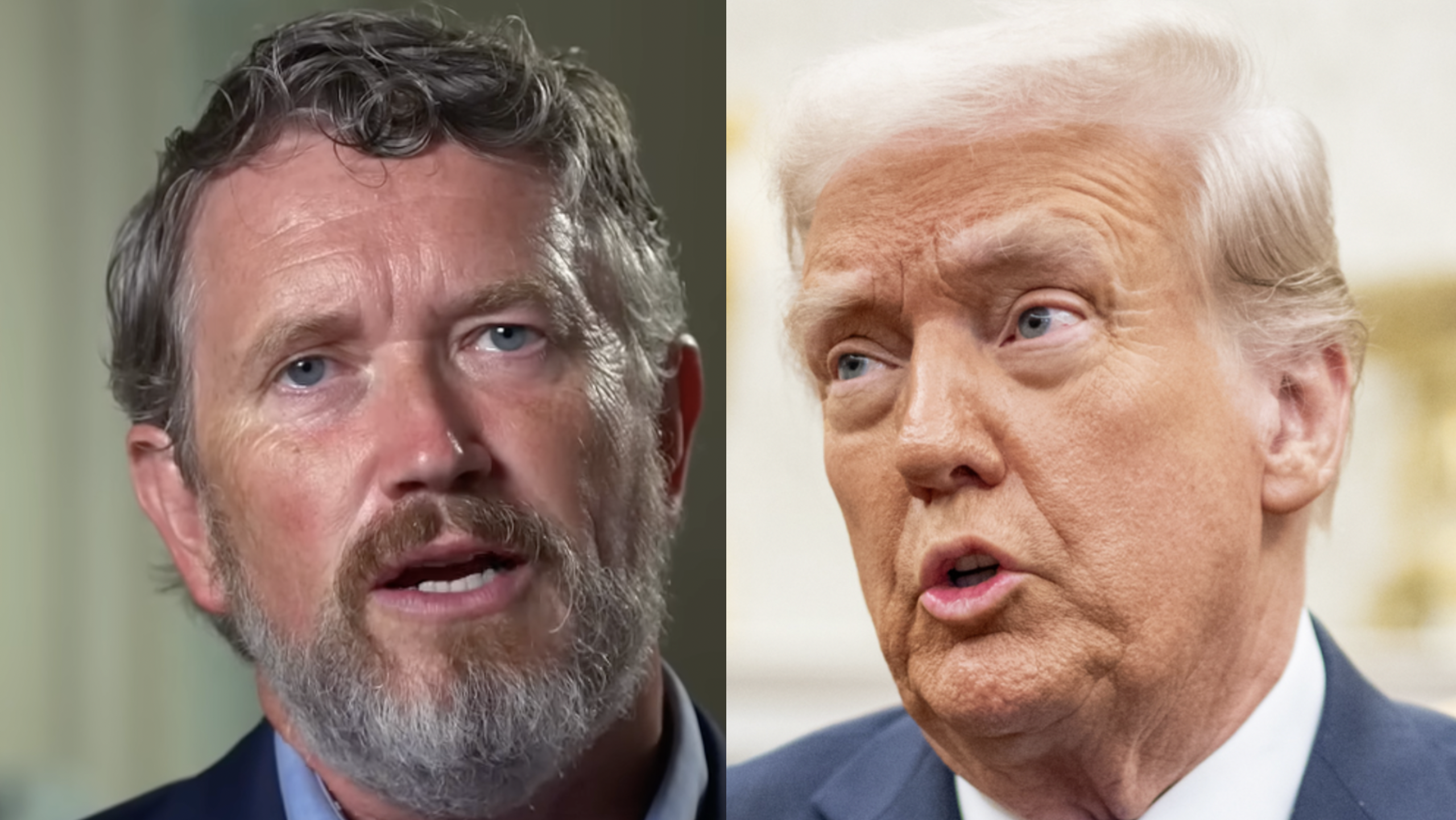
Republican Representative Thomas Massie of Kentucky used a single sentence on X Sunday morning to reopen one of his longest-running fights with the Trump administration, telling his followers that the renaming of the Pentagon should have been a warning of what was to come. The post landed the same weekend U.S. Central Command confirmed additional American service member deaths tied to the ongoing conflict with Iran, a war that has now stretched well past the timeline the administration originally suggested.
“We should have known what they were up to when they renamed it from the Department of Defense to the Department of War,” Massie wrote at 7:51 a.m. on July 19, 2026, in a post that offered no further elaboration.
The remark, brief as it was, carried the weight of a congressman who has spent the past year and a half warning against U.S. military entanglement in the Middle East, and who has repeatedly clashed with President Donald Trump and Defense Secretary Pete Hegseth over the direction of American war policy. Massie did not name either man in Sunday’s post, but the target was unmistakable to anyone who has followed his record on the issue.
The name change Massie referenced dates back to September 5, 2025, when Trump signed Executive Order 14347, titled “Restoring the United States Department of War.” The order authorized the Defense Department and its officials to adopt “Department of War,” “Secretary of War” and related titles as secondary designations in public communications, ceremonial contexts and non-statutory documents, while leaving the department’s legal name and statutory references to the Department of Defense unchanged. The order also directed Hegseth to submit a recommendation within 60 days on the legislative and executive steps required to make the renaming permanent.
In the text of the order, Trump invoked the department’s origins under President George Washington, who signed the original War Department into law on August 7, 1789. The order argued that the name “Department of War” better conveyed American “strength and resolve” than “Department of Defense,” and that it would “sharpen the Department’s focus on our own national interest and our adversaries’ focus on our willingness and availability to wage war.”
Trump made similar arguments in public remarks before signing the order, according to a Pentagon News account of the signing published the same day. He said the administration had “thought long and hard about” the change and had discussed it “for months,” and he argued that the United States won the two world wars under the War Department name but that outcomes turned into prolonged stalemates once the department became the Department of Defense.
Hegseth echoed that reasoning at the signing. “We changed the name after World War II from the Department of War to the Department of Defense and … we haven’t won a major war since,” he said, adding that the change was “not just about renaming, it’s about restoring; words matter.” Hegseth also told those present that the renamed department would pursue “maximum lethality, not tepid legality; violent effect, not politically correct.”
Massie’s Sunday post reframes that rationale as an admission rather than a rebranding. Where Trump and Hegseth described the name as a signal of deterrence, Massie’s post suggests the administration was previewing an appetite for war that Congress should have taken more seriously at the time.
The congressman’s skepticism toward the administration’s approach to Iran did not start Sunday. In June 2025, Massie and Democratic Representative Ro Khanna of California introduced a bipartisan War Powers Resolution intended to prohibit “United States Armed Forces from unauthorized hostilities in the Islamic Republic of Iran.” In a statement accompanying the resolution, Massie argued that “the Constitution does not permit the executive branch to unilaterally commit an act of war against a sovereign nation that hasn’t attacked the United States,” adding that “Congress has the sole power to declare war against Iran” and that “the ongoing war between Israel and Iran is not our war.”
Khanna, the resolution’s Democratic co-lead, said at the time that “no president should be able to bypass Congress’s constitutional authority over matters of war” and that “the American people do not want to be dragged into another disastrous conflict in the Middle East.” The resolution drew a list of progressive Democratic cosponsors, including Representatives Alexandria Ocasio-Cortez, Ilhan Omar and Rashida Tlaib, underscoring the unusual left-right coalition that has formed around opposition to expanded involvement in Iran.
Massie has continued to press the issue since. Records on his official House website show he has used his “Defense and National Security” issue page to track related legislation, including a December 2025 bill to remove the United States from NATO. Earlier this month, on July 15, 2026, Massie was the lone Republican in the House to support an amendment stripping $3.3 billion in proposed Israeli security assistance from a fiscal 2027 appropriations bill, a vote that split Democrats and failed 104 to 314.
Sunday’s post arrived alongside sobering news from the front lines of the conflict Massie has long warned against. In a public release dated July 19, 2026, U.S. Central Command said that two U.S. service members were confirmed dead and a third had been listed as missing in Jordan following an Iranian attack on July 17. CENTCOM said a search team recovered unidentified remains at the site and that an identification process was underway. The command is withholding the names of the fallen and missing “out of respect for the families during the notification process,” according to the release.
CENTCOM also disclosed a separate combat death in northern Iraq, where a U.S. service member was killed on July 18 during a controlled detonation of unexploded ordnance from a downed Iranian one-way attack drone. A second service member was wounded in the same incident and is receiving treatment for a minor injury, the command said.
The renewed casualties come as the conflict with Iran continues well beyond the duration initially suggested by the administration when hostilities began, a point that has fueled ongoing criticism from Massie and other war powers advocates in Congress. For a lawmaker who has spent more than a year arguing that Congress, not the executive branch, holds the constitutional authority to commit the country to war with Iran, the mounting American death toll has become the central evidence in his case.
Whether Sunday’s post signals a new legislative push from Massie remains to be seen. But it continues a pattern established since June 2025: tying the administration’s rhetorical choices, from the Pentagon’s rebranding to its early promises about the war’s length, back to the human cost documented in each new CENTCOM release.