
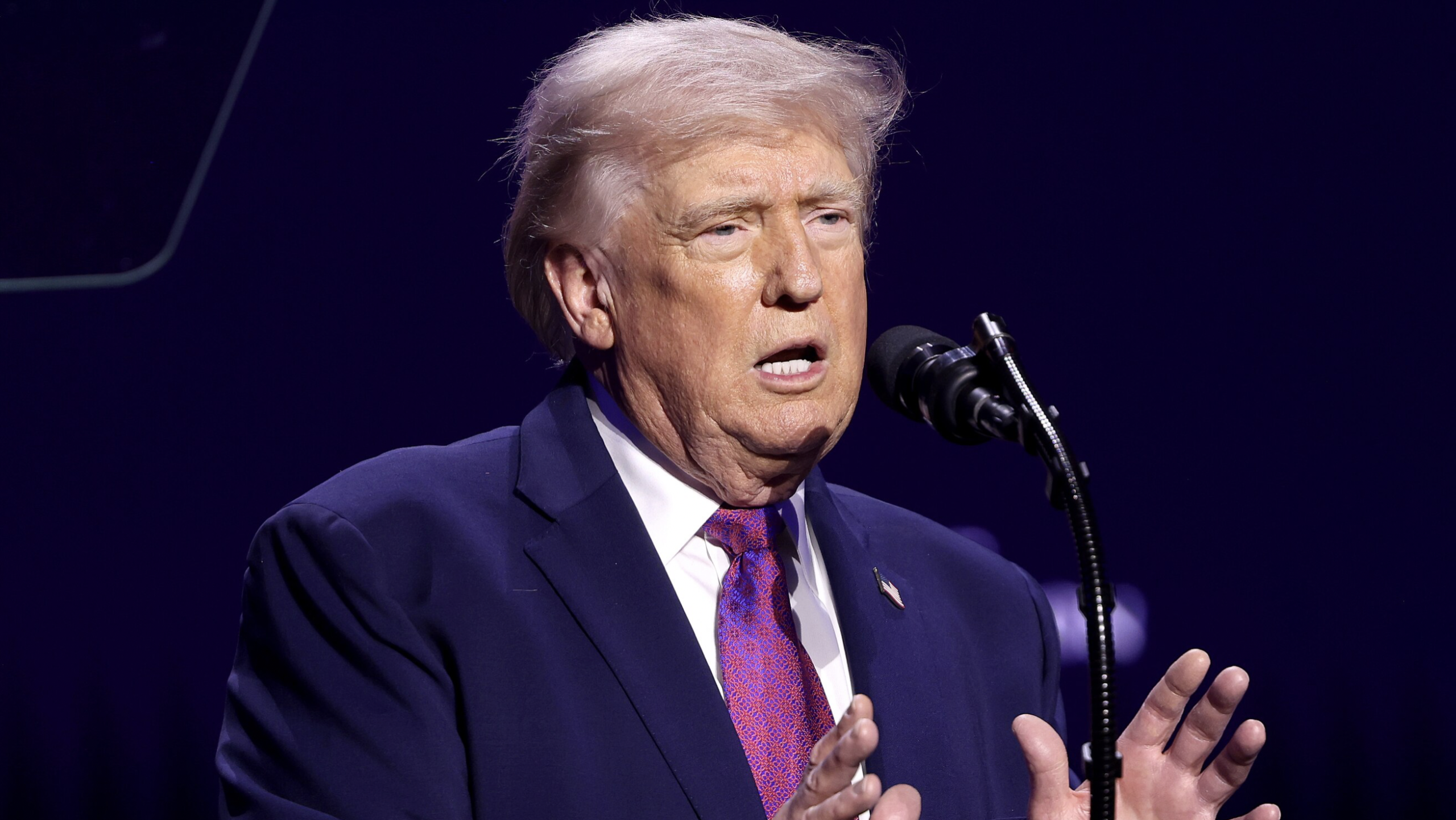
President Donald Trump signaled on Thursday, June 4, 2026, that Cuba would be the next target of his administration’s sweeping international agenda, saying he planned to address the island nation’s regime immediately after bringing the Iran conflict to a close — and that he intended to do it on the way back.
Trump made the remarks while speaking to reporters during a White House event announcing new support for domestic coal production. The conversation quickly expanded beyond energy policy, touching on the cascade of major military operations his administration has launched in rapid succession over the past several months. When a reporter asked whether Cuba was close to collapsing, the president did not hesitate.
“It sort of collapsed,” Trump said. “I like to do one thing at a time, and we’ll take care of the Islamic Republic of Iran. As soon as that’s done on our way back, we’ll just make a little brief stop. We want to help them out.”
A Season of Military Action
The context for Trump’s Cuba comments is an extraordinary stretch of international military operations that has reshaped the Western Hemisphere and the Middle East within the span of a few months. On January 3, 2026, Venezuelan dictator Nicolás Maduro and his wife Cilia Flores were taken into custody during Operation Absolute Resolve, a mission in which U.S. military personnel captured Maduro in Caracas and transferred him to the United States to stand trial. The Department of Justice had previously indicted Maduro in March 2020 for running a narco-terrorism partnership as leader of the Cartel de los Soles.
Less than two months later, the United States turned its attention eastward. On February 28, 2026, the United States Armed Forces launched Operation Epic Fury with a stated set of objectives: to destroy Iranian offensive missiles, eliminate Iranian missile production, neutralize Iran’s navy and other security infrastructure, and ensure that Iran would never possess nuclear weapons. In just the first ten days of the campaign, U.S. forces struck over 5,000 targets inside Iran. The majority of the regime’s offensive weapons were destroyed, and Iran’s ability to manufacture new ballistic missiles and long-range drones was severely degraded. Iran’s command and control structures were shattered by more than 2,000 strikes, triggering leadership losses, paralysis, and widespread military desertions.
Following the ceasefire that took hold after Operation Epic Fury, the administration launched Operation Project Freedom — a military escort operation for merchant vessels transiting the Strait of Hormuz in response to Iranian attacks on shipping. The operation was temporarily paused in early May as negotiations with Iran progressed, with Trump citing movement toward what he called a “complete and final agreement.”
Cuba: The Financial Lifeline Is Gone
With Venezuela subdued and Iran’s military crippled, Trump argued Thursday that Cuba now finds itself in a uniquely vulnerable position — stripped of the external support that had long propped up its government.
“Without Venezuela, Venezuela because it has such wealth in the ground, mostly in the ground, Venezuela took care of them for years,” Trump told reporters. “They were like the bodyguards. The country’s starving and it’s got no energy, no oil, no nothing. It’s got a beautiful piece of land.”
The president acknowledged that Cuba has long depended on oil and money flowing from Caracas, a pipeline he argued was now effectively severed. “Venezuela was giving them the money to survive,” he said, “and now the money is, I guess you could say, it’s coming to us and going to Venezuela.”
Promises to Cuban Americans
Trump’s comments about Cuba carried strong appeals to the Cuban American community, a voting bloc he has long courted and celebrated. He claimed 95 percent of Cuban Americans voted for him and pointed to their economic success in South Florida as evidence of what could be possible on the island itself.
“Some of the richest people in Miami are Cuban. They are unbelievable,” Trump said. “I’m going to take good care of them. I’m going to let them go back to their land. They have a lot of family over there. They’ve been treated very badly by Cuba.”
The president went further, framing a future Cuba not just as a foreign policy objective but as an economic opportunity. “We’re going to let our people go back and let them invest in Cuba if they would like,” he said. “We have some very good plans for Cuba.”
Regime Change on the Agenda
Trump made clear that any resolution of the Cuba situation would require the removal of its current government. “We have to get rid of the regime,” he said. “It was very tough, very nasty.”
The president expressed confidence that the Cuban people themselves were eager for U.S. involvement. “The people want us there so bad,” Trump said.
Cuban American Congressman Carlos A. Gimenez of Florida applauded Trump’s posture toward Cuba as far back as January, saying the Cuban American community stood with the president and that “the days of Communist dictatorships terrorizing their people and threatening our security are numbered.”
One Thing at a Time
What was perhaps most notable about Trump’s remarks was not just his intent toward Cuba, but the methodical way in which he framed it — as simply the next item on a sequential list of foreign policy tasks, to be addressed as soon as the current one is completed.
“I like to do one thing at a time,” Trump repeated, treating the potential toppling of a decades-old government as a matter of scheduling rather than strategy.
The president did not specify a timeline, nor did he detail what a U.S. operation in Cuba would look like. But the framing was consistent with how he had described the entire arc of his administration’s military activity — from Venezuela to Iran, and now onward toward Havana.
Whether those plans develop into a formal military operation, a continuation of maximum economic pressure, or something in between remains to be seen. But Trump, characteristically, left little doubt about the direction of travel. “You know what,” he said. “They want us to.”