
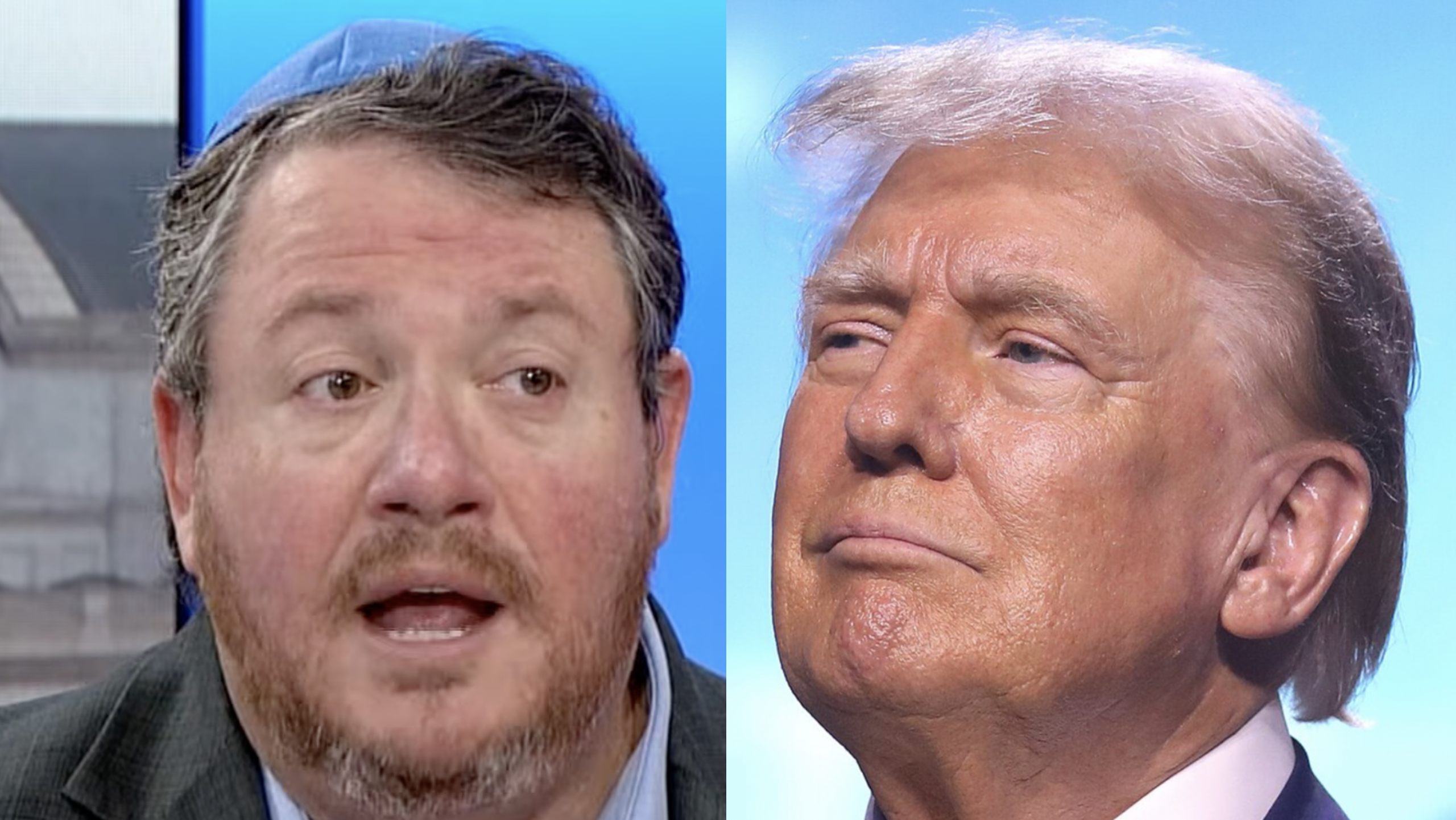
Rep. Randy Fine (R-FL), a member of the House Foreign Affairs Committee, offered a cautiously supportive but unflinching assessment of the U.S.-Iran ceasefire framework on Sunday, posting to social media and appearing on Newsmax to make clear that while he trusts President Trump to navigate the deal, he holds no illusions about Iran’s willingness to change course after nearly five decades of hostility toward the United States.
In a post to X on Sunday, June 21, Fine laid out the core tension he sees in the ongoing negotiations — acknowledging their complexity while placing his confidence squarely with the White House rather than with Tehran:
“The situation with Iran is very complicated. We are dealing with a Muslim terror regime that has spent 47 years chanting ‘Death to America’ and has American blood on its hands. To think that they’re going to turn a new leaf overnight is ridiculous. That said, I trust President Trump and Jared Kushner to get the job done for America.”
‘We Are Negotiating With Evil People’
Fine’s Sunday post followed a Newsmax interview on Saturday in which he made those views even more explicit. Appearing on “Saturday Report,” Fine acknowledged that the U.S.-Iran memorandum of understanding, signed June 17 in Islamabad, had produced at least one tangible result: the reopening of the Strait of Hormuz to commercial shipping traffic. However, he was direct about the nature of the adversary on the other side of the table.
“We have to keep in mind that we are negotiating with evil people, Muslim terrorists, that for 47 years have screamed death to America and have killed thousands of Americans,” Fine said on Newsmax. “And they’re not going to turn over a new leaf overnight.”
The interview aired amid conflicting signals from both sides. U.S. Central Command indicated that all American naval blockade enforcement had ceased, while an Islamic Revolutionary Guard Corps radio transmission warned commercial vessels against entering the strait. Iran’s Foreign Ministry subsequently said shipping was “currently underway” under the terms of the MOU, but Fine framed the dueling statements as entirely predictable from a regime he views as fundamentally untrustworthy.
The MOU and the Strait of Hormuz
The Islamabad Memorandum of Understanding between the United States and Iran, signed June 17, established an immediate and permanent cessation of military operations across all fronts — including Lebanon — and set a 60-day window for negotiating a final deal. The White House officially transmitted the full 14-point MOU text to Congress on Thursday, June 18. Among its terms, the MOU required Iran to reopen the Strait of Hormuz to commercial traffic and the United States to begin lifting its naval blockade, with full removal of naval forces from the region to follow within 30 days of a final deal. The agreement also committed the United States to developing a reconstruction and economic development plan worth at least $300 billion for Iran, and to terminating all U.S. and UN sanctions on an agreed schedule. Iran, for its part, reaffirmed that it would not procure or develop nuclear weapons and agreed to maintain the current status quo of its nuclear program during the 60-day negotiating period.
Fine called the Strait’s reopening the one concrete achievement of the MOU so far. “But what I will say is this: the MOU really accomplished one thing: it reopened the Strait of Hormuz and allows Iranians to sell their oil, which will actually lower prices around the world,” he said.
Oil Markets and the Iran Sanctions Question
Vice President JD Vance had said earlier in the week that more than 12.5 million barrels of oil moved through the strait in a single overnight period — the highest volume since the conflict began in late February. Fine, citing Vance’s figure, placed the number at “16 million barrels.” Vance also confirmed that U.S. naval forces had allowed more than a dozen ships to transit to Iranian ports.
When pressed on whether Iran should be receiving any oil revenue at all under the arrangement, Fine pushed back on the premise. “Iran was selling oil prior to the conflict beginning,” he said. “One of the things is we had sanctioned the oil, but they were still selling it to China and other countries. So it’s not as though after 47 years, they’re now able to sell oil.” He argued that restoring Iranian crude to the global market benefits the United States as much as Iran by increasing overall supply. “What they are able to do is they’re able to sell their oil on the world market, which benefits them a little bit, but it also benefits the United States because it means the global supply of oil is greater because the Iranian oil is included,” he said.
Iran ‘Destroyed’ — But Hezbollah Risk Remains
Despite his skepticism toward Tehran’s intentions, Fine painted a picture of Iran as a nation severely diminished by months of conflict. “Their country was destroyed over the last few months; it’s estimated $1 trillion worth of damage. Their currency is in free fall. Their people are in trouble,” he said in the Newsmax interview.
Pressed on whether Iran could redirect newly earned oil revenues toward Hezbollah, Fine acknowledged the possibility but dismissed its significance. “Could they take some of that money and divert it to Hezbollah? Sure. But what’s clear is that Hezbollah already has money and is acting, and stopping that isn’t affecting them in any way, shape or form,” he said. House Foreign Affairs Committee Chairman Brian Mast echoed a similar sentiment in a statement on June 18, writing that President Trump had “earned the deference” of Congress through the military campaign that leveled Iran’s nuclear sites, destroyed its Navy, and eliminated its top military and scientific leadership.
Fine’s Stance Throughout the Conflict
Fine’s posture toward Iran has been consistent and unambiguous since well before the MOU. In a post to X earlier in the war, Fine wrote: “When the Iranian regime chants ‘Death to America,’ we should take them at their word. They’re building weapons as we speak to destroy the WEST. It’s time for President Trump to END this terrorist regime for good. America and the world would be a much safer place with a free Iran.” The Florida congressman has also been personally targeted by the conflict — in early April, he publicly disclosed that the House Office of Cyber Security and Capitol Police had determined that Iran’s Islamic Revolutionary Guard Corps was likely behind a cyberattack operation targeting his staff, with a suspected IRGC operative posing as a reporter and sending what security officials believed was a geolocation tracking link designed to identify Fine’s physical whereabouts. “I was clearly targeted. It wasn’t random,” Fine said in a statement at the time. “And with the recent cyberattack on the FBI, I will not be intimidated or back down. Iran and its terror proxies continue to threaten Americans and those who serve this country.”
Trusting Trump, Not Tehran
Fine also broke with Vice President Vance on a separate front earlier in the week, calling Vance’s warning to Israel over its military actions against Hezbollah “absolutely inappropriate and frankly disgusting” in an appearance on Real America’s Voice on Friday. Vance had told reporters that the administration had grown frustrated with major explosions in Beirut derailing progress toward a comprehensive ceasefire — a comment Fine felt crossed a line regarding America’s closest ally in the region.
Through all of it, Fine’s bottom line has remained fixed. “So I think continuing the discussions and trusting President Trump is a good thing,” he said on Newsmax Saturday. “And we’ll see what happens. I’m not super optimistic, not because I don’t trust President Trump, but because I don’t trust the Iranians.”