
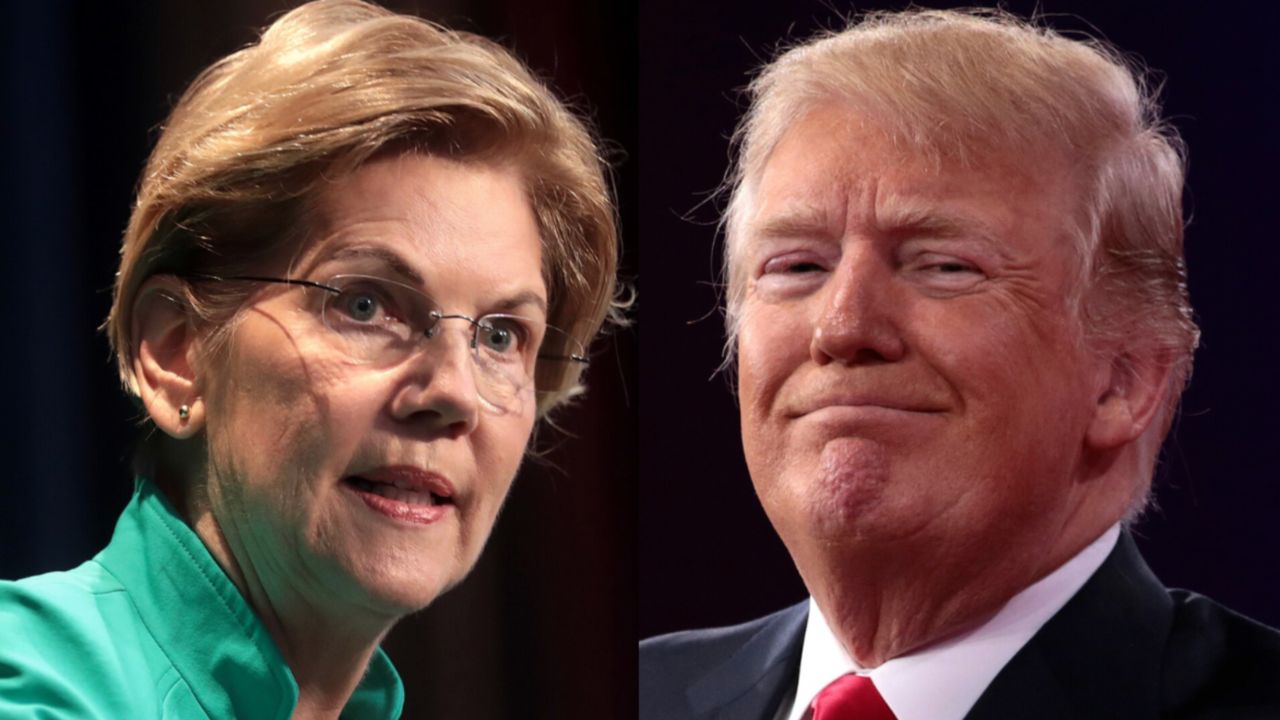
Senator Elizabeth Warren said Thursday that President Donald Trump had moved the end of the Iran war from a week to a month and then to a claim of complete control of the Strait of Hormuz, and that his statements were tied to convenience rather than facts. The White House has published Trump’s assertions that the U.S. Navy controls the strait. It has not posted the week-or-month timeline she cited.
“Trump said the war would be over within a week. Then a month. Then we had complete control of the Strait of Hormuz,” Warren, a Massachusetts Democrat, wrote in a post on X. “Trump says whatever is convenient. It’s not tied to reality. It’s not tied to facts. It’s tied to whatever is going on in Donald Trump’s head.”
The operation the administration calls Epic Fury was underway by early March. A March 12 White House release said the objectives had been unchanged since the operation began: destroy Iran’s missile capability and its capacity to build more, annihilate its navy, prevent it from obtaining a nuclear weapon, and stop it from arming forces outside its borders. Press secretary Karoline Leavitt said on March 4 that those aims were laid out “at the beginning of Operation Epic Fury, launched last weekend.”
That release does not say the war would end in a week or a month. It quotes Trump on March 2: “Our objectives are clear. First, we’re destroying Iran’s missile capabilities… Second, we’re annihilating their navy… Third, we’re ensuring that the world’s number one sponsor of terror can never obtain a nuclear weapon.” Secretary of War Pete Hegseth said on March 10 that the objectives were to destroy missile stockpiles and the industry that makes them, destroy the navy, and “permanently deny Iran nuclear weapons forever.”
On the strait, a Aug. 28 White House release said U.S. Central Command had confirmed that the United States, not Iran, controls the Strait of Hormuz. It quoted Trump on Aug. 10: “The only one that has control of the Strait of Hormuz right now is the United States Navy. We have a blockade that’s been infallible. It’s a steel wall… We control the Strait, 100%.” On Aug. 11 he said, “We totally control the Strait of Hormuz.” On Aug. 14: “In the true sense, we own the Hormuz Strait.”
The same release said Iran had exported no oil from its shores since the blockade resumed in July, that 75 vessels that tried to break the blockade were turned around, and that Gulf oil exports had recovered to two-thirds of pre-operation levels. It quoted Trump on Aug. 19 and Aug. 26 saying the strait was open and that oil was moving through it.
Hegseth described the same operation as a blockade in an Aug. 13 press availability aboard the USS Gridley. “The United States of America, the US Navy ships like this one out there enforcing an ironclad blockade,” he said, according to the Department of War transcript. “We can hold it as long as we need to. Indefinitely.” He said Iran “can’t get in and out on this blockade.”
The war was still underway in October. At a rally in Grand Island, Nebraska, on Oct. 5, Trump said it was “essentially almost over with” but would “end very soon, and it’s going to end one way or the other,” and that the Navy was moving more oil through the strait than before the war. In a Sept. 30 State of the Force address, Hegseth said U.S. forces had “destroyed Iran’s Navy, destroyed Iran’s Air Force,” and “crippled” its conventional shield, according to the department transcript.
A July 30 Statement of Administration Policy said the president ordered a ceasefire on April 7, that the United States and Iran signed a memorandum of understanding on June 17, and that Iran attacked neutral-flagged commercial ships in the strait on July 6 and 7. It said U.S. forces began strikes inside Iran on July 7, and described those operations as separate from earlier ones.
Warren’s post treats the week, the month, and the claim of complete control as a sequence of shifting assurances. The official record posted by the White House documents the control claims and the March objectives. It does not document a presidential statement that the war would be over within a week, or within a month.