
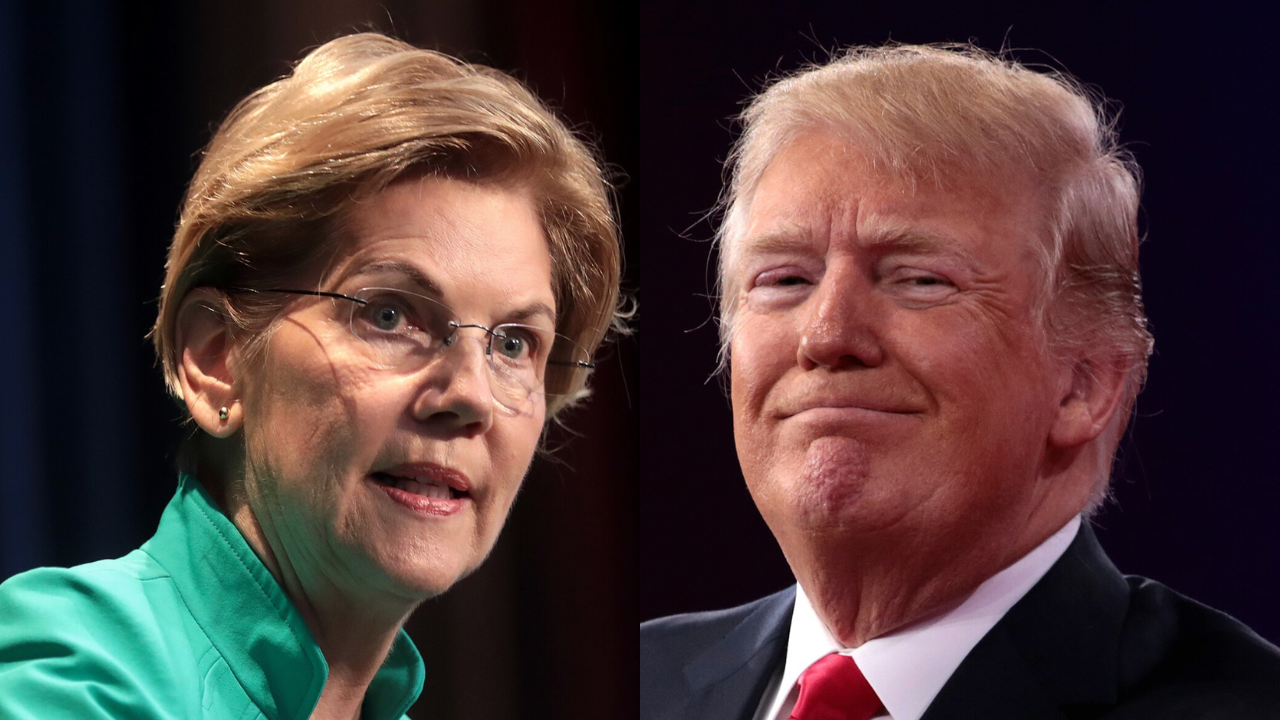
Sen. Elizabeth Warren laid out a three-step case Monday tying oil industry campaign spending to war profits and consumer pain. “Trump math: Oil companies invested $5 million in his inauguration. Then they saw $23 billion in excess war profits. And you got a gas bill that was $857 higher than last year,” Warren wrote on X.
Where the $5 Million Figure Comes From
Warren’s inauguration figure appears to reference a specific subset of major public oil companies’ donations rather than the fossil fuel industry’s full total. According to an analysis by Global Witness, which reviewed itemized Federal Election Commission data, Chevron gave the largest single oil-company donation to Trump’s inaugural committee at $2 million, while ExxonMobil, ConocoPhillips, and Occidental Petroleum each gave $1 million — a combined $5 million from those four companies alone. Global Witness’s broader analysis found the full fossil fuel industry, including individual executives and smaller donors, contributed more than $19.15 million total, or roughly 7.8 percent of the record $245 million the inaugural fund raised.
Where the $23 Billion War-Profits Figure Comes From
Warren’s second figure traces to an Oxfam International analysis released ahead of the June G7 summit. According to Oxfam’s own published research, 41 G7 energy billionaires increased their collective wealth by $23.5 billion in the roughly 12 weeks after the U.S. and Israel’s war against Iran began in late February — equivalent to about $301 million per day, or roughly $1,000 gained in the time it takes to blink. The same analysis found the world’s six largest oil companies were on track to see 2026 profits rise 80 percent above pre-war forecasts, reaching a projected $152 billion for the year.
What the Underlying Corporate Earnings Actually Showed
The Oxfam wealth figures are corroborated by the companies’ own reported results. According to an official press release from Warren’s Senate office, co-issued with Sen. Sheldon Whitehouse in June, oil and gas companies collectively booked more than $40 billion in profit in the first quarter of 2026 alone, following Iran’s closure of the Strait of Hormuz and the resulting drop in global oil supply. The senators wrote that at $100 a barrel, total industry windfall profits could reach $234 billion by the end of the year.
Trump’s Own Words on the Profit Dynamic
The same Warren-Whitehouse release documented Trump’s own public framing of the relationship between the war and oil company profits. As gas prices rose following the Iran strikes, Trump said: “The United States is the largest Oil Producer in the World, by far, so when oil prices go up, we make a lot of money.” Asked about the toll on American families, Trump said separately, according to the same release: “I don’t think about Americans’ financial situation.”
Where the $857 Gas-Bill Figure Fits In
Warren’s third figure — an estimated $857 in additional gas costs for the average household compared with the prior year — is consistent with the gas price data cited in her own office’s June release, which put the national average at $4.16 a gallon, up from $2.98 before the war began, a roughly 40 percent increase. That release noted the ripple effects extended beyond gasoline itself: “Higher fuel costs also ripple into higher grocery, utility, aviation, and other prices across the broader economy.”
The Companies Warren and Whitehouse Formally Pressed
Beyond the public statement, the June release detailed a formal oversight effort. Warren and Whitehouse sent letters to ExxonMobil, Chevron, Shell USA, bp America, ConocoPhillips, Occidental Petroleum, and Continental Resources, calling on the companies to disclose their windfall profits and pricing decisions, along with any involvement in what the senators described as a 2024 quid pro quo arrangement with the Trump campaign and any communications with the administration regarding the Iran war.
The 2024 Fundraising Request Warren Cited
The senators’ letter connected the current profits to a specific solicitation Trump made before taking office. According to the same release, in April 2024 then-candidate Trump asked fossil fuel executives at a private Mar-a-Lago dinner to raise $1 billion for his campaign, in exchange for promises to roll back environmental regulations, issue permits, and expand drilling opportunities — a episode Warren’s office has cited repeatedly as evidence of a direct financial relationship between industry support and subsequent policy benefits.
A Related Benefit Beyond Iran
The same release noted that oil companies gained from a separate administration action as well. Following the U.S. military’s capture of Venezuelan leader Nicolás Maduro earlier in the year, Chevron significantly expanded its oil operations in the country — a development the senators cited as a second example of oil-sector gains flowing from administration military and foreign policy decisions, distinct from the Iran-specific windfall Warren’s Monday post focused on.
Warren’s Consistent Framing Throughout 2026
Monday’s post continues a “Trump math” framing Warren has used repeatedly since the war began, tying campaign contributions to policy outcomes to consumer costs. Her office’s own release described the pattern directly: “The pattern is consistent: while Americans suffer from high prices and the Iran War imposes tens of billions of dollars of new costs on the American public, the oil industry wins big.”
Effects Reaching Beyond the Oil Industry Itself
Oxfam’s analysis also found the war’s price effects rippling into adjacent industries. The same research projected that three of the world’s largest fertilizer companies would see profits rise 23 percent above pre-war expectations, or roughly $928 million — a detail that connects to broader reporting elsewhere on rising fertilizer costs for American farmers during the same period, suggesting the war’s profit windfall for commodity-linked industries has extended beyond oil and gas producers alone.
Where This Leaves Things
As of Warren’s Monday post, none of the seven oil companies she and Whitehouse had formally written to had publicly released the specific windfall-profit and pricing data the senators requested, and gas prices remained substantially elevated compared with pre-war levels. Warren’s three-step “Trump math” sequence — industry donations, war-driven profits, and consumer costs — rests on figures independently documented by Global Witness, Oxfam, and the companies’ own reported earnings, though the causal chain connecting the $5 million in inauguration donations directly to the war’s specific profit outcomes remains her own political interpretation rather than a claim any of the cited sources make explicitly.