
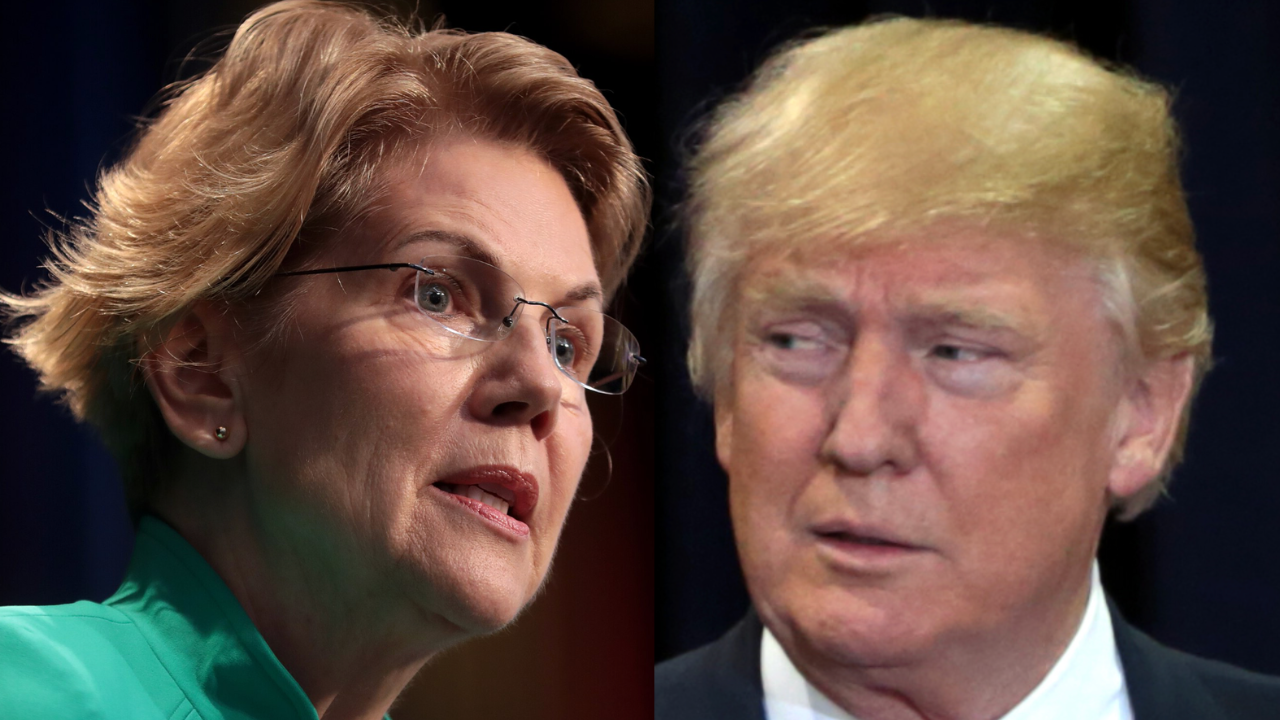
WASHINGTON — Sen. Elizabeth Warren (D-Mass.) delivered a sweeping indictment of the Trump administration’s Iran policy on June 18, 2026, saying the war was “the dumbest foreign policy decision in a generation” and that the memorandum of understanding reached to end it amounted to worse terms than the agreement Trump abandoned at the start of his first term. “President Trump should have never dragged the United States into war with Iran in the first place, and the American people have paid the price,” Warren wrote on X. “Fourteen brave servicemembers were killed and hundreds more have been injured, families have suffered higher gas and grocery bills, and countless innocent civilians, including children at an Iranian school for girls, were killed.”
Warren said she was glad the conflict had halted as a result of negotiations but added that “no one in the Trump administration or his Republican enablers in Congress — who repeatedly voted to continue military action — can explain how people in Massachusetts and across our nation are safer or better off because of the war.” She concluded by saying the burden was now on the administration to brief Congress on the deal’s details, explain its sanctions approach, and “ensure we end this destructive and costly war.”
Warren’s Position Throughout the Conflict
Warren has been one of the most vocal critics of the Iran war since its outset. In a Senate floor speech on March 3, 2026, just days after Operation Epic Fury began, Warren called it “a reckless, illegal war with Iran — a war based on lies, launched with no imminent threat to our nation.” She called on Congress to pass the bipartisan War Powers Resolution introduced by Sens. Tim Kaine (D-Va.) and Rand Paul (R-Ky.) and demanded a full investigation into the bombing of a girls’ elementary school in southern Iran on the first day of U.S. operations. “I am angry at what this administration is doing,” Warren said at the time, “and I will keep fighting for an end to this war.”
Warren was also among the senators who signed a bipartisan letter requesting the Senate Armed Services Committee investigate the school strike. That letter, led by Sen. Raphael Warnock (D-Ga.), asked the committee to launch a formal investigation culminating in a public hearing, citing Secretary of Defense Pete Hegseth’s statement that Operation Epic Fury would have “no stupid rules of engagement” and his call to show “no quarter, no mercy for our enemies.”
The Girls’ School Strike
The civilian incident Warren referenced in her post was the February 28, 2026, strike on the Shajareh Tayyebeh girls’ elementary school in Minab, in Iran’s Hormozgan province, during the opening hours of Operation Epic Fury. United Nations human rights experts said the strike killed at least 165 schoolgirls and injured many others, calling it “a grave assault on children, on education, and on the future of an entire community.” The UN called for an independent investigation.
Human Rights Watch, after analyzing 14 videos, photographs, and satellite imagery from the site, called the February 28 attack an unlawful strike and said the laws of war prohibit attacks where anticipated harm to civilians is disproportionate to expected military gain. A bipartisan group of senators cited a death toll of at least 175 at the school, most of them children, in their letter requesting a congressional investigation. The U.S. and Israel both sought to distance themselves from the strike; independent analysis cited in multiple Senate statements credibly suggested U.S. forces were responsible.
The Human Cost of the War
Warren cited 14 U.S. service members killed in the conflict — one more than the figure of 13 cited by several other Democratic colleagues in earlier statements. Time magazine reported that more than 1,000 civilians were killed in the first five days of U.S.-Israeli bombing alone, including at least 181 children under the age of 18. The Pentagon confirmed at least 381 U.S. service members were wounded during the 40-day major combat phase of the conflict. Iran responded to the opening strikes by launching thousands of missiles and drones at U.S. bases and allied targets across the Middle East, including attacks that killed several U.S. service members in Kuwait and elsewhere.
The Strait of Hormuz closure by Iran during the conflict disrupted global oil supplies and was cited by economic analysts as a primary driver of the spike in fuel and consumer prices that Warren referenced. The White House had said the threat of resumed bombing would keep Iran from closing the strait again under the terms of the memorandum.
Warren’s Critique of the Deal Itself
Warren’s central critique went beyond the conduct of the war to the terms of its resolution. “Trump’s war is a failure by his administration’s own metrics,” she wrote. “Iran is now a more extreme regime with greater leverage over the Strait of Hormuz.” She argued that the only way to prevent Iran from acquiring a nuclear weapon was through a diplomatic agreement — precisely what Trump dismantled when he withdrew from the 2015 Joint Comprehensive Plan of Action during his first term. “Trump ripped up [that agreement], went to war instead, and then negotiated worse terms,” she wrote.
The JCPOA, signed in 2015 by the U.S., China, France, Germany, Russia, the United Kingdom, and the European Union, required Iran to reduce its uranium enrichment capacity significantly and submit to rigorous international inspections in exchange for sanctions relief. Trump withdrew the U.S. from the deal in May 2018. The new memorandum of understanding does not bar Iran from enriching uranium, deferring nuclear questions to a 60-day follow-on negotiation. Critics from both parties have noted that the interim deal allows Iran to “maintain the current status quo of its nuclear program” during the negotiating window.
Congressional Backdrop
Warren’s statement also pointed to the repeated failure of war powers votes in the Senate, where Republican majorities blocked every Democratic-led effort to invoke the War Powers Act and force an end to the conflict. The House passed a war powers resolution 215-208 in early June, with four Republicans joining Democrats, but Senate Republicans voted it down for the ninth time the same week Warren posted her statement. Trump had indicated he would veto any such resolution if it reached his desk.
The memorandum of understanding was signed electronically and a formal signing ceremony was scheduled for Switzerland on June 19. The full text of the agreement had not been released publicly as of Warren’s post, though senior U.S. officials read its 14 points aloud to reporters in a briefing session the previous day. Warren called on the administration to make the full terms available to Congress and the public and to explain the administration’s approach to sanctions relief under the deal.