
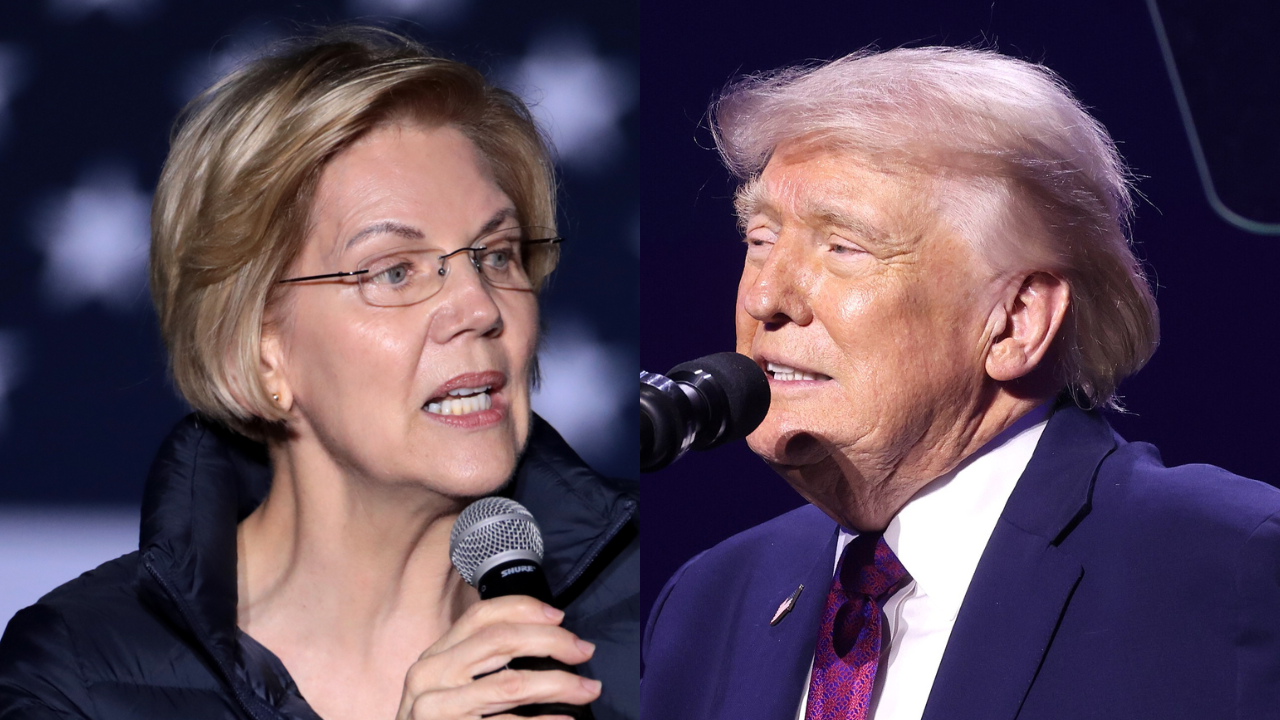
Senate Republicans on the Finance Committee on Thursday blocked a Democratic effort to unwind President Donald Trump’s IRS audit-immunity deal, prompting Senator Elizabeth Warren (D-Mass.) to accuse the GOP of rubber-stamping what she called “corruption on steroids” in a pointed post on X.
“BREAKING: Senate Republicans blocked Democrats’ proposal to end Donald Trump’s IRS sweetheart deal. This deal gives him FULL IMMUNITY from audits on tax returns he’s filed. It’s corruption on steroids,” Warren wrote in the 3:28 p.m. post on Thursday, July 30, 2026.
The vote, taken along party lines by the Senate Finance Committee, killed a Democratic amendment to a tax-administration bill that would have barred the Trump administration from implementing the audit-immunity plan. The amendment failed 14-13, with every Republican on the panel voting to preserve the deal. Sen. John Cornyn (R-Texas), who has been among the most vocal Republican critics of the arrangement, ultimately sided with his party against the Democratic proposal to kill it outright.
Finance Committee Chair Mike Crapo (R-Idaho) defended the decision to keep the immunity fight out of the broader legislation, warning colleagues that attaching the Democratic amendment would likely doom the underlying bill. “This is not the place,” Crapo told the panel, adding that turning the measure into “the vehicle where this issue is resolved” would make it “a partisan bill” with “a much dimmer future for becoming law.”
After Democrats’ effort to strip the immunity provision failed, the underlying tax-administration bill — which contains more than 60 largely uncontroversial provisions aimed at streamlining IRS operations — passed the committee 26-1. Warren was the lone senator to vote against the full package. “No other taxpayer, ever, has gotten this kind of a deal,” she said. “I cannot support a bill that rubber stamps Donald Trump’s corruption. Congress needs to stand up and put a stop to it.”
The audit-immunity arrangement at the center of Thursday’s fight traces back to January 2026, when Trump, his sons Eric Trump and Donald Trump Jr., and the Trump Organization sued the Treasury Department and the IRS for $10 billion over the leak of the president’s tax information by a contractor during his first term. The lawsuit put Trump in the extraordinary position of serving as plaintiff against the very federal agencies he oversees as president.
In May 2026, the administration announced it had reached a settlement in that case: Trump would drop the lawsuit in exchange for the IRS shielding him and his family from future audits. Just one day after the settlement was unveiled, the Justice Department issued an addendum instructing the IRS to permanently drop all pending audits or other enforcement actions involving Trump, his family, his businesses, and unspecified “related or affiliated individuals” — a term Democrats say was left deliberately vague.
Warren and Senate Finance Committee Ranking Member Ron Wyden (D-Ore.) responded almost immediately, calling the arrangement “outrageously corrupt” and pressing the IRS’s independent watchdog to open an investigation. In a letter to regulators, the two senators wrote that the settlement was “an astonishing abuse of presidential power and a corrupt giveaway of an unknown amount of taxpayer funds to the President,” adding there was “no conceivable rationale for this immunity agreement other than to personally enrich the President and his family by allowing them to get away with underpaying their taxes or violating tax law.”
Warren and Wyden also argued the deal was likely illegal on its face, noting the Justice Department lacks authority to terminate audits unrelated to the case that had actually been referred to it, and that federal law separately bars the president and the Treasury secretary from directly or indirectly ordering the IRS to end an ongoing audit. Their May press release noted the settlement had also created what they described as a $1.8 billion taxpayer-funded slush fund benefiting Trump allies.
That legal argument gained traction weeks later when a federal judge ruled that the Acting Attorney General’s order implementing the immunity deal “directly contravenes” federal law. According to Warren and Wyden, the judge found the May 19 order violated 26 U.S.C. § 7217, the statute that prohibits the president and certain executive branch officials from interfering with IRS audits and investigations. Following that ruling, the two senators sent a follow-up letter to Treasury Secretary Scott Bessent and IRS Chief Executive Officer Frank Bisignano demanding the administration cease implementation of the order, writing that “the sole purpose of this order appears to have been to corruptly shield the President and his family from accountability for potential violations of federal law.”
Warren has not limited her scrutiny to Trump personally. Alongside Senate Minority Leader Chuck Schumer (D-N.Y.) and Wyden, she launched an investigation into whether companies with ties to the Trump family — including the Trump Organization, World Liberty Financial, American Bitcoin, Kalshi, Polymarket, and Trump Media and Technology Group, among others — had also secured protection from audits, civil penalties, or federal prosecution under the settlement’s broad “affiliated” party language. The senators sent letters to eleven companies seeking clarity on their relationship to the deal.
The responses, which Warren’s office released publicly, split sharply. Six companies — Trump Media and Technology Group, Polymarket, Kalshi, American Bitcoin, Powerus, and Kaz Resources — told the senators they had not been involved in or granted immunity under the order. Five others with closer family ties to the president, including the Trump Organization, World Liberty Financial, and 1789 Capital, did not respond at all. “Several Trump-tied companies failed to respond to our basic questions about this corrupt agreement, raising real concerns that they plan to use it as a get-out-of-jail-free card,” Warren said. “Americans deserve answers and accountability now.”
Warren’s fight against the IRS deal has run parallel to a broader legislative push. In April 2026, before the settlement was even announced, Warren and Schumer joined Representatives Jamie Raskin (D-Md.) and Dave Min (D-Calif.) to introduce the Ban Presidential Plunder of Taxpayer Funds Act, legislation intended to prevent presidents and vice presidents from using their power to divert taxpayer funds for personal benefit. Warren has described the current arrangement as effectively making it “official United States government policy that President Trump, his family, and many other allies are above the law.”
Thursday’s committee fight also intersected with an unrelated but consequential confirmation battle. Cornyn, who sits on both the Finance and Judiciary committees, has pushed the administration to narrow the immunity deal — limiting it strictly to the parties named in Trump’s original lawsuit and to tax returns already filed, rather than any future filings. Cornyn has said Acting Attorney General Todd Blanche agreed to those terms verbally during his confirmation hearing earlier this month but has yet to put the commitment in writing, prompting the Judiciary Committee to postpone a scheduled vote on Blanche’s nomination to the permanent role while negotiations continue.
Sen. Thom Tillis (R-N.C.), another Finance Committee Republican who has voiced concerns about the immunity plan, said Thursday he believes the administration is negotiating “in good faith” to address the objections raised by himself and Cornyn. Even so, both Republicans ultimately voted with their party to block the Democratic amendment, leaving the immunity deal intact for now as the broader tax-administration bill heads toward a possible vote during Congress’s lame-duck session.
For Warren, Thursday’s vote was the latest setback in a monthslong campaign to force transparency around the settlement and, ultimately, to reverse it. Her Thursday post amplified a message she and her Democratic colleagues have pressed since May: that a sitting president who sued his own tax-collecting agency and emerged with blanket audit protection represents an unprecedented benefit no ordinary American could obtain. With the Finance Committee’s party-line vote, that protection remains in place, and Warren has signaled she intends to keep pressing the issue as the tax bill moves toward the full Senate.