
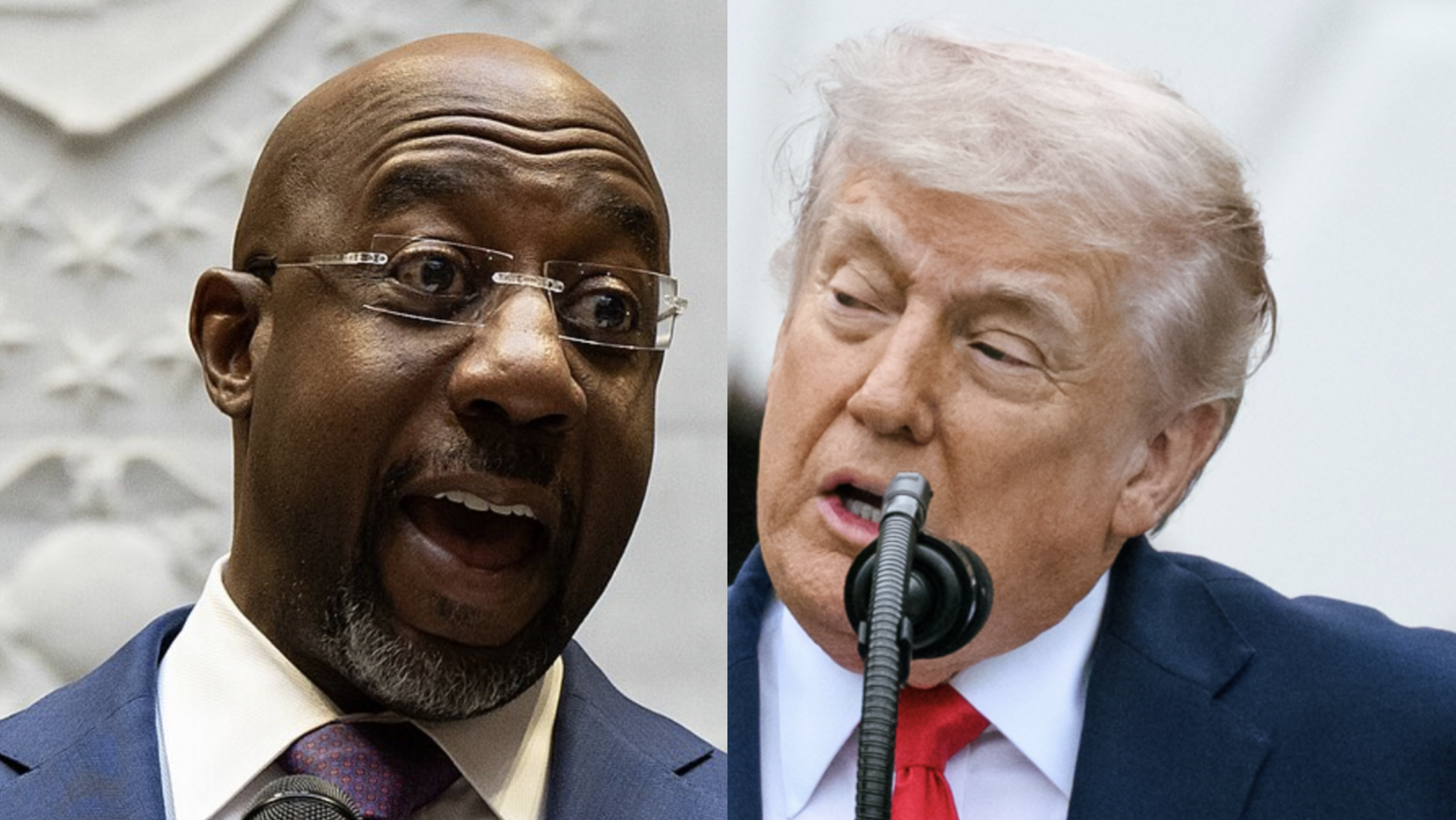
U.S. Senator Raphael Warnock, D-Ga., said Thursday he had just cast a vote to end President Donald Trump’s war in Iran, describing the five-month conflict as a “reckless and illegal war” that “has left us worse off” and calling it “a failure of leadership to the highest degree.” The statement, posted to X shortly after 3 p.m. on July 30, 2026, came as the Senate once again rejected an effort to force Trump to withdraw U.S. forces from hostilities against Iran, marking the 13th time the chamber has voted on the matter since the war began.
Warnock’s post read in full: “I just voted to end President Trump’s war in Iran. This reckless and illegal war has left us worse off. It has been a failure of leadership to the highest degree.”
The vote Warnock referenced was a motion to discharge a war powers resolution, sponsored by Sen. Kirsten Gillibrand, D-N.Y., from the Senate Foreign Relations Committee. The measure would have directed Trump to remove U.S. Armed Forces from hostilities within or against Iran unless explicitly authorized by a declaration of war or a specific authorization for use of military force from Congress. The Senate voted 49-50 against advancing the resolution, according to Roll Call.
Republican Sens. Rand Paul of Kentucky, Susan Collins of Maine and Lisa Murkowski of Alaska crossed party lines to vote in favor of discharging the resolution, continuing a pattern of GOP defections that has grown over the course of the war. Democratic Sen. John Fetterman of Pennsylvania again voted against the measure, as he has on prior war powers votes, while Sen. Bill Cassidy, R-La., who had previously voted both ways on similar resolutions, this time voted against advancement.
A War Now in Its Sixth Month
Trump, alongside Israeli Prime Minister Benjamin Netanyahu, launched a coordinated military campaign against Iran on Feb. 28, 2026. The conflict has since moved through a shaky ceasefire, a collapse of peace negotiations, and a renewed and deadlier phase of fighting that Thursday’s vote sought to address. Thursday’s vote came just two days after U.S. Central Command reported that Iranian forces had launched multiple ballistic missiles in what it called “an attempted surprise attack” on U.S. forces in the Middle East; Central Command said all of the missiles were intercepted.
According to the Pentagon, 18 American servicemembers have been killed and more than 600 wounded since fighting began in February. Roll Call reported that the Pentagon quietly updated its online casualty database last week so that four of those deaths and more than 200 of the injuries sustained after July 7 are now categorized under an undefined “overseas operations” designation rather than under Operation Epic Fury, the Pentagon’s official name for the Iran campaign.
Warnock’s Monthslong Fight Against the War
Warnock has positioned himself as one of the most persistent Senate critics of the administration’s Iran policy since the war’s opening days. In April, he filed his own War Powers Resolution to force a floor vote on the conflict, telling reporters at the time, “Donald Trump said that he was the candidate for peace. He is a warmonger president. He has dragged us into this illegal, unwise war right on the heels of 20 years and more, in which the American people saw that in the Middle East, it’s easy to get into these wars; it’s difficult to get out.”
That measure was blocked by Senate Republicans in June, after what Warnock’s office described as more than 100 days of war. Following a U.S. Tomahawk missile strike on an Iranian elementary school that killed at least 168 people, most of them children, Warnock sent a letter to Senate Armed Services Committee Chairman Roger Wicker, R-Miss., calling for a bipartisan investigation, a public hearing and a full report into the strike. At the time of the June vote, Warnock said on the floor: “After 109 days of contradictory messaging, rampant and rank corruption — with people literally cashing in on news about this war — and devastating news stories from the Middle East, will this be the vote when my colleagues finally stand up for their constituents rather than simply standing up for Donald Trump.”
Warnock has also opposed the administration’s Iran policy through the appropriations process. He voted “NO” on the Fiscal Year 2027 National Defense Authorization Act, with his office noting the war had by then continued for 137 days and cost 14 servicemembers their lives. “This President needs guardrails, not a blank check,” Warnock said in that statement, adding that Trump has yet to receive any authorization from Congress for the war as required under Article I of the Constitution.
A Pattern of Failed Attempts, With One Exception
Thursday’s 49-50 vote was the 13th time the Senate has taken up a motion related to an Iran war powers resolution since February. Senate Republicans have blocked such resolutions on 11 of those occasions. The lone exception came on June 23, when the Senate approved a nonbinding concurrent resolution — one that did not require Trump’s signature — directing the withdrawal of troops from the conflict, helped in part by the absences of GOP Sens. Dave McCormick of Pennsylvania and Mitch McConnell of Kentucky. Trump responded to that vote by calling it “poorly timed and meaningless” and said it “made his job more difficult” as he attempted to negotiate a peace deal with Iran. (
The House has separately passed its own war powers resolutions twice, most recently on July 23 in a 214-208 vote, with four Republicans — Reps. Warren Davidson of Ohio, Brian Fitzpatrick of Pennsylvania, Tom Barrett of Michigan and Thomas Massie of Kentucky — joining all Democrats in support. Because the House measure is a concurrent resolution, even Senate approval of an identical version would not send the measure to Trump’s desk for a signature. Rep. Gregory Meeks, D-N.Y., the top Democrat on the House Foreign Affairs Committee, has said he is exploring “all legal avenues” and announced he would introduce a resolution calling on the House speaker to sue the Trump administration over its refusal to comply with the will of Congress.
Democrats Frame the Vote as a Test of Political Courage
Gillibrand, who has led the Senate effort in recent months, argued for her resolution on the floor Thursday before the vote failed. “I ask my colleagues, how many more servicemembers will we lose, how many more billions of dollars must families pay at the pump, how many more empty promises must be made from an out of control administration before this body finally acts?” she said. “Under the Constitution, we have the power to end this war today. Let’s use it.” Gillibrand’s office separately noted the war began with the Feb. 28 strikes ordered jointly by Trump and Netanyahu.
Other Democrats have used similar language in past votes. Senate Democratic Leader Chuck Schumer of New York has called the war “one of the biggest catastrophes in American history” in urging Republican colleagues to support past withdrawal resolutions, while Sen. Chris Van Hollen, D-Md., who sponsored an earlier version of the resolution, said in July that “there is no good way out of a bad war” and framed each vote as “an opportunity for this Congress to finally take responsibility.”
Republican Defections Reflect Growing Unease
Even as GOP leadership has continued to block the resolutions, cracks have emerged within the Republican conference. Sen. Rand Paul, who has voted in favor of curbing Trump’s war powers on multiple occasions, told reporters ahead of a prior vote that “I think the Iran war has not been a success.” Sen. Susan Collins, who is facing a competitive reelection race in Maine, has also repeatedly crossed the aisle to support the withdrawal measures.
The war’s toll on gas prices, oil markets and military casualties has increasingly been cited by lawmakers in both parties as a political liability ahead of the U.S. midterm elections. Oil prices topped $100 a barrel in late July as the conflict escalated, and the White House’s handling of the war has drawn scrutiny amid reports of financial dealings by individuals tied to the administration profiting from war-related news.
What Comes Next
Even if the Senate were to eventually pass a binding war powers resolution alongside the House, Trump would be all but certain to veto it, and neither chamber currently holds the votes needed to override a veto. That reality has left Democrats, including Warnock, relying on floor speeches, procedural votes and public pressure — including social media statements like Thursday’s — to keep the war in the political spotlight as fighting between the U.S. and Iran continues without a clear end in sight. Warnock’s office has not yet published a separate press release on Thursday’s vote, though his X post makes clear he intends to keep the issue before Georgia voters and the broader public as the conflict heads toward its sixth month.