
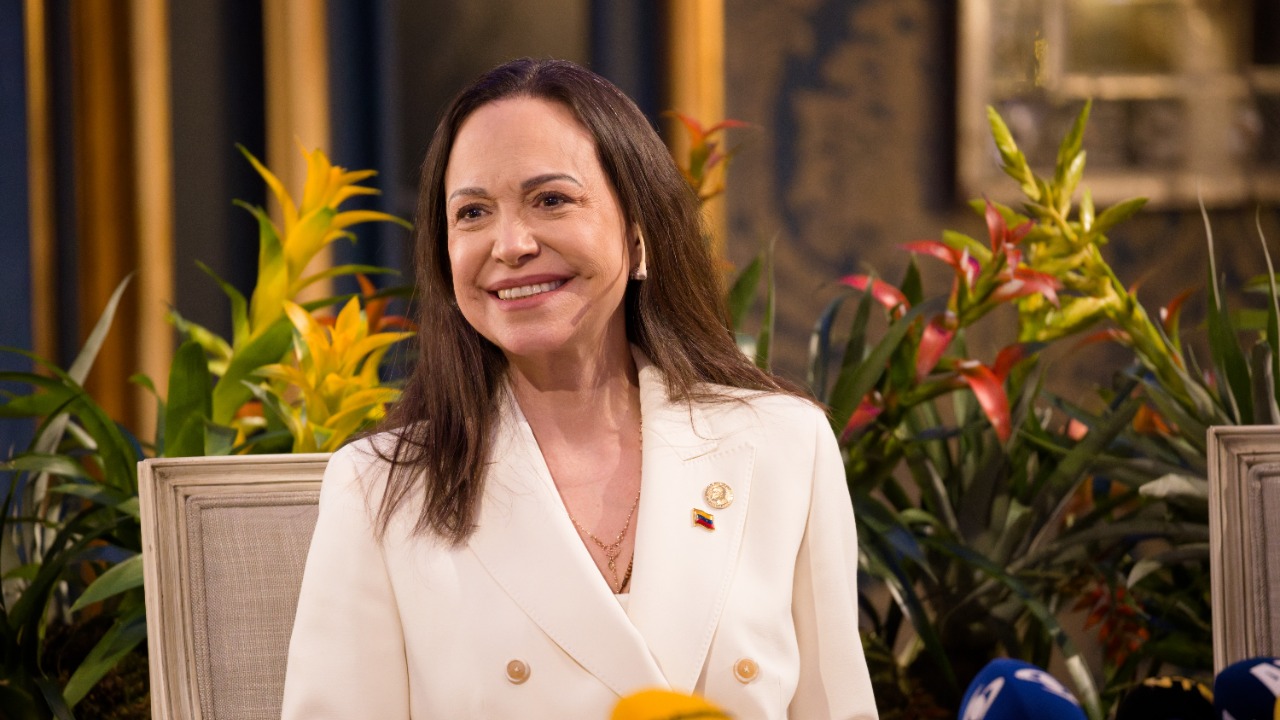
Venezuela’s most prominent opposition figure is speaking with a confidence that would have sounded fanciful only a few years ago, predicting that her country is finally on a path back to competitive elections. Yet she is just as insistent that the journey from authoritarian rule to the ballot box will be fraught with institutional traps, security risks, and geopolitical crosscurrents that could still derail it.
That dual message, hope tied tightly to caution, now frames the struggle over Venezuela’s future as much as any formal negotiation or decree. It is a reminder that transitions do not unfold in straight lines, and that even as the regime signals a willingness to talk, the opposition must navigate a landscape shaped by repression, mistrust, and competing foreign agendas.
Machado’s confident forecast of elections
I see María Corina Machado’s recent remarks as a deliberate attempt to lock in the idea that elections are no longer a distant aspiration but an expectation. In Washington, the Venezuelan opposition leader said she was “profoundly, profoundly confident” that the country would achieve an orderly transition to free elections, framing the current phase as complex but ultimately manageable once key conditions are met. In public comments captured on video, she stressed that Venezuela will have free elections and that the transition, while difficult, is already under way, a message echoed in a Venezuela focused report.
Her language is not casual. In one detailed account, she described herself as acting president of a transitional authority and repeated that she was “profoundly, profoundly confident” about an orderly transition, even as she acknowledged that the process “would be difficult and complex,” a formulation attributed to Jan. A companion segment, credited “By Gram Slattery and Matt Spetalnick,” underscored that she sees the road ahead as “difficult and complex,” a phrase that appears alongside the figure 51 in the transcript.
A “transition to democracy” with hard limits
When I listen closely to Machado, what stands out is her insistence that Venezuela has already crossed a political threshold, even if the institutions have not yet caught up. At an event described as taking place “During Friday” at the Heritage Foundation, she praised actions taken by President Donald Trump and spoke of a “transition to democracy” that she believes has begun, while refusing to speculate on specific timelines, a stance reflected in a detailed During Friday account. In another version of that appearance, the same outlet notes that “Machado says Venezuela has begun ‘transition to democracy’,” describing how she framed the process as an “orderly transition” already in motion, a claim tied to Machado and Venezuela.
Yet she is equally clear that this transition is incomplete and fragile. In a video where she is asked point blank whether Venezuela will hold elections, she responds that the military must first be brought “under terror and neutralize,” and that only once those steps are taken can the country move forward with “reinstitutionalization,” a sequence captured in a Jan transcript. A second link to the same exchange reinforces that she sees the armed forces as both a threat and a necessary part of any settlement, with the same “under terror and neutralize” language appearing in a parallel Jan clip.
International stagecraft and Trump’s role
I read Machado’s recent tour through Washington as both a diplomatic campaign and a domestic signal. She met President Donald Trump at the White House, a moment that was followed, “Meanwhile, in Caracas,” by a fiery speech in which Rodríguez called for a “diplomatic battle” with the United States and invoked Venezuela’s equivalent to the State of the Union, a sequence laid out in a Rodr focused dispatch from Caracas. In another account, she is described as lauding American forces and handing Trump what was described as a “participation trophy” during a speech in Washington, a flourish that appears in a Trump focused video from Washington that also highlights her praise for the American role.
Her relationship with Trump is not without tension. In one report, he is quoted saying “And by the way, I think she’s a very fine woman” and promising “we’ll be talking again,” even as his broader comments left her allies uneasy about the depth of U.S. commitment, a nuance captured in a piece that cites Jan and later refers simply to Trump. Another account notes that she cautioned the Trump administration about dealing with “Maduro’s cronies” during the transition, pointing out that “Just days before Rodriguez made the announcement, the interim government freed at least four U.S. citizens detained in Venezuela,” a sequence laid out in a Just detailed report that also names Rodriguez and situates the episode inside Venezuela.
Warnings of a treacherous road at home
Inside Venezuela, Machado’s optimism is tempered by a sober reading of the risks that still surround any move toward elections. In one widely shared social media message, she urged supporters, “Let us stay vigilant, active, and organized until the democratic transition is achieved,” and warned about “the serpent and its lieutenants,” language that appears in a Let focused story that also notes how the opposition felt blindsided by some of Trump’s moves. A parallel version of that report repeats the same quote and framing, again crediting Let, Machado and the cautionary “But” that frames the piece.
Others outside her camp share that sense of peril. Florida lawmaker Carlos Giménez, speaking about the same unfolding process, predicted “a difficult road ahead” and pointed to the need to safeguard political prisoners who remain in the country, a warning captured in a Gim focused piece that also references “Venezu” and broader concerns about Latin America. At the same time, Machado herself has told supporters that the country has crossed a “threshold of freedom,” a phrase attributed to “Venezuelan opposition leader María Corina Machado” in an Instagram post that celebrates a decisive moment for Venezuelan democracy, and that same language is repeated in a second Mar tagged version that again names Corina Machado.
From prediction to proof: what must happen next
For Machado’s prediction of elections to move from rhetoric to reality, several concrete steps will have to follow, and she has begun to sketch them out. In one video, she explains that once the military is brought under control and neutralized as a tool of repression, the country can move toward “reinstitutionalization,” a process she links directly to the restoration of electoral authority, as heard in the Machado clip where she is pressed on whether Venezuela will actually vote. In another recording, she reiterates that she is “profoundly profoundly confident that we will have an orderly transition,” a line that appears in a segment labeled “Venezuela Opposition Leader Confident on Elections, Warns” and attributes the quote to Maria Karina Machado, while a separate upload of the same message shows “Venezuelan opposition leader Maria Corina Machado” expressing confidence that the country will reach free elections, a point reinforced in a Venezuelan focused video that names Maria Corina Machado.