
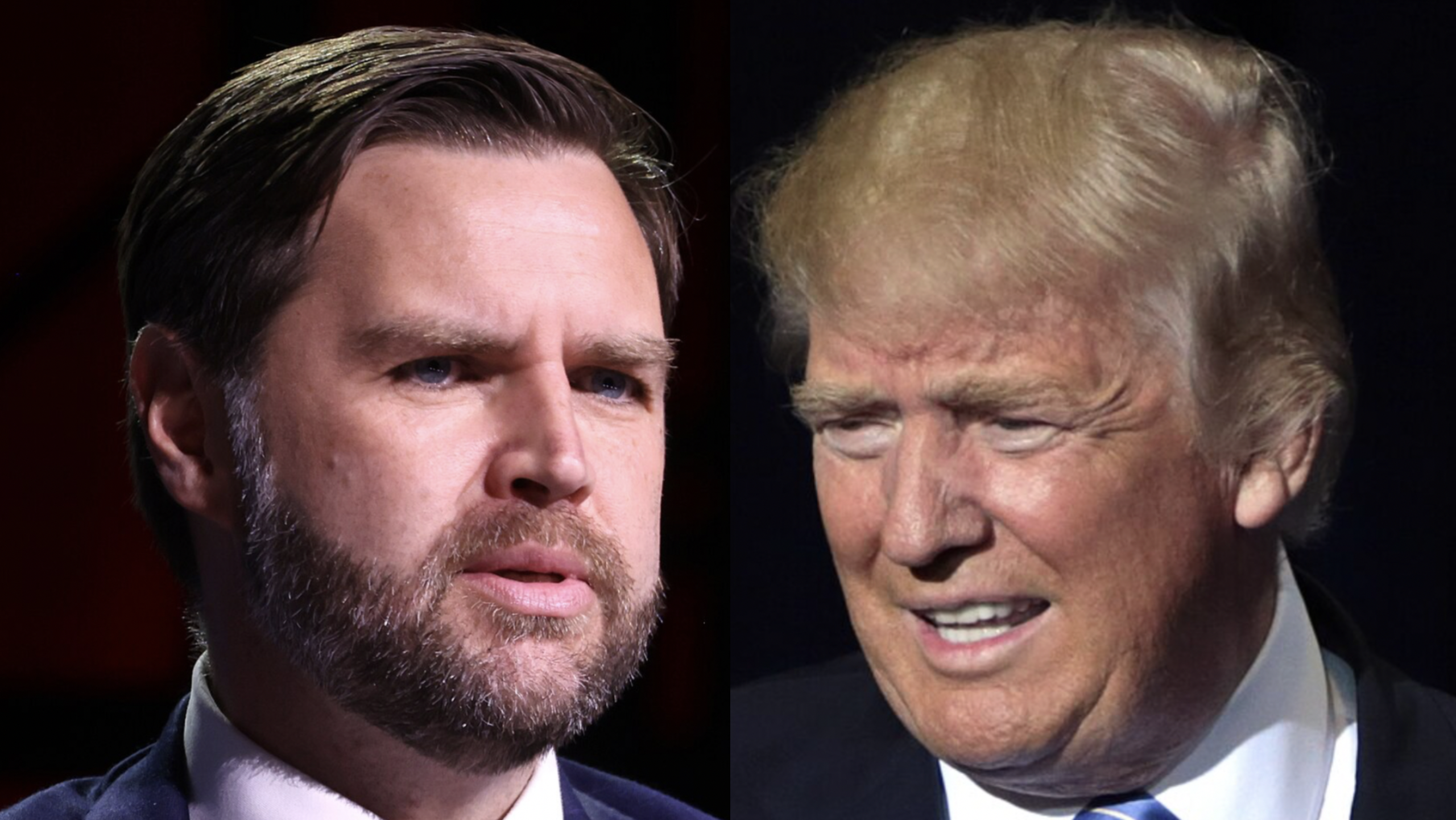
VIRGINIA BEACH, Va. — Vice President JD Vance delivered a pointed warning to Iran on Wednesday, telling U.S. service members stationed at Naval Air Station Oceana that President Donald Trump retains military options should Tehran attempt to reconstitute its nuclear program — and that the troops standing before him are the reason those options exist.
Vance visited Naval Air Station Oceana to celebrate America’s 250th anniversary, with the stop framed by the Trump administration as an opportunity to highlight its efforts to support American warfighters and veterans. The base, the Navy’s East Coast master jet base and one of the branch’s most significant aviation installations, hosted the event in the heart of a region Vance called one of the proudest geographies of military history in the country.
Speaking directly to the men and women who carried out Operation Epic Fury — the U.S.-Israeli joint military campaign against Iran that launched on February 28, 2026 — Vance offered a sweeping defense of the Trump administration’s Iran policy while making clear that the war’s end does not mean America has relinquished its ability to act. He specifically praised Carrier Air Wing 8 for their 11-month deployment, which saw service members logging close to 12,000 launches and over 5,500 flight hours in support of Operation Epic Fury alone.
“If the Iranians try to rebuild the nuclear program, the president’s got options again because of you,” Vance told the crowd. “If the Iranians try to threaten their neighbors or fund terrorism, we’ve got options again because of you.”
A Direct Warning to Tehran
The remarks came as the Trump administration navigates a fragile diplomatic aftermath following the signing of a memorandum of understanding with Iran on June 17, 2026. Vance made clear that negotiations do not mean unconditional trust, and that the military leverage built through Operation Epic Fury remains fully intact.
Operation Epic Fury was launched on February 28, 2026, under the direct orders of the president, with U.S. and partner forces striking targets to dismantle the Iranian regime’s security apparatus and prioritizing locations that posed an imminent threat. The opening salvo of the operation took out Supreme Leader Ali Khamenei, triggering a torrent of retaliatory missiles and thousands of drones from Iran across the Middle East before the campaign concluded on May 5.
Vance grounded his warning in a concrete recent example, telling troops that just days before his speech, the United States dropped bombs on Iranian targets because Iran was shooting at commercial ships. “We dropped some bombs, we applied some leverage, and we’ve had free commercial transit for the last three days,” he said, presenting the episode as a model for how military force should function — targeted, purposeful, and tied directly to American interests.
The vice president framed the question of further action explicitly around Iranian behavior. Should Tehran attempt to reconstitute its nuclear capabilities or resume sponsoring terrorism and threatening its neighbors, he said, Trump will not be without recourse. “The president’s got options again because of you,” Vance repeated, directing the words at the airmen in the audience.
The Troops Behind the Leverage
Central to Vance’s message was a direct attribution of American geopolitical strength to the service members themselves. He argued that it is the existence of a capable, trained, and battle-tested military that gives diplomatic negotiations their weight — and that without the men and women who carried out Operation Epic Fury, Trump would have no leverage to deploy.
“Bad guys and good guys, friends and foes, allies and enemies are afraid of you,” Vance told the crowd. “They know that if we ask, you guys will go and make the impossible possible. They know that when we demand that a bad guy does something, if they say no, you are the ones who are going to enforce that demand.”
That military readiness is being reinforced not only by the veterans already serving but by a surge of new recruits entering the armed forces — a trend that officials in Washington have credited, in part, to the return of strong executive leadership.
Recruiting Hits 15-Year High
The warnings Vance issued from the stage are backed by a military that, by every available metric, is growing stronger by the year. According to Pentagon News reporting from December 2025, in fiscal year 2025, the military’s recruiting efforts returned to levels not seen in more than a decade, with Chief Pentagon Spokesman Sean Parnell stating that “since November 2024, our military has seen its highest recruiting percentage of mission achieved in more than 15 years.”
Every active-duty service branch met or exceeded its recruiting goals for the fiscal year. The Army surpassed its target of 61,000 recruits by attaining 62,050 — 101.72 percent of goal. The Navy achieved 108.61 percent of its target, bringing in 44,096 of a planned 40,600. The Air Force, Space Force, and Marine Corps each met 100 percent or more of their respective missions. Collectively, all five branches averaged a 103 percent mission completion rate.
Undersecretary of War for Personnel and Readiness Anthony J. Tata attributed the surge directly to leadership at the top. “In 2025, the department exceeded our annual active-duty recruitment accession goals across all five services,” Tata said at a defense forum. “Why? Because we have a commander in chief and a secretary of war who are focused on our troops and our mission, and on ensuring that we remain the most lethal fighting force on the planet.”
Parnell echoed that assessment, pointing to the November 2024 election as a turning point. “If you look at the data from November, from the election of President Trump and then Secretary Hegseth’s confirmation thereafter, the numbers that we’ve seen during that time period have been historic,” he said. The department also noted practical improvements in the recruiting pipeline, including streamlined medical screening and a new accession pilot program that cut waiting times from up to ten days down to one day or less — a change designed to prevent prospective recruits from losing interest while their paperwork is processed.
“A No-Fail Mission”
Looking ahead to fiscal year 2026, officials said momentum is already building. According to Pentagon reporting, the department had met nearly 40 percent of its delayed entry program accession mission at the very start of the fiscal year — a figure Tata called “a historic figure and a testament to our support from the president and the secretary, as well as the great work being done by each of the services.”
“Recruiting is a no-fail mission,” Tata said. “We will continue to maintain focus on sustaining our momentum, meeting our targets and securing the warriors we need to achieve peace through strength.”
That phrase — peace through strength — was the same animating principle Vance returned to again and again in Virginia Beach on Wednesday. As he closed his remarks on Iran, Vance made the connection explicit: the president can negotiate, threaten, and act because the people standing in front of him have given him the power to do so. “That is what you should expect out of your political leadership,” he told the troops.