
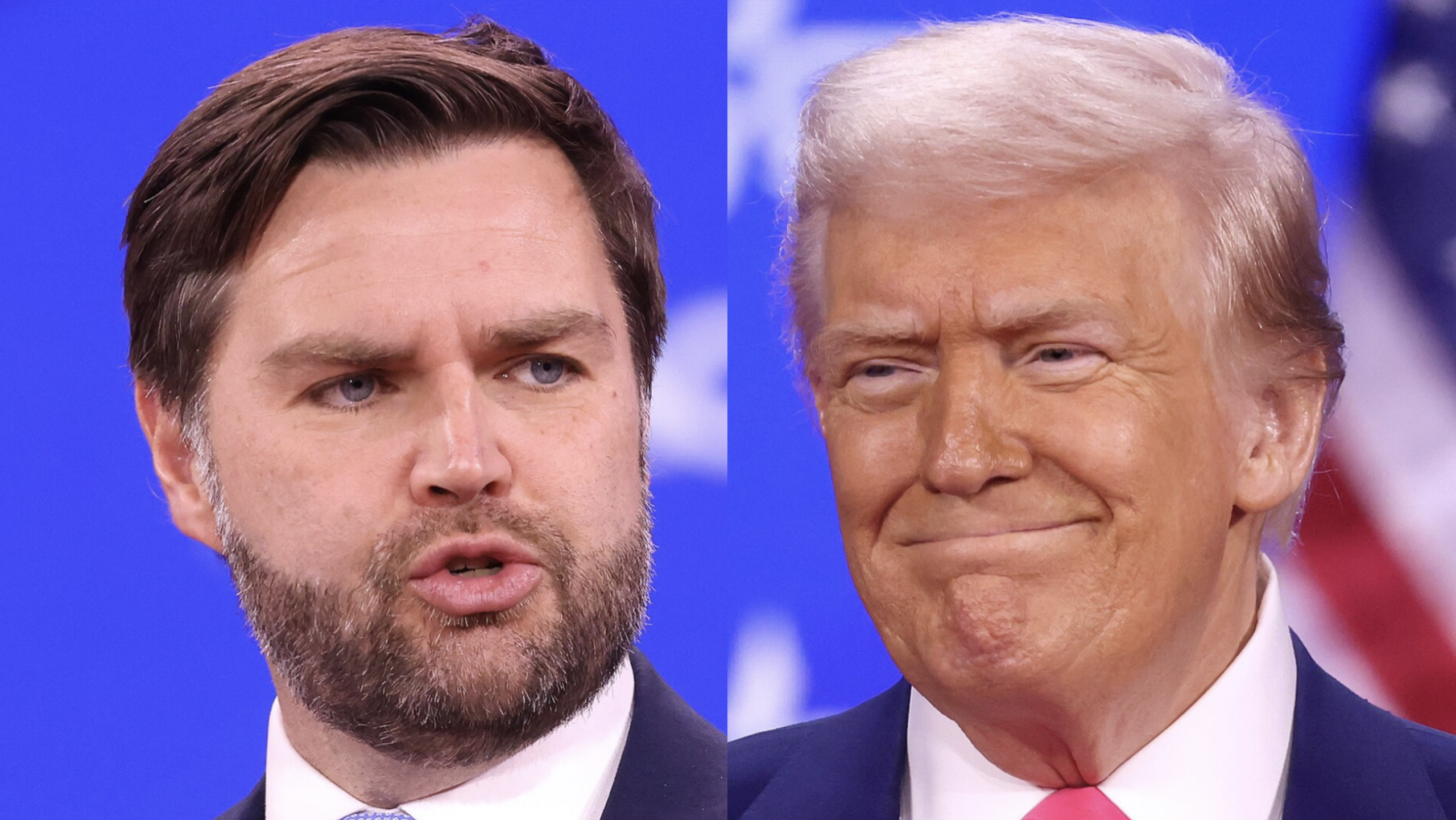
Vice President JD Vance on Thursday credited President Donald Trump’s handling of the Iran conflict to a disciplined refusal to expand the mission beyond its original goals, telling an audience at the Richard Nixon Presidential Library that even allies pushing for broader objectives have not swayed the president’s strategy.
Speaking in a wide-ranging conversation at the Yorba Linda library on June 25, Vance drew a direct comparison between Trump’s approach to Iran and President Richard Nixon’s withdrawal from Vietnam, arguing that the manner of an exit matters as much as the exit itself. “It’s one thing to tuck tail and run,” Vance said. “It’s another thing to clearly define an objective to accomplish that objective and then to ensure that you don’t allow mission creep to transform a victory into a defeat.”
The vice president’s remarks came as he reflected on the epitaph at Nixon’s gravesite at the library, which reads, “The greatest honor history can bestow is the title of peacemaker.” Vance said the sentiment had been on his mind during recent negotiations in Switzerland, even if the specific quote was not.
Vance has led the U.S. delegation in talks with Iranian officials at the Bürgenstock resort in Switzerland over the past week, working alongside special envoy Steve Witkoff and Jared Kushner to build out a memorandum of understanding signed by the U.S. and Iranian presidents. Those talks set a 60-day window for negotiators to settle remaining details, including Iran’s nuclear program and the status of the Strait of Hormuz.
At the library, Vance said the president had laid out a specific and limited set of objectives at the outset of the conflict, which began in late February. “He said at the outset, I want to destroy their conventional military. I want to eliminate their ability to project power and I want to ensure that they never have a nuclear weapon ever,” Vance said, describing the goals Trump had set for the military and diplomatic campaign.
The vice president said that some of the criticism the administration has received in recent weeks, including from within its own political coalition, has centered on calls to broaden that mission. “And what I’ve seen is some people try to say, you know, well, that’s great, but you should have a different objective,” Vance said.
He argued that the president’s unwillingness to give in to those calls is central to the administration’s success so far. “I think the reason why the president has been so successful is because he refuses to give in to that impulse,” Vance said.
Vance characterized Trump’s current posture as one of using the position the U.S. has built to pursue further gains, rather than redefining the mission altogether. “He says, ‘We came what we set out to do. We created incredible diplomatic, economic, and military leverage. Let’s use that leverage to go and accomplish an even bigger win for the American people,'” Vance said, paraphrasing the president’s instructions to his negotiating team.
Vance described that approach as the direct task the president has assigned to him and other officials involved in the negotiations. “That’s what he’s asked us to do,” he said, before offering a cautious assessment of where things currently stand. “It’s not over yet, but so far so good.”
The comments add to recent public statements Vance has made about the state of the negotiations. Following the conclusion of an initial round of talks in Switzerland on June 22, Vance told reporters that the discussions had created a “good foundation for a successful final deal,” while cautioning that significant work remained. “The final deal is the house,” Vance told reporters. “We set the foundation. We haven’t built the house, but we’ve laid a successful foundation to get to a good place for the American people.”
The negotiations have not been without turbulence. Trump’s own public remarks during the Switzerland talks, including comments to Fox News that Iranian officials “won’t even make it back” to their country absent a deal, briefly disrupted the discussions and drew a sharp response from Iran’s chief negotiator. Despite that friction, mediators Pakistan and Qatar said the two sides ultimately agreed on a roadmap toward a final deal within 60 days, with working groups now focused on nuclear issues, sanctions, and a monitoring mechanism to enforce the memorandum of understanding.
Vance’s comments at the Nixon Library reflect a broader argument the administration has made in defending the negotiated framework: that ending the war does not require abandoning its core military objectives. The vice president’s framing, tying Trump’s approach to Nixon’s exit from Vietnam “from a position of strength,” underscores the administration’s effort to present the ongoing diplomacy as a continuation of, rather than a retreat from, its original war aims.