
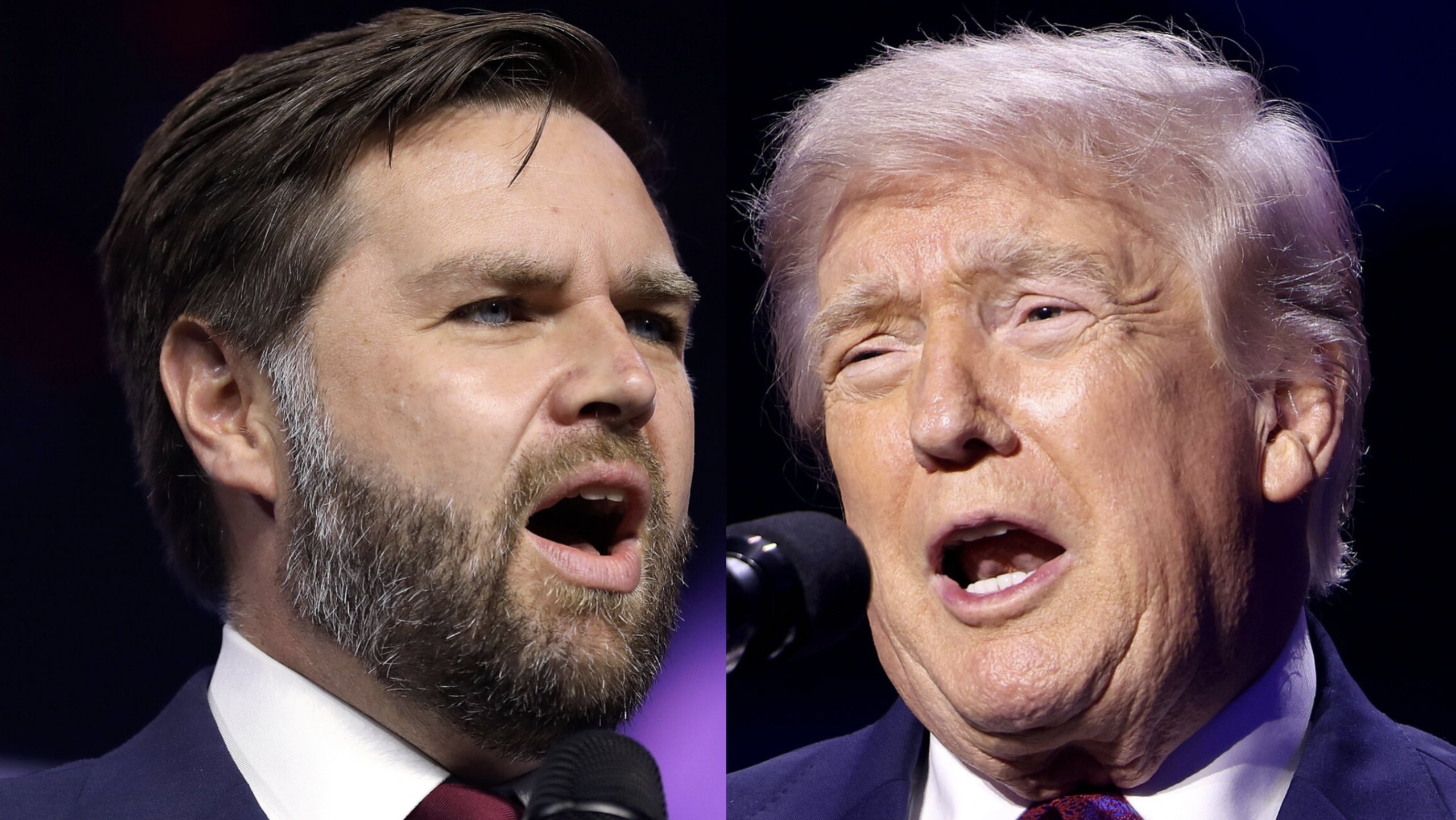
Vice President JD Vance delivered an emphatic rebuttal Thursday to what he called widespread media misrepresentation of the economic terms of the U.S.-Iran memorandum of understanding, insisting that Iran will not receive a single dollar of American money under the agreement and that every reported benefit is entirely conditioned on Iran demonstrably changing its behavior.
Vance opened his briefing at the White House addressing the issue directly and without waiting for a question, signaling that the administration considered the narrative around Iran’s potential financial gains to be among the most urgent distortions requiring correction.
“The part of this that I think have been most misrepresented by certain parts of the media is the idea that the Iranians get all these benefits,” Vance said. “You will hear things about $300 billion or $24 billion or this or that number of money or amount of money. And the simple fact is that the only way the Iranians get any of those resources — not a single penny by the way from the United States of America under any circumstances — but the only way that they would ever get any benefit of the bargain is if they comply fully and change their behavior.”
President Trump echoed those sentiments directly on Truth Social Thursday morning. “There is no 300 Billion Dollar payment to Iran by the U.S. That’s Fake News! All there is for the U.S. is Success, Lower Oil Prices, and Victory. Check out the Stock Market. Dumocrat propaganda at play!!! President DJT,” Trump wrote at 11:49 a.m.
The figures circulating in press reports stem from copies of the 14-point memorandum of understanding obtained by CNN and Bloomberg, which indicate that Iran may gain access to a $300 billion development fund if it meets specific commitments related to scaling back its nuclear program. Vance and the administration have moved to clarify that while such a fund exists as a concept in the agreement, no portion of it would be sourced from U.S. taxpayers, and that the fund itself would only be unlocked through a series of verifiable compliance milestones that Iran has not yet begun to meet.
Vance framed the overall agreement as a structural win for the United States regardless of which path Iran chooses. “If the Iranians don’t change their behavior, their military and their nuclear program is still destroyed,” he said. “If they do change their behavior, then they are going to have a transformative relationship with the Middle East, and the Middle East will have a transformative relationship with the people of Iran. That’s a win for the American people and for the president of the United States, regardless of which option the Iranians ultimately choose.”
The vice president also offered what he described as an important and underappreciated window into Iranian internal politics, arguing that the relevant question is not whether the Iranian government as a whole wants compliance — but whether the factions within it that do want a transformed relationship with the world are winning the internal argument.
“There are real divisions within their country about how exactly to proceed,” Vance said. “And what we’ve seen over the last couple of months is that the pragmatists within the Iranian system, the people who really do want to transform their relationship with the Middle East and with the world, those people are winning the argument. The United States wants those people to win the argument.”
He was direct about the conditionality at the heart of the agreement. “The United States wants to have a better relationship, but in order for that to happen, the Iranians have to perform. And if they don’t perform, as we’ve said before, they don’t get any of the benefits of the bargain.”
On the question of sanctions, Vance argued that the primary economic chokepoint on Iran throughout the conflict has been the U.S. naval blockade of Iranian shipping — not the sanctions themselves — and that lifting the blockade in conjunction with Iran’s reopening of the Strait of Hormuz does not represent a novel concession to Tehran but rather a return to pre-conflict conditions that both sides are now trading back in exchange for one another’s compliance.
The Strait of Hormuz has already seen early evidence of the agreement’s impact. Vance noted Thursday morning that 12.5 million barrels of oil passed through the strait the previous night — a high point since the conflict began on February 28 — and that oil prices have dropped to near pre-war levels. Gas prices fell below $4 per gallon nationally for the first time since the conflict began.
As of the MOU’s formal signing in Geneva on Friday, the 60-day clock for finalizing a permanent agreement officially began. Vance confirmed the United States would not release any frozen Iranian assets — which he said range in estimates from over $100 billion to over $200 billion, with most held in Gulf or European accounts — until Iran takes meaningful steps toward compliance.
“They need money to do anything,” Vance said of Iran’s economic situation. “Their economy is in absolute dire straits. But in order for them to get any integration into the world economy, they’re going to have to show us and verify for us that they are changing their behavior.”