
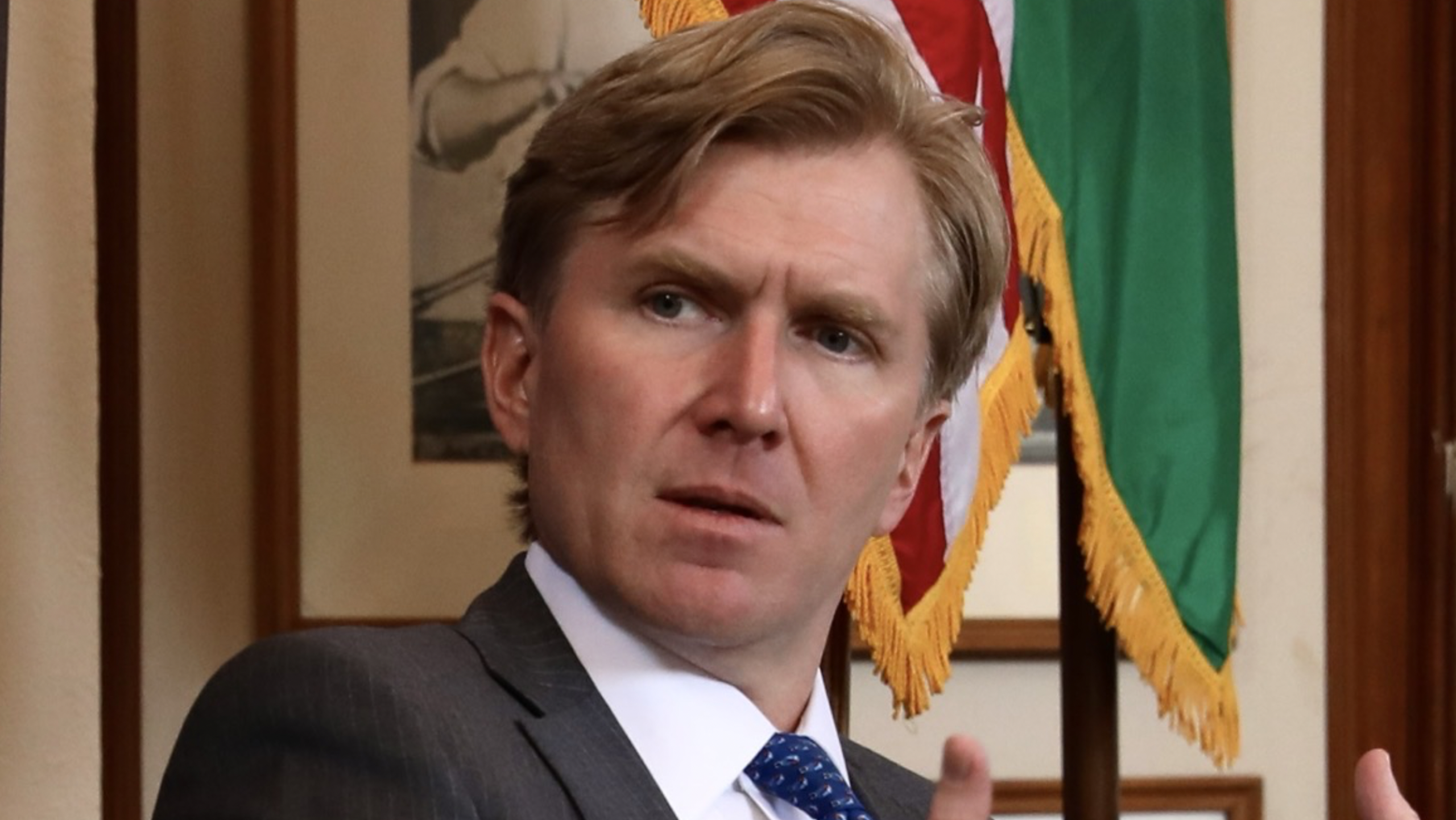
WASHINGTON, June 12, 2026 — U.S. Under Secretary of War for Policy Elbridge Colby called on the United Kingdom to rapidly increase its military strength Thursday, responding directly to British Defense Secretary John Healey’s resignation over insufficient defense funding by praising Britain’s wartime military legacy and urging London to meet the demands of the current security environment with immediate urgency.
“The United Kingdom has an extraordinarily proud military history. It commands our respect,” Colby wrote on X. “There is again a great need for more British military strength in this critical time. We urge the UK to meet that need with urgency, scale, and determination.”
Colby’s post quoted and responded to Healey’s resignation letter, posted June 11, and was framed as both a tribute to Britain’s military history — invoking Normandy, the Somme, Dieppe, and El Alamein — and a pointed call for the UK to match that legacy with commensurate defense investment at a moment of heightened global threats.
Why Healey Resigned
John Healey resigned as UK Defence Secretary on June 11, 2026, writing a detailed resignation letter to Prime Minister Keir Starmer outlining what he described as a fundamental failure to fund Britain’s defence needs adequately. Healey acknowledged significant achievements during his tenure — including raising defence spending to 2.5 percent of GDP ahead of schedule, completing a Strategic Defence Review, delivering pay increases for service personnel, and strengthening alliance relationships — but said the Defence Investment Plan settlement he received on Monday “falls well short” of what is required.
Healey called for a clear path to three percent of GDP in defence spending by 2030 and 3.5 percent by 2035 — in line with NATO commitments discussed at the Hague Summit — arguing that anything less would force reduced operational readiness and place British forces and national security at higher risk. The Treasury’s refusal to commit to that funding path was the breaking point, according to his letter.
“The Defence Investment Plan settlement I received on Monday falls well short of what I was promised and what is needed for our security,” Healey wrote in his resignation letter, posted on X on June 11. Armed Forces Minister Al Carns resigned alongside Healey in solidarity. Prime Minister Starmer subsequently appointed Dan Jarvis as the new Defence Secretary.
Colby’s Historical Framing
Colby’s response invoked the sweep of British military history across both world wars — referencing the D-Day landings at Normandy, the Battle of the Somme, the Dieppe Raid, and the North African campaign at El Alamein — as evidence of Britain’s capacity for martial resolve when national survival demands it. The historical framing was deliberate: Colby was arguing that the same country that bled at the Somme and stormed the beaches of Normandy has both the tradition and the obligation to meet the current moment with equivalent seriousness.
The message tracks closely with remarks Colby delivered at the International Ceremony Commemorating the 82nd Anniversary of the WWII Allied Invasion at Normandy on June 6, 2026, in which he honored British and Canadian forces and called for stronger allied conventional defense capabilities as a condition of continued American support. Colby has consistently framed European defense investment not as charity toward allies but as a prerequisite for a sustainable transatlantic security partnership.
The U.S. Pressure Campaign
Colby’s post is the latest in a sustained campaign by Trump administration defense officials to press European NATO allies to dramatically increase defense spending. The same week, a leaked Pentagon document revealed the U.S. plans to cut roughly one third of the fighter jets it assigns to NATO, withdraw all eight aerial refueling tankers from European operations, and reallocate a carrier strike group and missile-launching submarine away from European defense missions — moves Pentagon spokesman Sean Parnell framed as an “opportunity for allies to demonstrate that they have heard President Trump’s call for them to take primary responsibility for Europe’s conventional defense.”
The UK’s situation is particularly sensitive given its status as NATO’s second-largest military spender and one of the alliance’s two nuclear powers. If Britain — which has already committed to 2.5 percent of GDP and was pushing toward three percent — cannot secure the funding its own defense secretary deemed necessary, it raises difficult questions about whether other European nations facing greater domestic political resistance to defense spending will be able to fill the gaps the U.S. drawdown creates.
The Broader European Defense Picture
Healey’s resignation came in the same week that Germany confirmed its withdrawal from the Future Combat Air System — a joint next-generation fighter jet project with France and Spain — and as the Trump administration’s plans for sweeping NATO force reductions became public. The combination of developments prompted concern among European security analysts that the continent’s rearmament effort, while accelerating, remains fragmented and underfunded relative to the threats it faces.
The NATO Defence Planning Process requires member nations to commit forces to the alliance’s Force Model — a system now under strain as the U.S. reduces its contributions and European nations race to build capabilities that historically depended on American enablers including tankers, reconnaissance aircraft, and submarine-launched missiles.
Colby’s message to the UK was clear: the history is there, the need is real, and the time for incremental action has passed. “We urge the UK to meet that need with urgency, scale, and determination,” he wrote — a phrase that will resonate differently in London now that the minister who was trying to do exactly that has resigned because his own government would not give him the money to do it.