
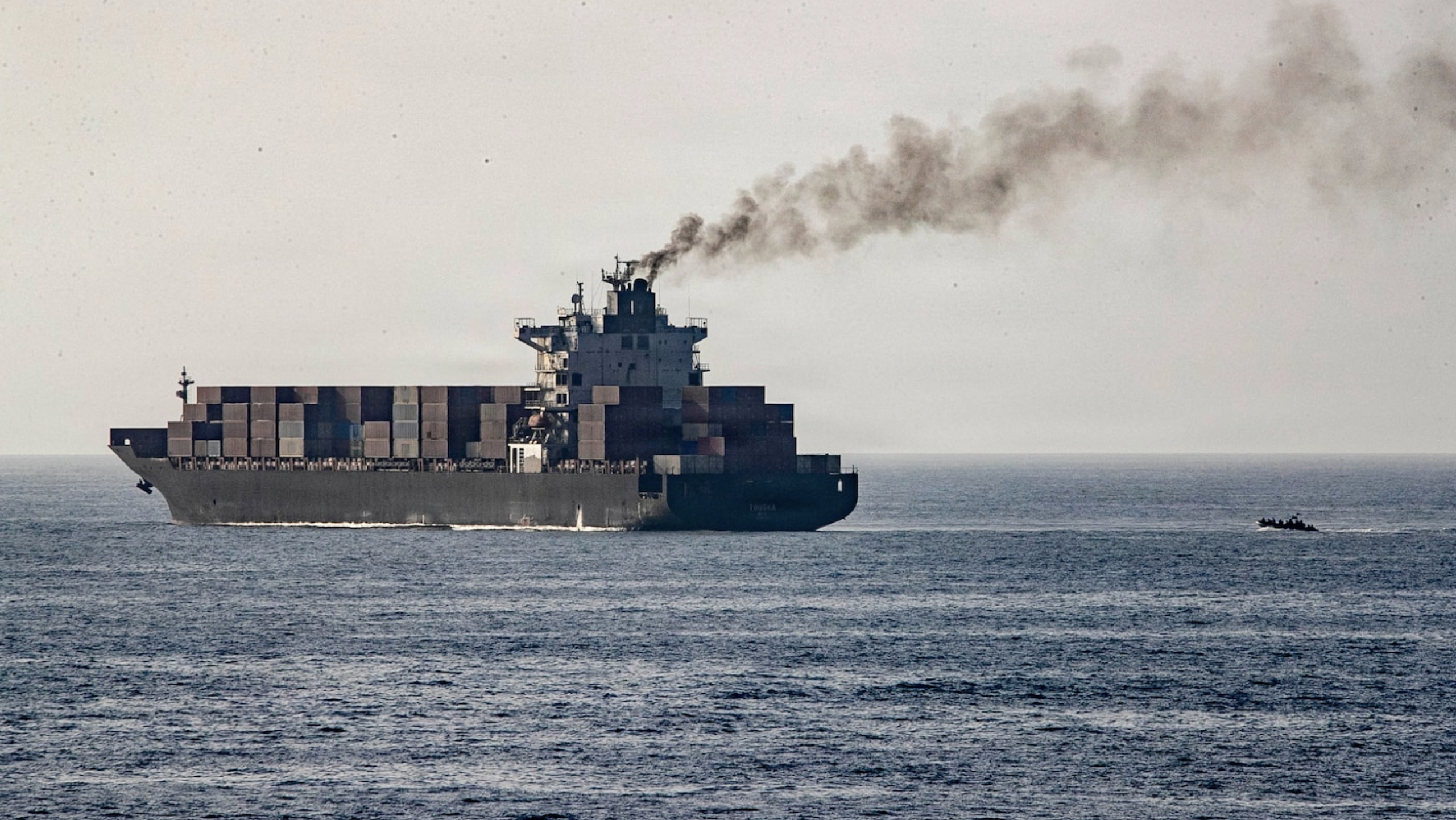
The Trump administration is placing economic sanctions on a major China-based oil refinery and roughly 40 shipping companies and tankers involved in transporting Iranian oil, the U.S. Department of the Treasury announced Friday.
The move makes good on Trump’s threat to impose secondary sanctions on companies and countries that do business with Iran. It’s also part of his Republican administration’s overall ramped-up campaign to cut off Iran’s key source of revenue — its oil exports.
Hengli Petrochemical in Crosshairs
Included in Friday’s sanctions is Hengli Petrochemical’s facility in the port city of Dalian, which has a processing capacity of roughly 400,000 barrels of crude oil per day, making it one of the biggest independent refineries in China.
Hengli Petrochemical (Dalian) Refinery Co., Ltd., China’s second-largest teapot refinery, has emerged as one of Tehran’s most valued customers, purchasing billions of dollars’ worth of its oil products, according to Treasury.
Since at least 2023, Hengli has received Iranian oil cargoes from a host of sanctioned shadow fleet vessels, including BIG MAG, GALE, and ARES, which alone have delivered over five million barrels of Iranian crude oil.
Shadow Fleet Targeted
Additionally, OFAC is targeting approximately 40 shipping firms and vessels that operate as part of Iran’s shadow fleet, whose transportation of petroleum and petrochemicals provides a financial lifeline to Iran’s unstable regime.
Since February 2025, OFAC has sanctioned over 1,000 Iran-related persons, vessels, and aircraft as part of this campaign.
China is the biggest buyer of Iranian oil, importing 80 per cent to 90 per cent of Iranian oil before the U.S.-Israeli war with Iran broke out, though the crude is often disguised as coming from other countries such as Malaysia.
Part of Broader Economic Fury Campaign
A senior administration official said the Treasury Department is intensifying enforcement under what it describes as an “Economic Fury” campaign, using financial and maritime tools in tandem to squeeze Iran’s revenue streams. The strategy focuses on “systematically degrading Iran’s ability to generate, move, and repatriate funds.”
Treasury Secretary Scott Bessent said Friday that his agency “will continue to constrict the network of vessels, intermediaries and buyers Iran relies on to move its oil to global markets.”
Concurrently, the U.S. this month imposed a physical blockade on the Strait of Hormuz, the Persian Gulf waterway that is crucial to global energy supplies.
China’s Response
The sanctions, which cut off the companies from the U.S. financial system and penalize anyone who does business with them, come just a few weeks before President Donald Trump and China’s Xi Jinping are due to meet in China.
China has disagreed with previous U.S. sanctions, but its major companies and banks still comply with U.S. sanctions because they are more exposed to the U.S.-dominated financial system.
After the U.S. earlier this month sanctioned a Chinese refinery accused of buying Iranian oil, Liu Pengyu, a spokesperson for China’s embassy in Washington, said the use of the sanctions “undermines international trade order and rules, disrupts normal economic and trade exchanges, and infringes upon the legitimate rights and interests of Chinese companies and individuals.”
Legal Authority
The U.S. State Department confirmed that today’s action is being taken pursuant to Executive Order 13902, which targets persons operating in Iran’s petroleum and petrochemical sectors. These actions further the President’s National Security Presidential Memorandum 2 (NSPM-2), which directs the imposition of maximum pressure against Iran.