
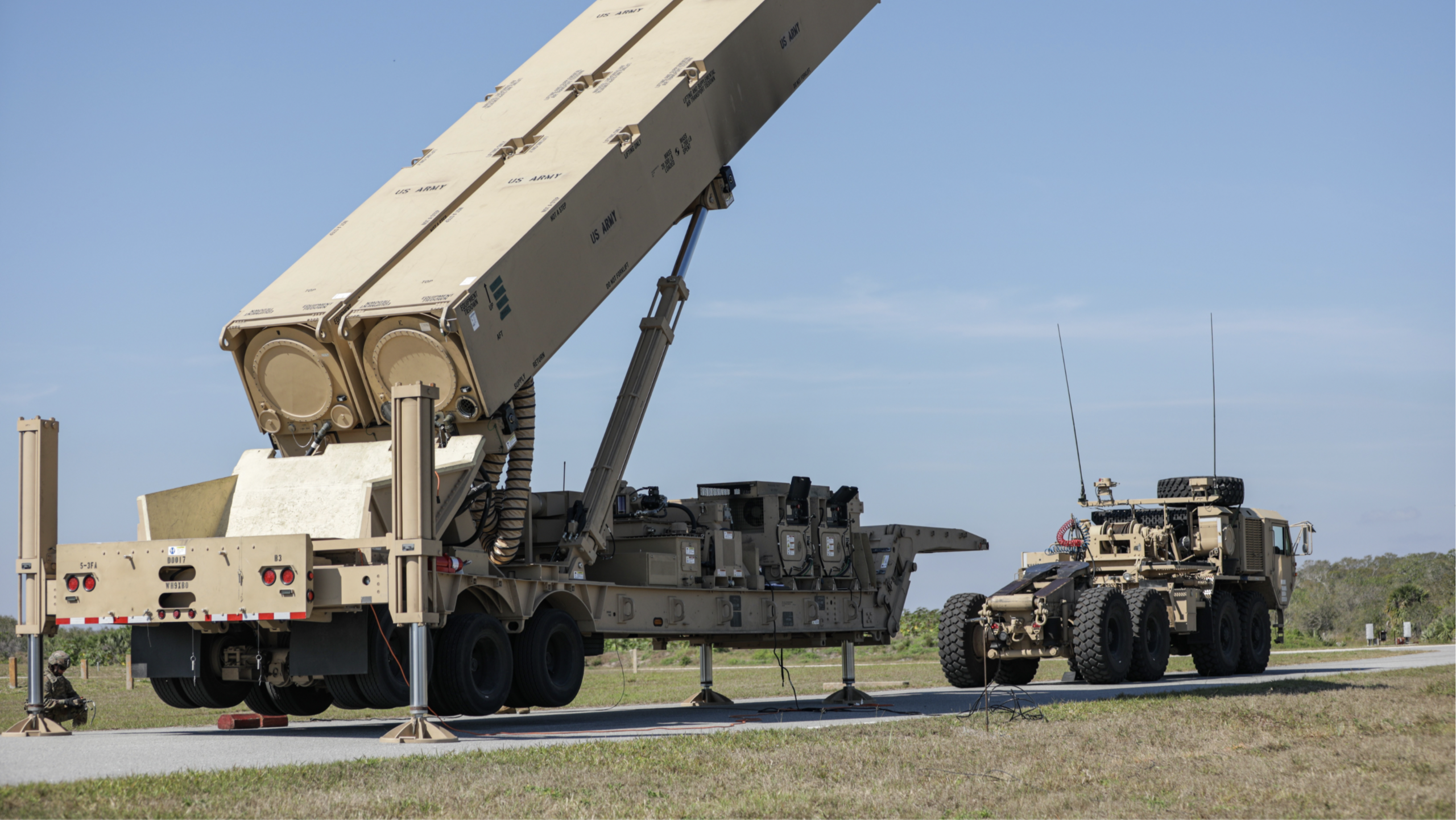
U.S. Central Command has submitted a formal request to deploy the Army’s Long-Range Hypersonic Weapon — known as Dark Eagle — to the Middle East for possible use against Iran, according to Bloomberg, which first reported the request Wednesday citing sources familiar with the matter. No decision has been made.
If approved, it would mark the first time the United States has deployed a hypersonic weapon in an active theater of war — and the first operational use of a system that has not yet been formally declared combat-ready, even as Russia and China have long since fielded their own hypersonic platforms.
Why CENTCOM Wants It
The request, submitted as a formal Request for Forces, was driven by a specific operational problem: Iran has relocated its ballistic missile launchers to sites deeper inside the country, placing them beyond the range of the Precision Strike Missile — the U.S. Army’s current primary ground-launched strike weapon, which can hit targets at ranges beyond 300 miles. The Dark Eagle’s reported range of more than 1,725 miles would restore the ability to hold those relocated launchers at risk.
The system is designed to strike what the U.S. military describes as “time-sensitive and heavily defended targets.” It works by launching a Common Hypersonic Glide Body atop a two-stage booster rocket, which carries it to altitude before releasing the glide vehicle. The glide body then maneuvers toward its target at speeds exceeding Mach 5 — more than 3,800 mph — retaining the ability to alter course during flight, which significantly reduces the time an adversary has to respond and complicates interception by air defense systems.
A Weapon Still Under Development
The request carries a significant asterisk. The Dark Eagle has not been declared fully combat-operational. While it completed some successful classified tests in 2024, it has also repeatedly failed to launch during other test attempts due to launcher and production quality issues, according to Responsible Statecraft. An unnamed defense official told Fox News the weapon has reached “initial operational capability,” but the Pentagon’s own testing office has stated it will not have sufficient data to formally evaluate the Dark Eagle’s combat effectiveness until early 2027.
The stockpile is also extremely limited. Bloomberg reported there are no more than eight missiles currently available. Each missile costs approximately $15 million, and each battery is estimated to cost roughly $2.7 billion, according to the Government Accountability Office — figures that make the Dark Eagle one of the most expensive conventional strike systems ever developed. The U.S. has already expended the majority of its JASSM-ER cruise missile stockpile — another system designed for near-peer adversary conflicts — in the Iran campaign.
The combination of an unproven operational record and a razor-thin stockpile has drawn skepticism from outside analysts. “How do you know it is defense budget season in Washington? An unnecessary push to deploy a not-yet-fully-operational hypersonic missile against Iran,” Kelly Grieco, Senior Fellow at the Stimson Center, wrote on X. “Nothing says ‘fund me’ like first use, I guess.”
Broader Signal: Russia, China, and the Hypersonic Gap
Beyond the immediate Iran context, a Dark Eagle deployment would carry strategic messaging well beyond the Middle East. Russia has fielded its Kinzhal and Avangard hypersonic systems and used the Kinzhal in combat in Ukraine. China has deployed the DF-17 hypersonic glide vehicle. The United States has lagged both rivals in fielding an operational hypersonic weapon — a gap that has drawn sustained criticism in Congress and among defense analysts. Deploying Dark Eagle in a combat theater, even against a second-tier adversary, would represent the first demonstration that the U.S. can field the capability at all.
Lt. Gen. Francisco Lozano, director of Hypersonic, Directed Energy, Space and Rapid Acquisition, offered a sense of the system’s broader deterrent potential in testimony to Hegseth, stating: “I can range mainland China from Guam.”
What Else Trump May Be Briefed On
The Dark Eagle request is part of a wider package of options CENTCOM Commander Admiral Brad Cooper is preparing to present to President Trump, according to Axios. One option involves a “short and powerful” wave of strikes on Iranian infrastructure, designed to break the current negotiating deadlock and force Tehran back to the table with greater flexibility on its nuclear program. A second option focuses on seizing partial control of the Strait of Hormuz to reopen it to commercial shipping — an operation that could require ground forces. A third option that has been discussed involves a special forces operation to secure Iran’s stockpile of highly enriched uranium.
A tenuous ceasefire between the United States and Iran has been in place since April 9. The Strait of Hormuz remains largely closed to international commercial traffic. Trump canceled a planned second round of indirect peace talks in Islamabad last week, saying U.S. negotiators would not be “making any more 18-hour flights to sit around and talk about nothing.”
The White House and U.S. Central Command did not respond to requests for comment at the time of Bloomberg’s report.