
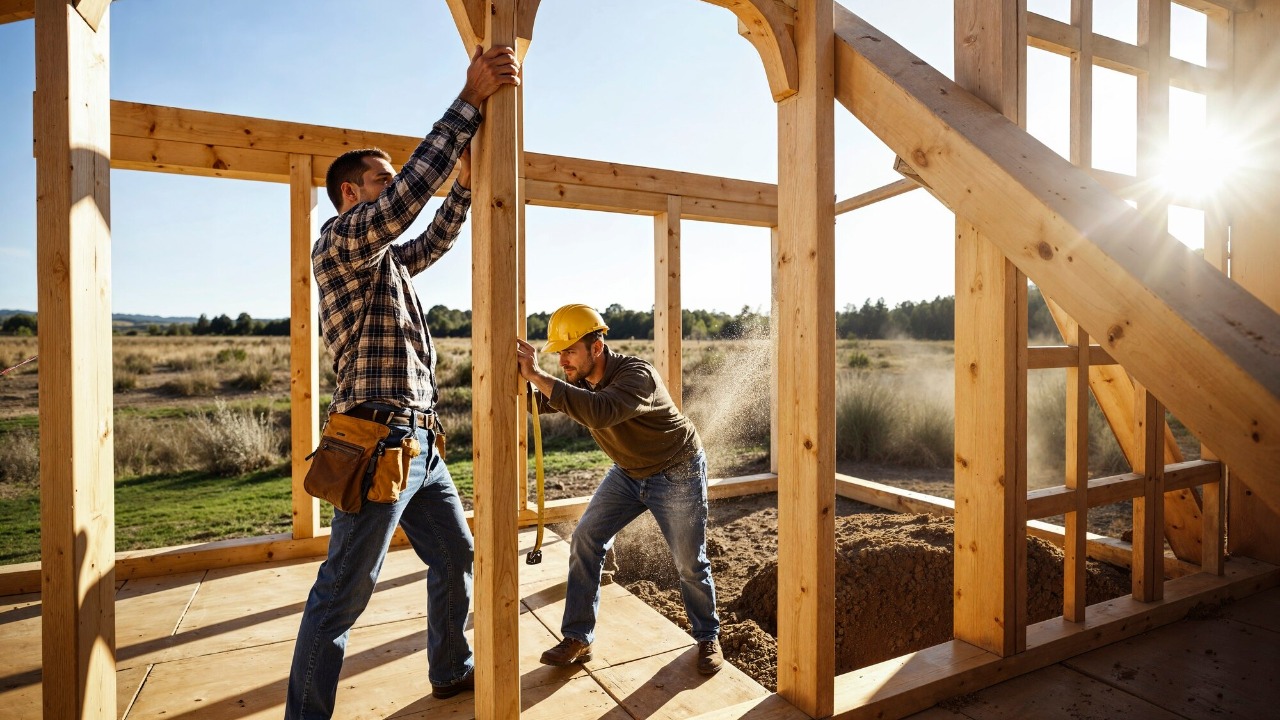
Developers are quietly sketching out one of the most ambitious housing schemes in recent memory, a proposal to build as many as one million branded “Trump Homes” across the United States. The plan, still in its formative stages, would marry large-scale construction with rent-to-own financing in a bid to ease a severe affordability crunch while capitalizing on President Donald Trump’s political brand. If it advances, it could reshape not only where Americans live but also who owns the country’s next generation of starter homes.
Behind the headline figure is a complex effort by major builders, investors, and the Trump administration to align political promises with market incentives. Supporters frame the idea as a way to unlock private capital for lower-cost housing at a moment when first-time buyers are being priced out of traditional subdivisions. Skeptics see a high-stakes experiment that could concentrate risk, entrench corporate control of neighborhoods, and leave households exposed if the economics or politics shift.
Inside the one-million-home blueprint
The emerging proposal centers on a cohort of large builders that are exploring a coordinated push to construct up to one million new houses targeted at entry-level buyers. Reporting indicates that major homebuilders are discussing a shared framework that would standardize product, pricing, and financing terms under the “Trump Homes” label. At full scale, the developments would represent more than $250 billion in housing value, a figure that underscores how central this initiative could become to the national construction pipeline.
Early descriptions suggest that the homes would be modest single-family properties, built in large tracts and marketed primarily to renters who have struggled to save for a down payment. Several accounts describe Several major homebuilders weighing whether to band together to deliver the first wave of as many as one million units. Another report notes that Trump Homes at that scale would be explicitly pitched as a way to make housing more affordable, with the federal government providing political backing while private investors supply most of the capital.
How the “Trump Home” would work
What distinguishes the concept from a conventional subdivision is not only the branding but also the financing structure. Instead of selling every house at completion, one version of the plan envisions investors acquiring large blocks of properties and renting them out under a rent-to-own model. In that scenario, one outline has investors renting homes to tenants while reserving a path to eventual purchase, aligning long-term ownership with short-term rental demand.
Supporters say the structure is designed to convert renters into owners over time. Under the draft framework, Renters would have the option after three years to purchase the home they are living in, with prior payments counting toward the eventual price. Analysts who have reviewed the idea note that the total package, if fully realized, could involve up to $250 billion in housing value, a scale that would rival some of the largest federal housing efforts of the postwar era while relying heavily on private balance sheets.
Markets, politics, and the “Trump Homes” trade
Even in its preliminary form, the proposal has already rippled through financial markets. Reports that the Trump administration is considering such a program coincided with a rally in homebuilding shares, with Several large builders seeing stock gains on a Tuesday trading session after the first detailed accounts surfaced. Another analysis framed the initiative as a new housing trade, noting that Denver-based investors and others are already positioning around the idea that “Trump Homes” could reshape America’s housing landscape well beyond the headline builders.
The political stakes are just as significant. President Trump has repeatedly highlighted housing affordability as a priority, and allies argue that a large-scale building program would show tangible progress where local zoning fights have stalled. One prominent conservative voice, Vivek Ramaswamy, has described the Housing crisis as “not that complicated” and urged policymakers to cut regulations that block new construction, a view that aligns with the builders’ push for streamlined approvals. Reporting by Patrick Clark notes that companies such as TMHC and LEN are central to the early discussions, and that the political imprimatur of the Trump name is seen as a way to win support from both investors and local officials.
Risks, unanswered questions, and lessons from past booms
For all its promise, the “Trump Homes” concept is riddled with open questions. Consumer advocates warn that rent-to-own structures can be opaque, with households bearing maintenance costs and market risk without the full protections of traditional mortgages. Analysts at Bloomberg News have highlighted that, at the one million homes mark, even small miscalculations in pricing or demand could cascade through local markets. A separate Article Summary stresses that key details, including how consumer protections would work and how defaults would be handled, remain Unverified based on available sources.
History also offers cautionary tales about rapid innovation in residential construction. Two decades ago, synthetic stucco was marketed as a miracle product that could cut costs and speed building schedules. Now, however, that same material is associated with moisture damage and costly repairs, and its future in residential construction is uncertain. The lesson for policymakers and builders is that scale magnifies both benefits and flaws. If “Trump Homes” moves from concept to concrete, the durability of the financing model, the quality of the construction, and the clarity of the contracts will matter as much as the headline promise of up to 42 months of rent credits or any other incentive that marketers attach to the brand.