
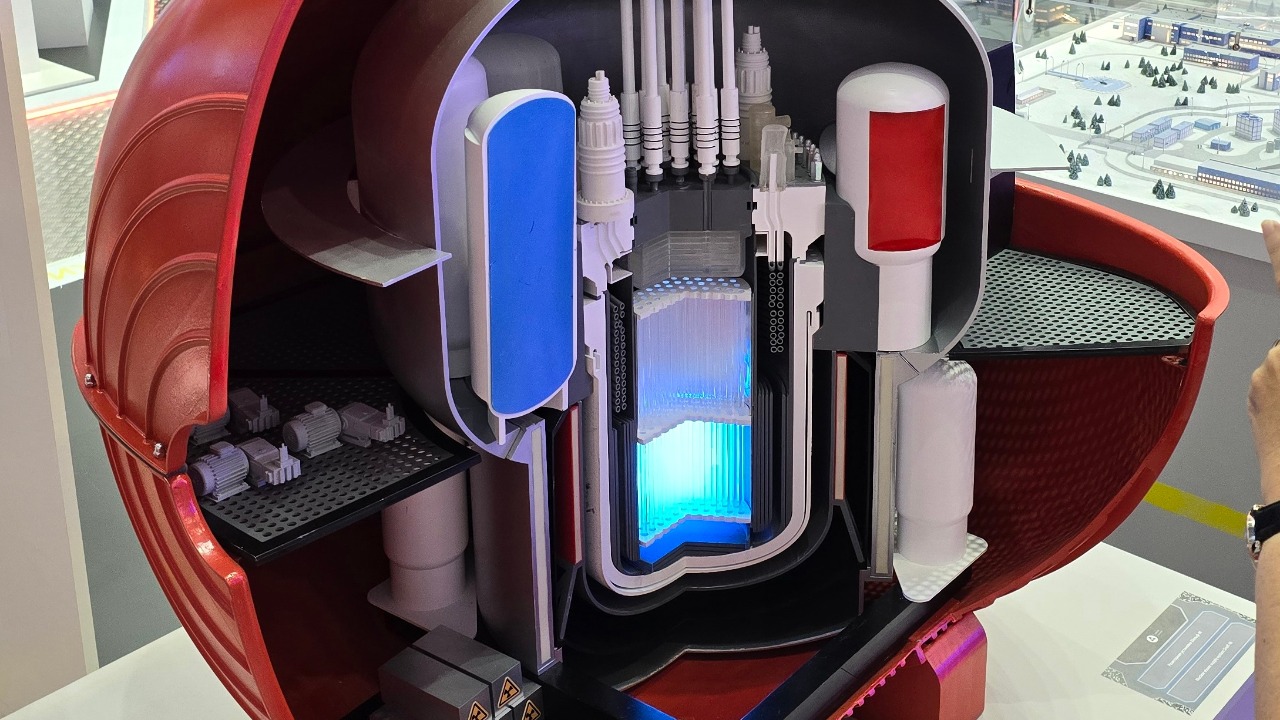
U.S. companies are racing to shrink nuclear power into factory built microreactors that can slot into federal facilities and remote bases. Their goal is to harden critical infrastructure against blackouts and fuel disruptions while cutting emissions from diesel generators. I see the emerging partnerships between startups, defense agencies, and energy contractors as a test of whether nuclear technology can finally match the speed and flexibility of modern grid demands.
From concept reactors to federal campus power
The most visible signal of this shift is the decision by NANO Nuclear Energy to work with Ameresco on siting advanced microreactors at federal and commercial locations. In their Nuclear Signs Memorandum of Understanding, NANO and Ameresco commit to Explore the Deployment of Advanced Microreactor units, including the ZEUS MMR and LOKI MMR, on government campuses and private properties that need resilient power. I read that agreement as a bet that small, transportable reactors can move from demonstration projects to routine infrastructure, with Ameresco bringing its experience in federal energy performance contracts and NANO providing the technology platform.
That collaboration does not stand alone. Reporting on U.S. startups describes a broader plan that covers multiple reactor designs, including KRONOS, ZEUS and LOKI systems, so agencies can compare performance and costs across several microreactor designs for broader evaluation. A separate summary of the Ameresco discussions notes that the plan covers multiple reactor designs, including KRONOS, ZEUS and LOKI, at commercial properties, which suggests that the same hardware could serve both a military depot and a data center parking lot. In my view, that dual track, federal plus private, is crucial, because it spreads development risk and builds a larger market for components and fuel services.
Military bases as proving grounds
The Pentagon is treating its own installations as the first real world laboratories for this technology. The DAF identified Eielson Air Force Base in Fairbanks, Alaska as the preferred site to construct and operate an advanced nuclear microreactor, making it the first Air Force installation selected for site exploration. Oklo has been named the intended supplier, with its Oklo Aurora powerhouse, shown in an Image by Gensler, chosen for a long term power purchase agreement that would provide clean, reliable power to Eielson Air Force Base in Alaska. For a base that currently depends heavily on trucked in fuel, a five megawatt scale reactor could be transformative.
Local residents are already being briefed on what that means. Community coverage around Fairbanks explains that the microreactor is anticipated to be able to provide up to five megawatts of power and will be used to generate electricity and heat only, with no weapons application, which has shaped how people in Fairbanks, Alaska weigh the possibilities of the project. At the same time, federal regulators are asserting their authority. The U.S. Nuclear Regulatory Commission previously rejected an initial license application from Oklo for its microreactor design, citing incomplete information, a reminder that even as the DAF pushes ahead, the Nuclear Regulatory Commission will decide how fast designs like Oklo’s can move from paper to sites in the field.
Project Pele, XENITH and the Army’s nuclear ambitions
While the Air Force focuses on Eielson, the Army is mapping out its own fleet of microreactors for domestic posts. An analysis of Army planning notes that Army Goes Nuclear: Microreactors Set For US Bases By 2028, with the question framed bluntly as Who Will Build the Army Nuclear Reactors, and highlights the role of the Defense Innovation Unit, or DIU, working with the Depar of Defense to ensure U.S. energy dominance at bases within the contiguous United States. In parallel, the Department of Energy Announces Initial Selections for New Reactor Pilot Program, with Selected reactor designs targeting criticality by 2026 to support national security, American prosperity and technological advancement, which gives these military projects a civilian research backbone.
On the hardware side, The BWXT designed Project Pele, a transportable microreactor, has secured a construction permit from NRC and is moving toward testing. BWXT Delivers Full Core of TRISO Nuclear Fuel for Project Pele Microreactor to a facility in IDAHO FALLS, where BWX Technologies expects the unit will be tested at INL, showing how fuel fabrication and reactor assembly are converging. The same company states that it is committed to shaping the future of nuclear energy and believes small modular reactors, or SMRs, and microreactors are a critical part of that future, positioning its SMRs & Microreactors portfolio as a long term business line rather than a one off defense contract.
Other vendors are pushing different designs into the same defense ecosystem. Earlier this month, California based X energy reached an agreement with the U.S. Department of Defense to advance a commercial microreactor for national security that aligns with President Trump and his Executive Order on Deploying Advanced Nuclear Reactor Technologies for National Securi, using its proprietary TRISO X fuel as a selling point. A related description of the company’s XENITH system stresses that Deployed in months, not years, XENITH provides energy independence where traditional power infrastructure falls short, a claim that, if proven, would mark a sharp break from the decade long timelines that have haunted conventional nuclear projects.
Microreactors, AI policy and the next phase of public private deals
As I see it, these microreactor deals are part of a broader shift in how Washington manages high stakes technology. Announced through a presidential executive order, President Trump’s Genesis Mission at the Department of Energy promotes AI partnerships with tech giants for innovation and signals a new era of public private partnerships in high stakes research. The same logic is now visible in nuclear energy, where the Department of Energy, the DAF, DIU and private firms like NANO, Ameresco and BWXT are sharing risk and intellectual property rather than relying on fully government owned projects.