
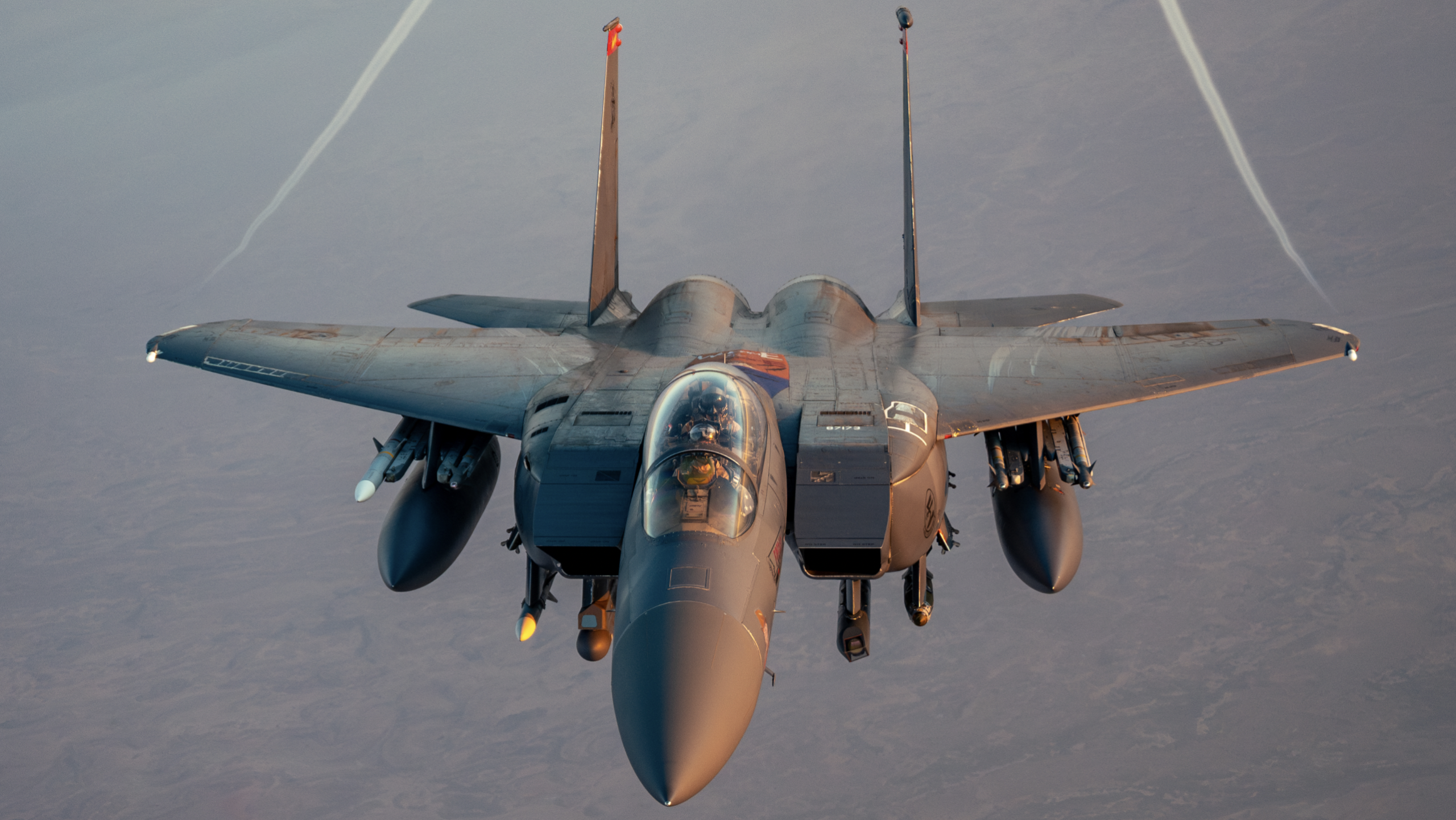
A U.S. fighter jet has been shot down over Iran, prompting an active search-and-rescue effort for a missing crew member in what marks a significant escalation in the ongoing conflict tied to Operation Epic Fury. U.S. officials confirmed that one of the two crew members aboard the aircraft has been recovered after ejecting, while the second remains unaccounted for, raising the stakes for potential U.S. military involvement on the ground.
The aircraft involved has been identified by U.S. officials as an F-15E Strike Eagle, a two-seat fighter designed for both air-to-air and air-to-ground missions. One crew member serves as the pilot, while the other operates weapons systems. It remains unclear which of the two individuals has been recovered, and officials have not disclosed details about how that recovery was carried out.

The incident represents the first confirmed case of a U.S. aircraft being downed over Iranian territory since the conflict began nearly five weeks ago. With one American believed to be missing behind enemy lines, the situation introduces new operational challenges for U.S. forces. Military planners must now weigh the urgency of recovering the missing service member against the risks associated with conducting search-and-rescue missions deep in hostile territory.
Iranian authorities have responded by urging civilians to assist in locating the crew. Reports from Iran’s semi-official news outlets indicate that local officials have encouraged citizens to report or capture any survivors, while images circulating on social media purport to show debris from the downed aircraft. Independent analysis of those images by forensic experts has suggested that visible components, including a tail fin, are consistent with the F-15E model.
The development comes amid intensifying rhetoric from Donald Trump, who has warned of severe military escalation against Iran, including threats targeting critical infrastructure such as energy facilities and desalination plants. The broader conflict, involving both U.S. and allied Israeli forces, has expanded across the region and continues to exert pressure on global energy markets.
According to data released by United States Central Command, at least 13 U.S. service members have been killed and more than 300 wounded since the start of hostilities. No American personnel have been confirmed captured by Iranian forces. However, the possibility of a downed airman evading capture inside Iran introduces a volatile new dimension to the conflict.
Despite repeated assertions from U.S. leadership that Iranian military capabilities have been significantly degraded, intelligence assessments indicate that Iran retains substantial missile and drone capacity. Estimates suggest that only about one-third of Iran’s missile arsenal has been definitively destroyed, while the status of another portion remains uncertain due to the likelihood that weapons have been concealed or shielded within underground facilities.
The conflict’s expansion has contributed to rising global energy prices and growing economic concerns, including inflationary pressures in multiple countries. Domestically, public support for the war effort remains limited. Recent polling indicates that a majority of Americans favor ending U.S. involvement quickly, even if it means falling short of stated military objectives.
With Operation Epic Fury still underway, the downing of a U.S. aircraft and the uncertain fate of one of its crew members could influence strategic decisions in Washington. The need to recover personnel, combined with the risks of further escalation, may increase the likelihood of deeper U.S. military engagement in the region.