
The United States has turned the Caribbean into a live laboratory for twenty‑first century warfare, using precision strikes and naval task forces against targets it labels as drug traffickers. What began as a counternarcotics push has evolved into a campaign that blurs the line between law enforcement and armed conflict, raising hard questions about who can be killed, where, and on what legal basis. As the operation expands, it is testing not only regional stability but the very rules that have governed the use of force for decades.
At the center of this shift is President Donald Trump’s decision to treat parts of the Caribbean and Latin American littoral as a battlespace, authorizing the United States Armed Forces to hunt suspected traffickers at sea and in coastal waters. The result is a crackdown that looks less like traditional interdiction and more like a low‑intensity war, complete with airstrikes, amphibious groups, and contested legal justifications.
From counternarcotics strategy to open-ended campaign
Washington’s public rationale for the Caribbean escalation is rooted in a long‑standing effort to cut the flow of cocaine and synthetic drugs into the United States. The Caribbean Border Counternarcotics Strategy, described by the United States Government as the framework for reducing threats associated with drugs along the Caribbean border, emphasizes coordination, interdiction, and support for partner nations rather than offensive combat operations. That document, known simply as The Caribbean Border Counternarcotics Strategy, outlines a whole‑of‑government approach that blends law enforcement, intelligence sharing, and capacity building, and it presents the region as a transit corridor to be managed rather than a theater of war.
The reality on the water now looks far more kinetic than the Strategy’s technocratic language suggests. Under President Trump, the United States has moved from a policy architecture centered on interagency cooperation to one that leans heavily on the United States Armed Forces and high‑end platforms. The shift is visible in the deployment patterns highlighted by United States Southern Command, which showcases carrier strike groups, maritime patrol aircraft, and special operations units assigned to regional missions on its official site. The legal and political bridge between a paper strategy and a shooting campaign is Operation Southern Spear, the umbrella under which the current crackdown has been organized.
Operation Southern Spear and the militarization of drug control
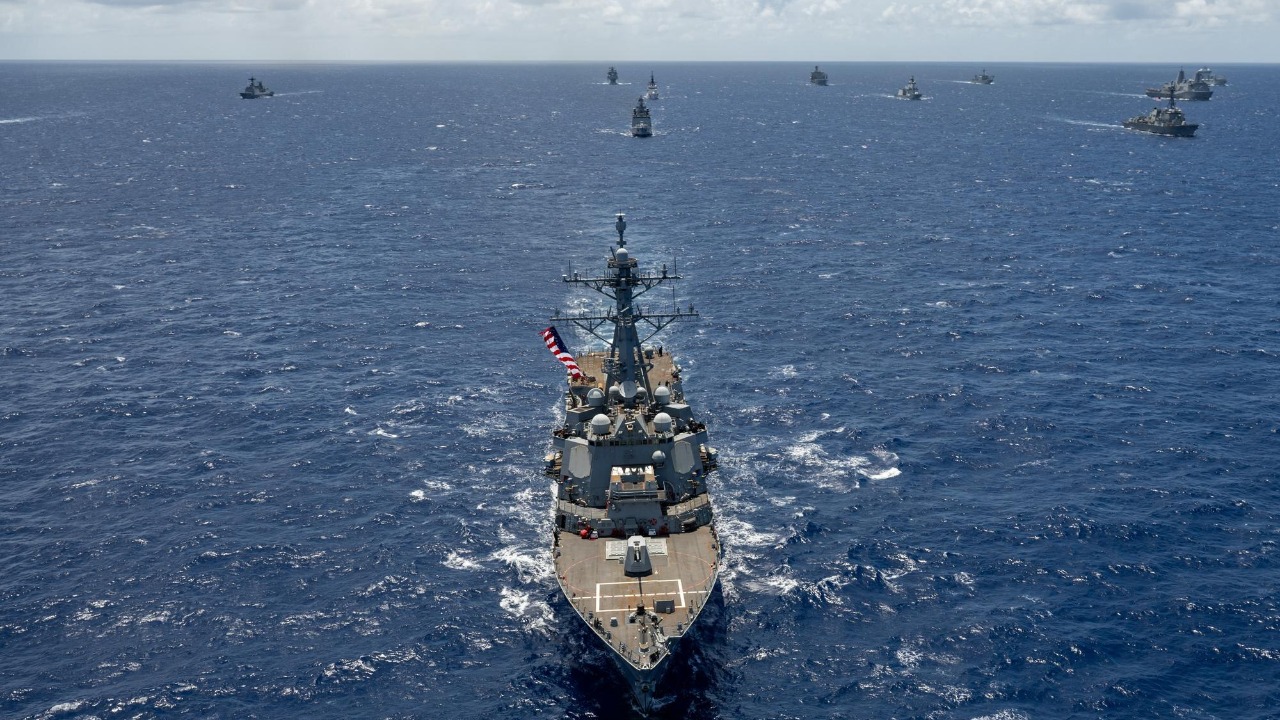
Operation Southern Spear marks a decisive turn toward militarized counternarcotics in the Caribbean and adjacent Latin American waters. According to detailed accounts of the United States military buildup in the Caribbean during Operation Southern Spear, President Donald Trump directed the United States Armed Forces to begin using military force against certain Latin American drug trafficking networks, authorizing air and maritime strikes as part of a broader surge. That buildup included the deployment of a carrier strike group and an Amphibious Ready Group, a level of naval power more commonly associated with major combat operations than with chasing smugglers in fast boats.
The operational concept treats suspected traffickers as quasi‑military targets, to be engaged at sea before they can reach coastal states or U.S. territory. Reporting on United States strikes on alleged drug traffickers during Operation Southern Spear describes a pattern of airstrikes and ship‑launched attacks on vessels identified as part of trafficking routes from Latin America to the United States. The United States has framed these actions as necessary to disrupt transnational criminal organizations that it argues pose a strategic threat, but the choice to rely on lethal force rather than interdiction and arrest moves the campaign into the gray zone between policing and war. That gray zone is precisely where the laws of armed conflict and human rights law begin to collide.
“Narco boat” strikes and the human cost at sea
The most visible and controversial expression of this new approach is the series of so‑called “narco boat” strikes in Caribbean and nearby waters. In one widely cited incident, The US carried out a strike off the Venezuelan coast that killed six people on a boat it said was transporting drugs, an attack described as the fifth such strike since September and part of a sequence that had already produced 27 deaths. That pattern, detailed in coverage of the latest narco boat strike, underscores how quickly a counternarcotics mission can accumulate a body count more typical of a small war than a law enforcement campaign.
Each engagement raises the same core questions: who was on board, what evidence justified lethal force, and what process, if any, existed to verify the target before missiles were fired. The United States has presented these operations as precise and intelligence driven, but the secrecy surrounding targeting criteria and post‑strike assessments makes independent verification difficult. When The US insists that a destroyed vessel was carrying traffickers, families and local authorities in coastal communities often contest that narrative, arguing that fishermen and migrant workers have been caught in the crosshairs. The absence of transparent investigations into civilian harm risks eroding the legitimacy of the entire crackdown, particularly in a region where memories of past U.S. interventions remain vivid.
Legal fault lines: when counternarcotics becomes war

Beyond the immediate casualties, the Caribbean campaign is forcing a reckoning with the legal boundaries of modern warfare. Analysts who have examined the operation’s legal underpinnings argue that the Trump administration’s justification begins to unravel in cases like The Centuries Seizure, a high‑profile interdiction that has become shorthand for the point Where the Legal Argument Collapses. In that episode, U.S. forces seized a vessel under a theory of extended self‑defense and extraterritorial jurisdiction that critics say stretches both international law and domestic authorizations for the use of force, as detailed in legal analysis of America’s Caribbean crackdown.
The core dispute turns on whether the United States can treat suspected traffickers on the high seas as combatants in a non‑international armed conflict, even when they are not directly linked to an organization already covered by existing war authorizations. Traditional law of the sea frameworks, along with human rights norms, assume that drug interdiction is a law enforcement activity that should prioritize capture and due process. By framing the crackdown as part of a broader warlike effort against transnational crime, the Trump administration is effectively claiming a right to use lethal force in circumstances that many legal scholars would classify as peacetime policing. That move risks setting a precedent other states could invoke to justify their own extraterritorial strikes, a prospect that alarms even some of Washington’s partners.
Regional backlash and strategic blowback
The human and legal controversies are feeding a broader political backlash across the Caribbean. Following the killing of six civilians in a missile strike on a Caribbean vessel, regional civil society groups and political leaders have demanded that the United States military halt its attacks and respect the sovereignty of Caribbean states. Reporting on how, Following the killing, the peoples of the Caribbean have risen to defend peace describes protests, diplomatic démarches, and calls for regional organizations to take a firm stance against what many residents now describe as a war on the Caribbean itself. For communities that already feel marginalized by global power politics, the sight of advanced U.S. weaponry destroying small boats has become a potent symbol of imbalance.
Strategically, the backlash threatens to undercut the very cooperation that The Caribbean Border Counternarcotics Strategy depends on. Effective interdiction in the region requires access to ports, airfields, and intelligence from partner governments, all of which can be constrained if publics perceive the United States as an occupying or hostile force. United States Southern Command, which highlights partnership and joint training on its regional portal, now has to manage relationships in an environment where each new strike risks inflaming opinion. If Caribbean governments respond by limiting basing rights or intelligence sharing, the United States could find that a short‑term show of force has produced long‑term strategic costs, weakening its influence in a region it has long considered vital.
Testing the future rules of conflict
The Caribbean crackdown is more than a regional story; it is a preview of how powerful states may try to handle transnational threats in the coming decades. By using Operation Southern Spear to fuse military assets, counternarcotics objectives, and expansive legal theories, the United States is effectively writing a playbook for cross‑border force against non‑state actors that are not traditional insurgents or terrorists. The United States has already normalized targeted strikes on alleged traffickers under the Operation Southern Spear banner, as documented in accounts of United States strikes, and other governments are watching closely.
Whether this model becomes an accepted part of the international security toolkit will depend on how the current campaign is judged in hindsight. If the operation is seen as effective, legally sound, and responsive to regional concerns, it could entrench a new norm that treats certain criminal networks as legitimate military targets. If, instead, the legacy is one of contested killings, strained alliances, and legal arguments that collapse under scrutiny, the Caribbean may be remembered as the place where the boundaries of modern warfare were pushed too far. For now, the region sits at the intersection of strategy, law, and human cost, as the United States tests how far it can go in turning counternarcotics into a new kind of war.