
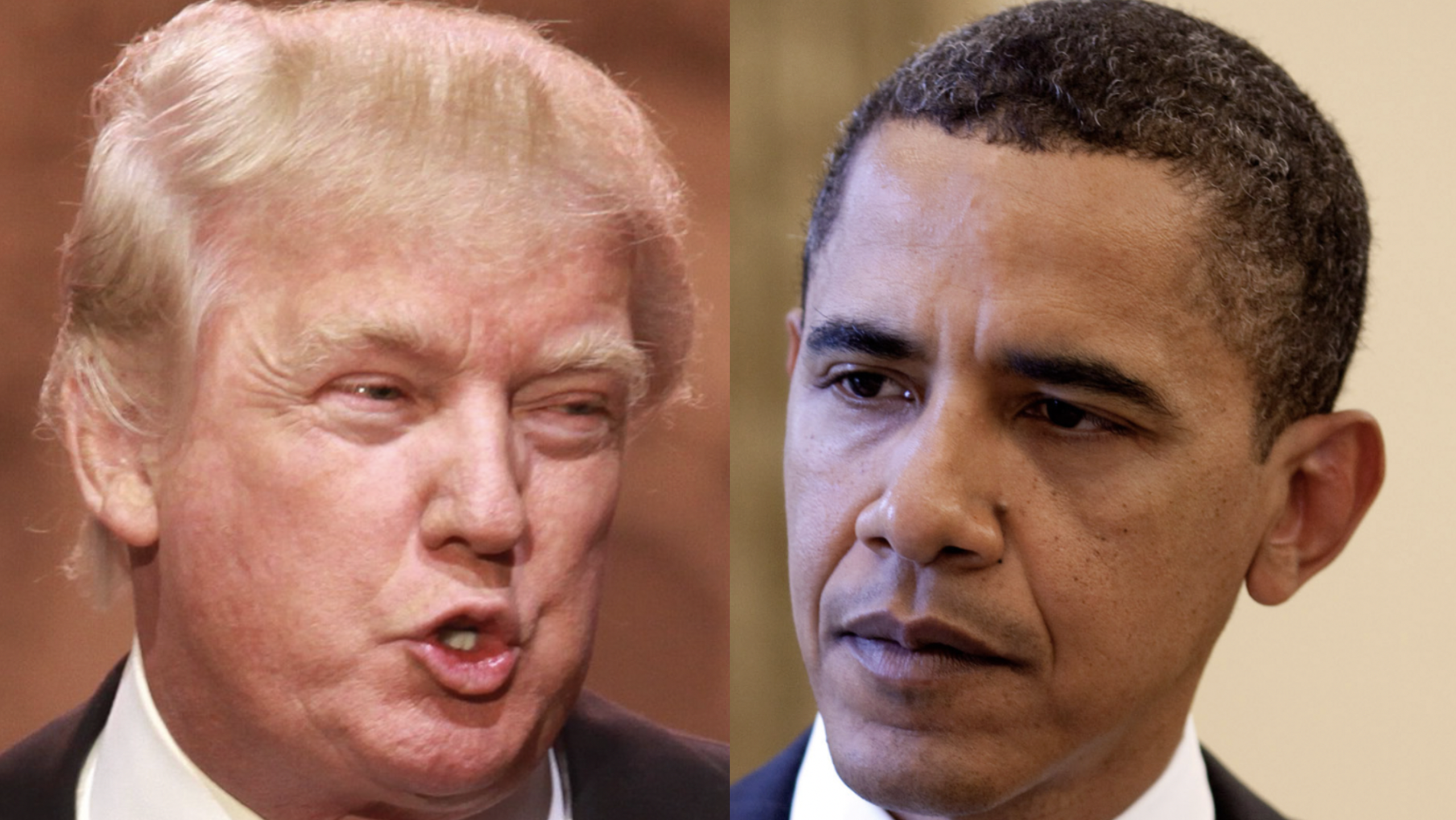
President Donald Trump said Wednesday that no American president has been tougher on Iran than he has, drawing a direct contrast between his administration’s newly announced agreement with Tehran and the 2015 nuclear deal negotiated under President Barack Obama, which Trump described as a pathway toward an Iranian nuclear weapon rather than a barrier against one.
Speaking at a press conference closing out the Group of Seven summit in Évian-les-Bains, France, Trump addressed the structure and enforceability of the framework agreement reached with Iran on Sunday. “No president in history has ever been tougher on Iran than I have,” Trump said. “And they know that.”
Trump acknowledged that certain elements discussed with Iranian officials were not formally written into the agreement itself, characterizing the document as a memorandum of understanding rather than a binding treaty. “By the way, if they don’t honor the agreement or some things aren’t even mentioned in the agreement, it’s a memorandum of understanding,” he said. “But we have an understanding of certain things without writing it.”
He then repeated his warning that noncompliance would be met with renewed military action rather than diplomatic consequences. “And if they don’t honor that, we’ll probably go back to bombing them until they honor it,” Trump said. “You know, it’s amazing what bombs can do.”
Trump used the moment to draw a historical comparison to the Joint Comprehensive Plan of Action, the multilateral agreement negotiated during the Obama administration in 2015 that placed temporary restrictions on Iran’s nuclear program in exchange for sanctions relief. “So I say it, the Obama deal was a road to a nuclear weapon,” Trump said. “And let’s call it the Trump deal was a wall for a nuclear weapon that the nuclear weapon could not get through.”
He elaborated on that framing, describing the new agreement as an impassable barrier compared to what he characterized as the temporary and porous restrictions of the earlier deal. “Nobody’s going to get through it,” Trump said. “We built a wall. They weren’t going to have it. And that’s what we have right now.”
Trump pointed to specific language in the new agreement that he said distinguished it from its predecessor. “And it says very clearly, the most important clause to me too, number one, the strait opens,” he said, referring to provisions reopening the Strait of Hormuz. “But that’s much less important than the other clause. Close number whatever, five, eight, is a very strong statement that they will never have a nuclear weapon.”
He emphasized that the new agreement, in his characterization, contained no expiration on Iran’s nuclear restrictions. “And it doesn’t say they’ll have one in five years or 10 years or 20 years,” Trump said. “With Obama, they were able to enrich very quickly.”
Trump’s broader remarks elsewhere in the press conference detailed his account of the Obama-era agreement, which he said involved sending $1.7 billion in cash to Iran aboard a Boeing 757. The 2015 deal, formally known as the JCPOA, had an initial duration of roughly a decade for its core restrictions before the Trump administration withdrew the United States from the agreement in 2018.
Trump closed his comparison of the two agreements by describing the current moment as an opportunity for Iran rather than solely a point of confrontation. “This agreement now provides Iran with a historic opportunity,” he said. “If they follow the path of cooperation will have opened for them, their country will have a chance to survive.”
The comments came two days after Pakistani Prime Minister Shehbaz Sharif, who mediated negotiations between Washington and Tehran, announced that the United States and Iran had reached an agreement to end nearly four months of war and immediately and permanently halt military operations on all fronts, including in Lebanon. Sharif said a formal signing ceremony would take place Friday, June 19, in Switzerland.
Trump confirmed the agreement in a Truth Social post on Sunday, writing that the deal was “now complete” and authorizing the reopening of the Strait of Hormuz along with the lifting of the U.S. naval blockade that had been in place around Iranian ports during the conflict, which began on February 28 with coordinated U.S. and Israeli strikes.
Senior administration officials briefed reporters in Évian on the contents of the memorandum of understanding on Wednesday, reading through its provisions in full, including Iran’s commitment not to produce or procure a nuclear weapon and a 60-day window for both sides to negotiate a more comprehensive final agreement.
Trump’s framing of the deal as categorically different from the Obama administration’s approach was a recurring theme throughout the press conference, which capped three days of G7 meetings hosted by French President Emmanuel Macron. Trump also credited the 2020 killing of Iranian military commander Qasem Soleimani, which he ordered during his first term, as a turning point that he said set the conditions for the current agreement.
A ceremonial signing of the framework agreement is expected to take place in Geneva, Switzerland, later this week. Vice President JD Vance has said he plans to attend, and Trump told reporters in Évian that he might also be present, though he noted the document’s status as a memorandum of understanding made his personal signature uncertain.