
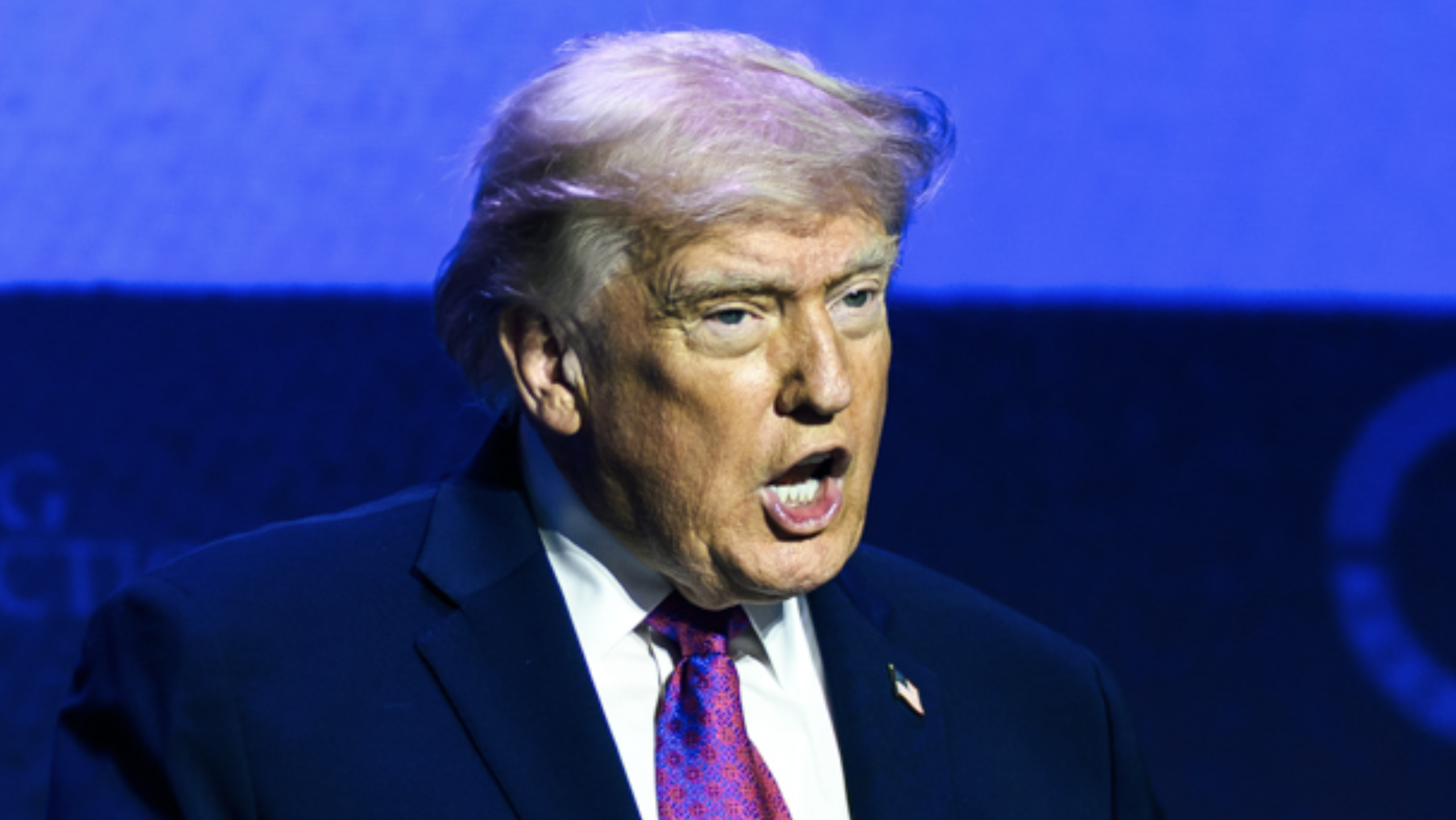
President Donald Trump stated in a May 4, 2026, interview on Salem News that Iran may struggle to retrieve highly enriched uranium from sites struck during last year’s Operation Midnight Hammer, complicating any potential nuclear deal. Trump emphasized that the precision strikes buried much of the material deep under rubble, making recovery uncertain despite U.S. demands to secure it.
In the interview, Trump addressed key red lines for any agreement with Iran. When asked whether recovering the highly enriched uranium remained a priority, he responded affirmatively. “Yes. Yes, we do. And by the way, from, from a standpoint of value, it’s not very valuable, probably can’t be used. They may not be able to get it, ’cause, you know, despite they love to say, ‘Oh, maybe these great pilots didn’t do their job.’ In the dead of night at 1:00 in the morning with no moon, every single bomb went down those air shafts. It was the most incredible. Totally, uh, you know, I use the word obliterated, and the Atomic Energy Commission agreed with me. So people don’t even know if you can get it. Right. And by the way, if they could’ve gotten it, they would’ve gotten it. It was… That was one of the greatest military maneuvers ever,” Trump said.
.@POTUS on the Iranian regime's remaining highly enriched uranium, buried far beneath rubble following Operation Midnight Hammer last year: "People don't even know if you can get it… We want it back." pic.twitter.com/V8fcplr0I0
— Rapid Response 47 (@RapidResponse47) May 4, 2026
Trump reiterated the demand to recover the material. When pressed if returning the uranium formed part of a red line, he confirmed, “Yeah, we want it back 100%.”
The comments highlight the lasting impact of Operation Midnight Hammer, conducted on June 22, 2025, as part of the Twelve-Day War. U.S. forces targeted three key Iranian nuclear facilities: the Fordow Uranium Enrichment Plant, the Natanz Nuclear Facility, and the Isfahan Nuclear Technology Center. Fourteen GBU-57A/B Massive Ordnance Penetrators, carried by B-2 Spirit stealth bombers, along with Tomahawk missiles launched from a submarine, struck the sites. Trump described additional U.S. F-35 and F-22 fighters entering Iranian airspace to draw out surface-to-air missiles, though none were launched.
Trump has consistently described the strikes as having “completely and totally obliterated” Iran’s key nuclear enrichment facilities. A July 2025 Pentagon assessment indicated the Iranian nuclear program was likely set back by around two years. Iranian Foreign Minister Abbas Araghchi acknowledged that the nuclear sites sustained severe damage.
The Fordow plant, built deep underground at an estimated 80 to 90 meters, presented a significant challenge that the bunker-buster munitions were designed to address. The operation marked the first U.S. attack on Iranian territory since 1988 and the first offensive action against an Iranian target since the 2020 assassination of Qasem Soleimani.
Trump framed the mission as one of the most successful military operations in recent history. He noted that the nighttime precision bombing left the highly enriched uranium potentially inaccessible, buried far beneath the rubble. This situation, according to his remarks, reduces the material’s immediate value and usability even if Iran could reach it.
The Twelve-Day War began with Israeli strikes on June 13, 2025, and concluded with a ceasefire on June 24. The U.S. participation through Operation Midnight Hammer represented its primary direct involvement. Iran responded to the strikes by attacking a U.S. base in Qatar before the ceasefire took effect. Shortly afterward, Iran suspended cooperation with the International Atomic Energy Agency.
Trump’s interview comments come amid ongoing tensions and renewed U.S. efforts to address Iran’s nuclear capabilities. He stressed that any deal must prevent Iran from developing a nuclear weapon, including measures to cap missile production. “Yeah, but you know, you have to- ‘Cause I don’t trust them … you have to look a little bit like at the neighbors. You know, they can’t have, less than, you know. They say, ‘Well, what about other people?’ Look, missiles are bad. Uh, but yeah, and they do have to cap it, but this is about they cannot have a nuclear weapon,” Trump stated when asked about missile program limits and inspections.
The president’s remarks underscore the technical difficulties Iran faces in recovering material from the heavily damaged underground facilities. By highlighting the success and precision of the 2025 strikes, Trump suggested that the buried uranium may remain beyond reach, shaping the parameters of any future negotiations.