
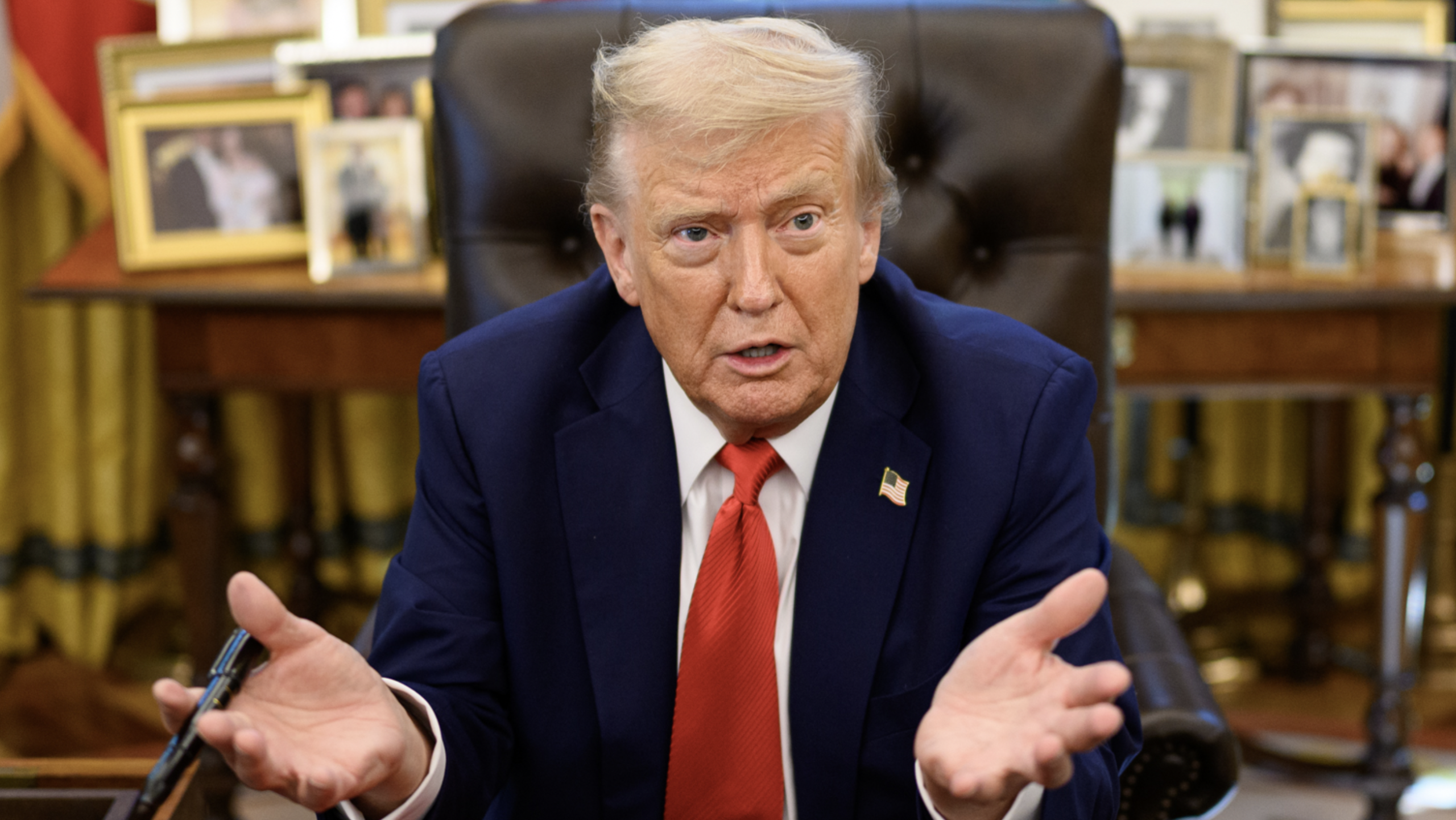
In one of the most jarring about-faces of the ongoing U.S.-Iran conflict, President Donald Trump told reporters at the NATO summit in Ankara, Turkey, on Wednesday that after getting to know Iran’s new leadership, he is no longer certain he wants to reach a peace agreement with them at all — a declaration that throws the fragile diplomatic process that produced last month’s ceasefire into serious doubt.
The remarks came in response to a pointed question from Tyler Pager of the New York Times, who noted the dramatic shift in Trump’s characterization of Iran’s leaders over a matter of weeks. Just last month, Trump had spoken of the Iranian leadership in notably positive terms, calling them rational, intelligent, and capable. On Wednesday, in front of a global audience at the NATO summit, he described them as “scum” and “sick people.”
“Last month you said Iranian leaders were very rational people, nice people to deal with, strong people, smart people,” Pager noted. “Today you said they were scum, sick people, and being led by sick people. What changed?”
Trump’s response was blunt. “I got to know them,” he said. “I’m not sure I want to make a deal with them. We can play games, but I’m not sure I want to make a deal. I just finished the job.”
The stunning turnaround comes roughly three weeks after the U.S. and Iran signed a Memorandum of Understanding on June 17 — a 14-point agreement that committed both countries to a 60-day ceasefire, a reopening of the Strait of Hormuz, and the lifting of U.S. sanctions on Iranian oil. At the time of signing, Trump celebrated the deal as a major diplomatic achievement.
When the MOU was signed last month, Trump said the deal “achieves everything we set out to accomplish, everything and much more.” But key issues, including the status of Iran’s nuclear program, remained unaddressed.
By Wednesday morning, however, Trump’s language had hardened dramatically. Earlier in the day, before the press conference, he had already declared the ceasefire finished. “I don’t want to deal with them anymore. They’re scum. Do you know what scum is? They’re scum. They’re sick people. They’re led by sick people, and they’re vicious, violent people, and if they had a nuclear weapon, they’d use it,” Trump told reporters. “As far as I’m concerned, it’s over.”
Trump also accused Iranian negotiators of agreeing to terms in private and then publicly denying those conversations ever occurred. “They’re liars,” he said. “There’s something wrong with them.”
NATO Secretary General Mark Rutte aligned himself with the U.S. position, stating: “I’m with you on Iran.” Earlier, Rutte had insisted the U.S. strikes were “absolutely necessary,” noting that Iran had violated the ceasefire.
Iran’s Foreign Minister Abbas Araghchi responded in a post on X, writing that his country does not “answer vulgarity with vulgarity, but with action: fearlessly and with great valor.”
Iran’s Deputy Foreign Minister and parliament speaker Mohammad Bagher Ghalibaf, who has been serving as Tehran’s chief peace negotiator, said in a post to X that the U.S. had violated the MOU with its latest strikes: “The era of bullying and extortion is over. It leads nowhere. We don’t fold.”
Trump’s comment that he does not want to make a deal represents a significant departure from the diplomatic pathway the administration itself constructed. The MOU was the product of months of back-channel negotiations involving U.S. envoy Steve Witkoff and Trump’s son-in-law Jared Kushner. After declaring the ceasefire “over” on Wednesday, Trump said he would speak to his negotiators, but argued it was a “waste of time” dealing with Iran.
The president did leave a narrow door open for continued talks, suggesting the negotiators could continue if they wished. But his own stated position, repeated multiple times throughout the press conference, was that his judgment of the Iranian leadership had shifted fundamentally — and that shift was based on direct observation of their behavior in recent weeks.
The declaration underscores the high-wire nature of the current moment. The United States and Iran reached the closest thing to a formal ceasefire the conflict had yet produced, only to see it unravel within three weeks as both sides traded strikes in the Strait of Hormuz. Trump’s public rejection of the negotiating track he himself championed marks a potentially historic turning point in the conflict’s trajectory.