
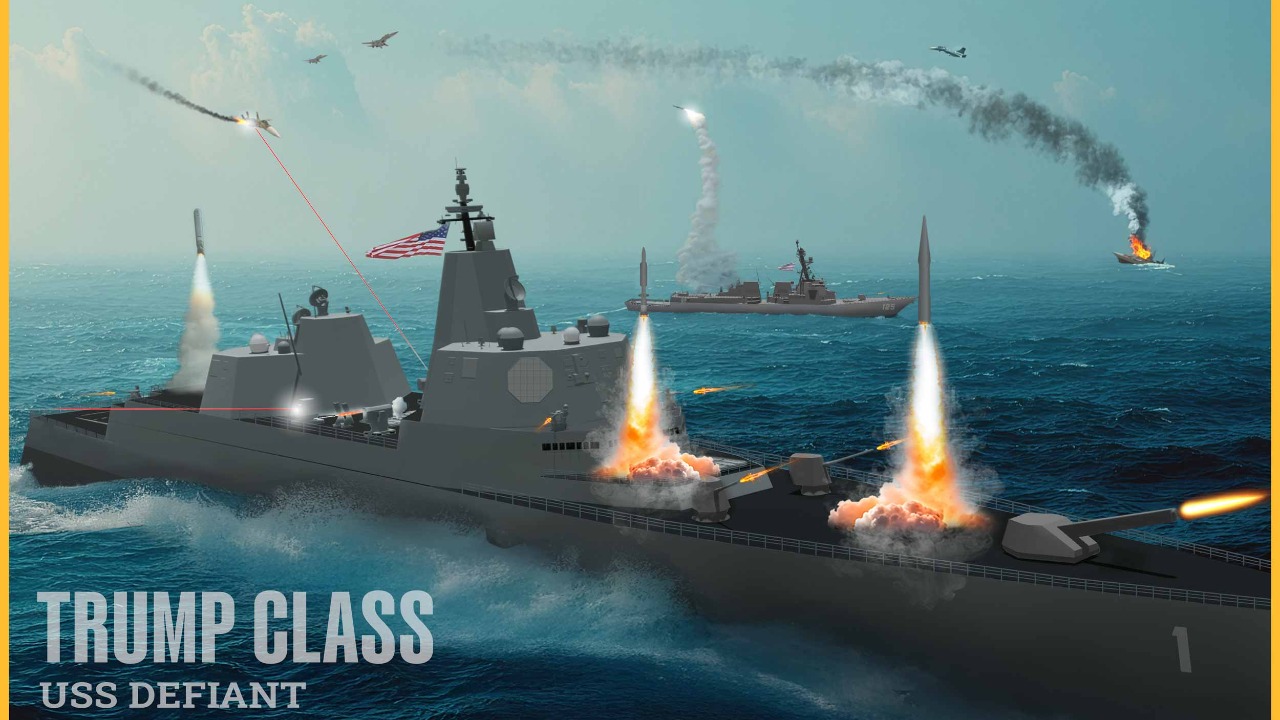
President Trump is pitching a new “Trump-class” battleship as the flagship of a future “Golden Fleet,” casting the concept as proof that American sea power is entering a new golden age. The proposal blends nostalgia for big-gun warships with futuristic promises of lasers and nuclear-armed missiles, while raising sharp questions about cost, feasibility, and whether such a vessel fits modern naval warfare.
Supporters inside the administration frame the Trump-class as both a military leap and a jobs engine for the United States shipbuilding industry. Critics, including naval analysts and former officers, counter that the plan revives an obsolete platform and risks diverting money and attention from the ships and weapons the Navy actually needs.
Trump’s vision of a ‘Golden Fleet’ and a namesake warship
Trump has wrapped the Trump-class concept in sweeping rhetoric about restoring American maritime dominance, describing the ship as a centerpiece of a broader “Golden Fleet” that would showcase U.S. power and industrial strength. In public remarks, Trump has said the new battleship-style vessel will be “100 times” more powerful than earlier American capital ships, a claim that echoes his long-standing fascination with the big-gun era of World War II and his desire to see the United States Navy field visibly imposing hardware again, according to Trump Class and On December. The Golden Fleet label is meant to signal a generational modernization push, with the Trump-class marketed as the most visible symbol of that effort.
The administration has paired this symbolism with a promise to revive domestic shipyards and suppliers under a program the Navy describes as a way to “revitalize America’s maritime industrial base, rapidly build a new generation of warships, and keep projecting peace through power,” language used in internal descriptions of The Golden Fleet. President Trump has appeared with Secretary Pete Hegseth and Navy Secretary John Phelan to underscore that the Navy is central to this industrial strategy, presenting the Trump-class as both a warship and a domestic economic project tied to the broader Golden Fleet vision, according to President Trump.
What the Trump-class battleship is supposed to be
At the heart of the pitch is a 30,000-ton surface combatant that Trump and his aides insist deserves the “battleship” label, even though its planned armament and role look closer to a heavily armed guided missile ship. Trump has promoted renderings of the first hull, the USS Defiant, with a hull designation of BBG-1, suggesting a hybrid between traditional battleship nomenclature and modern guided missile roles, according to descriptions of the Projected USS Defiant (BBG-1). The ship is advertised as carrying advanced missile batteries, a pair of 300-kW lasers, and other high-end systems that Trump and his allies say will make it the most powerful surface combatant ever built for the United States Navy, according to the Trump entry and related reporting.
Trump and Navy Secretary John Phelan have also said the new class would carry nuclear-armed sea-launched missiles, a feature that would give the ship a strategic strike role in addition to conventional missions, according to Navy Secretary John Phela. Supporters argue that combining nuclear-capable missiles, high-energy lasers, and heavy conventional firepower on a single 30,000-ton hull would allow the Trump-class to dominate contested seas and deter adversaries in a way smaller ships cannot, a framing that has been reinforced by administration visuals and talking points about replacing aging warships with a new generation of Trump-branded vessels for the Navy, as described in coverage of Donald Trump and the Golden Fleet.
Symbolism, nostalgia, and the politics of naming
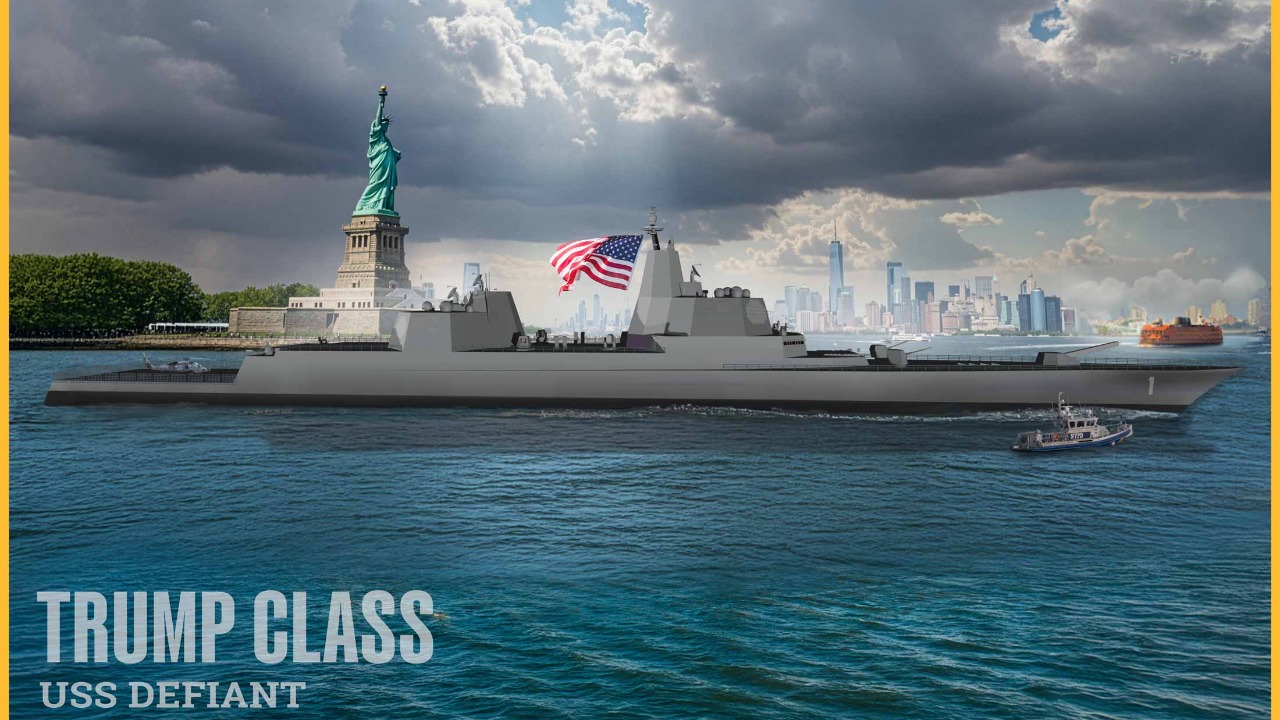
Beyond the technical specifications, the Trump-class is steeped in symbolism that plays to Trump’s political base and his personal brand. Trump has repeatedly invoked the era when “we had big battleships,” presenting the new design as a way to bring that imagery into the twenty-first century and to signal that the United States is once again building visibly dominant warships, according to remarks cited in Trump. Naming the class after himself and highlighting the USS Defiant in renderings behind the podium reinforces that this is not just a Navy program but a personal legacy project, with the ship’s silhouette and branding carefully staged in televised events, as seen in coverage of the Renderings of the USS Defiant.
The Golden Fleet label itself carries political weight, suggesting a prosperous, almost mythic future for American sea power that dovetails with Trump’s broader messaging about national renewal. The Navy has described the Golden Fleet as a program to rebuild America’s maritime industrial base and rapidly expand the fleet, language that aligns with Trump’s promises to restore manufacturing jobs and project “peace through power,” according to internal descriptions of Navy goals. By tying the Trump-class directly to that narrative, the administration is using the ship as a visual shorthand for a broader agenda that blends defense policy, industrial strategy, and campaign-style branding, a pattern also reflected in commentary on Donald Trump and his role as President of the United States.
Strategic doubts: is it really a battleship for today’s wars?
Naval experts and defense analysts have been quick to question whether the Trump-class concept matches the realities of modern maritime conflict. Some point out that nothing in U.S. law prevents the president from calling a ship a battleship, but argue that the proposed design is closer to a large guided missile ship than to the heavily armored, gun-centric vessels that dominated World War II, according to assessments that ask Nothing more than whether the label fits. Analysts also stress that the United States Navy moved away from battleships decades ago, closing the chapter on that class after the last Iowa-class ships left service, and that current doctrine emphasizes distributed lethality, submarines, and carrier air wings rather than single, massive surface targets, a point underscored in critiques of the Golden Fleet’s flagship.
Critics also highlight that large surface combatants are increasingly vulnerable to long-range anti-ship missiles, submarines, and drones, raising doubts about the wisdom of concentrating so much firepower and cost on a single hull. One detailed examination of the USS Defiant concept notes that a century of evidence suggests large warships are obsolete in the face of modern precision weapons, and concludes that Trump’s claim that the ship will be “100 times” more powerful than predecessors is “factually incorrect,” according to the USS Defiant analysis. Another assessment bluntly states that “this ship will never sail,” arguing that the Trump-class faces a large obstacle in its way, reality, and that the plan clashes with both budget constraints and the technological maturity of systems like railguns and high-energy lasers, according to commentary on The Trump concept and its collision with Reality Trump.
Industrial ambition, budget reality, and what comes next
Even supporters of a larger Navy acknowledge that the Trump-class would demand enormous resources at a time when the service is already struggling to fund submarines, carriers, and smaller surface combatants. The Golden Fleet initiative is framed as a way to restore the domestic shipbuilding industry and expand the fleet, but analysts warn that a single 30,000-ton prestige ship could crowd out more practical investments if it moves beyond the rendering stage, according to descriptions of the Golden Fleet as a main component of Trump’s push to restore the domestic shipbuilding industry. Some experts argue that if the goal is to revitalize America’s maritime industrial base, a mix of frigates, logistics ships, and repair yards might deliver more capability and jobs than a handful of Trump-class hulls, a tension that underlies many of the skeptical assessments of the program’s long-term viability, including those that suggest the Golden Fleet’s battleship will never be built at all, as noted in Dec analyses.
For now, the Trump-class remains a political and conceptual project rather than a ship under construction, with its future dependent on congressional funding, Navy priorities, and the pace of technological progress on systems like 300-kW lasers and advanced missile defenses. Trump and his allies continue to present the design as a bold statement that the United States Navy will not cede blue-water dominance, while critics see it as a costly distraction from more urgent modernization needs, a divide reflected in both supportive and skeptical coverage of Trump and his plans for the Navy. Whether the Trump-class ever leaves the drawing board, the debate around it has already become a proxy fight over what kind of fleet the United States should build for the threats of the coming decades, and how much of that future should be shaped by nostalgia, branding, and the promise of a Golden Fleet.