
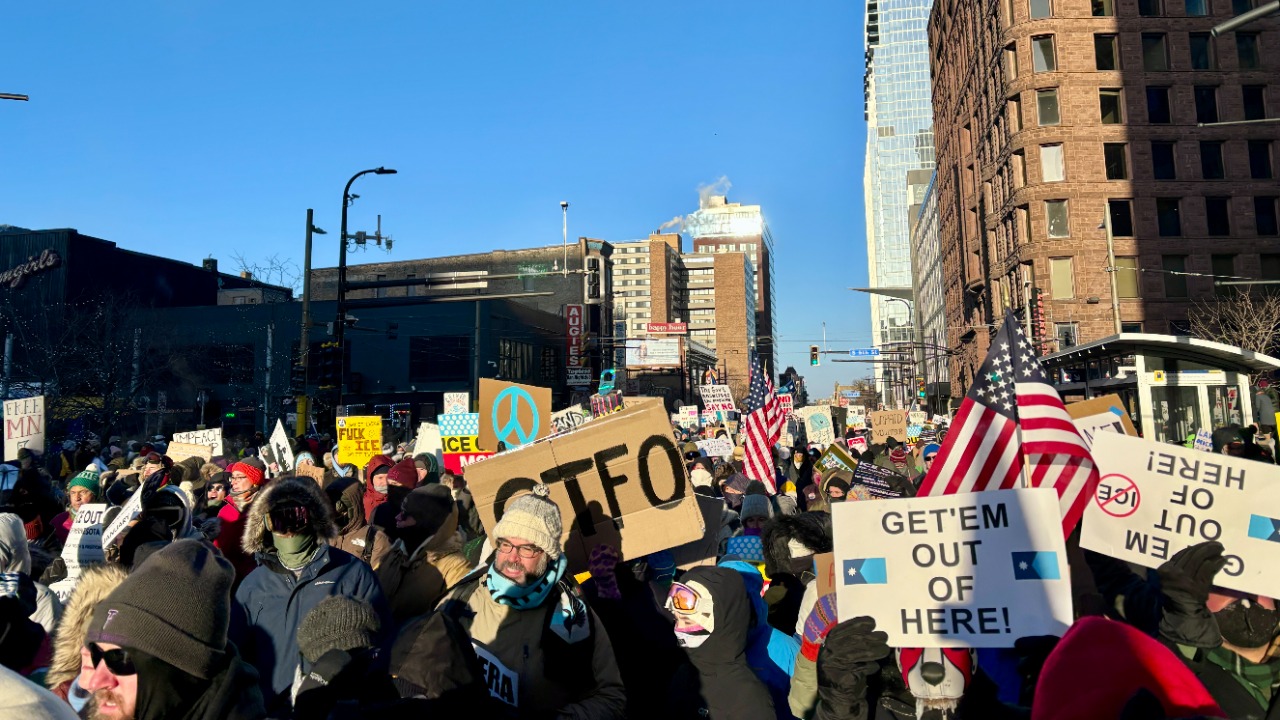
President Donald Trump has redefined the role of federal law enforcement in heavily Democratic jurisdictions, instructing the Department of Homeland Security to keep its agents away from protests in blue cities unless local leaders explicitly request help. The directive, delivered as demonstrations over immigration and policing continue in several metropolitan areas, effectively shifts first responsibility for crowd control and public order back to mayors and governors who have often clashed with the White House. It also revives a long-running argument over when Washington should step into local unrest and when it should stand back.
The order arrives after years of controversy over federal deployments to cities such as Minneapolis and Portland, where critics accused agents of escalating tensions and blurring lines of accountability. By directing Homeland Security to hold back unless invited, Trump signals a political challenge to Democratic officials and a recalibration of federal power at the local level.
What Trump ordered DHS to do, and where
Trump’s instruction is straightforward on its face: the Department of Homeland Security is to avoid intervening in protests in Democrat run cities unless those jurisdictions ask for federal assistance. According to accounts of the directive, the president told aides that federal agents should not be dispatched into demonstrations in Democratic led communities without a formal request, a shift from earlier episodes when tactical teams were sent in over the objections of local leaders. One report described how the U.S. president instructed the Department of Homeland Security to stay away from such protests after criticism of how federal agents interacted with citizens in earlier crackdowns.
The practical effect is most visible in large metropolitan areas that have been focal points for demonstrations. Trump has cited Democratic led cities including Minneapolis, Los Angeles, Washington, D.C., and Portland as places where local officials must now manage unrest on their own unless they seek federal help. In one summary of the order, Trump was described as telling DHS to stay away from protests in these Democratic-led cities unless federal help is requested, a clear attempt to draw a bright line between local policing and national intervention.
The carve out for federal property and immigration enforcement
Even as Trump limits the circumstances under which Homeland Security can enter blue city streets, he has carved out a broad exception for federal facilities and immigration enforcement. Trump said he instructed Homeland Security Secretary Kristi Noem not to intervene in protests in Democratic cities unless asked, but he also emphasized that Immigration and Customs Enforcement and Border Patrol would still be deployed aggressively to protect courthouses, federal buildings, and other national assets. In one account, President Donald Trump said Saturday that he had given Kristi Noem this dual mandate, limiting street intervention while promising a forceful posture around federal property.
The president has framed this distinction as a matter of constitutional responsibility, arguing that Washington cannot allow federal courthouses or immigration facilities to be overrun even if it is stepping back from general crowd control. In a separate account from Washington, TNND reported that Trump said that the federal government would not intervene in anti immigration riots in certain cities, but that he had ordered ICE and Border Patrol to defend federal property in places such as Minneapolis, Portland, and Los Angeles. That report from WASHINGTON underscored that Trump was still prepared to confront what he called rioters, agitators, and insurrectionists when federal sites were at stake.
Blue city leaders, “please” and the politics of asking for help
Trump’s directive is as much a political message as a law enforcement guideline, and he has not hidden that fact. In public comments, he has said that Democratic led cities will have to ask and even say “please” before Homeland Security will intervene in their protests, a formulation that turns a procedural requirement into a pointed rebuke. One account quoted Trump as saying Democratic leaders must formally request DHS assistance before federal agents intervene, a remark relayed by Sophie Brams of The Hill.
Local officials are weighing that demand against their own political incentives and public safety concerns. Some Democratic mayors have long argued that federal agents inflame tensions, pointing to earlier deployments in Portland and Washington, D.C., while others worry that refusing help could leave them vulnerable if protests turn violent. A brief from News / AP summarized the Topline that President Donald Trump has instructed Homeland Security Secretary Kristi Noem not to intervene in protests in Democratic led cities unless asked, highlighting the pressure on local leaders to decide whether to invite federal forces. That point was echoed in a second brief, reinforcing that Trump assigned DHS a strictly conditional role, reinforcing how central the request requirement has become to the politics of these protests.
Clarifications, media scrutiny and what comes next
As the directive rippled through Washington, Trump and his aides moved to clarify its scope and intent. In a Politics chat, commentators noted that Trump had sought to explain his directions to DHS while the House prepared to take up a spending package, underscoring how the order intersects with broader fights over federal authority and funding. That conversation, led by Ayesha Rascoe and Tamara Keith, described how Politics around Trump, DHS, and the House were converging, with lawmakers watching closely how the new posture might affect security in their own districts.