
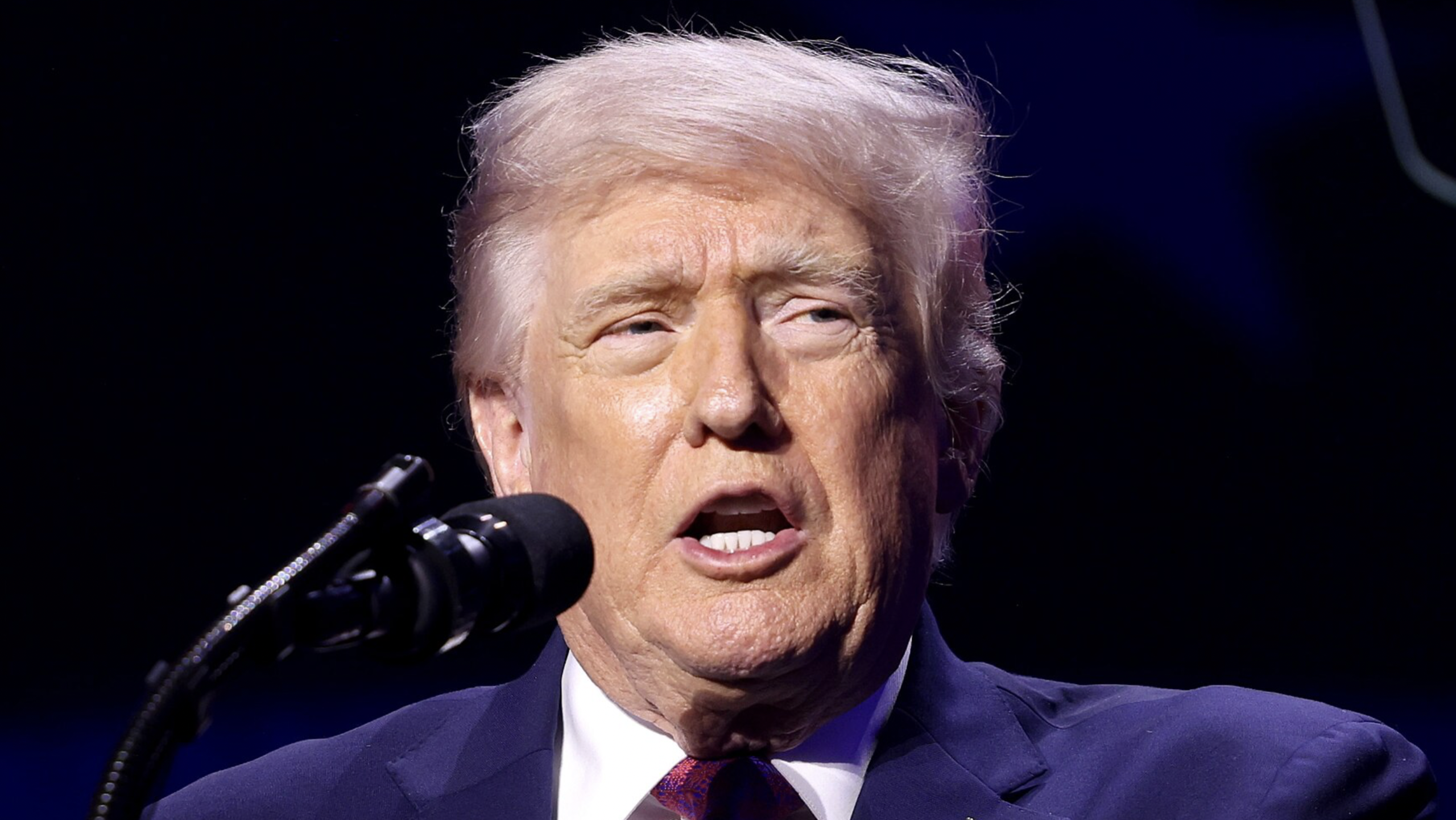
President Donald Trump on Monday called on six Muslim-majority nations — Saudi Arabia, Qatar, Pakistan, Turkey, Egypt, and Jordan — to simultaneously join the Abraham Accords as part of what he described as a once-in-history diplomatic realignment of the Middle East, warning that any country unwilling to sign would be excluded from the broader Iran peace framework.
A “Mandatory” Demand
In a Truth Social post on May 25, 2026, Trump said that following Saturday discussions with leaders from across the region, he had made clear that, “after all the work done by the United States to try and pull this very complex puzzle together, it should be mandatory that all of these Countries, at a minimum, simultaneously, sign onto the Abraham Accords.” Trump listed the countries in question as Saudi Arabia, the United Arab Emirates — already a member — Qatar, Pakistan, Turkey, Egypt, Jordan, and Bahrain, also already a member.
The statement represented the most direct and far-reaching expansion push the Abraham Accords have seen since their original signing in September 2020.
What the Abraham Accords Are
The Abraham Accords are a series of bilateral agreements brokered by the United States whose core original intent has been to normalize relations between Israel and several Arab countries. The first agreements were signed on September 15, 2020, between Israel and the United Arab Emirates and Israel and Bahrain. Israel and Sudan agreed to normalize relations in October 2020, while in December 2020, Israel and Morocco established official diplomatic ties.
Kazakhstan formally joined the grouping on November 6, 2025, although it had maintained normalized relations with Israel since the 1990s. The accords were brokered during Trump’s first term and are widely regarded as one of his signature foreign policy achievements.
Countries Already in the Accords
The Abraham Accords — consisting of a general declaration alongside bilateral agreements between Israel and the individual parties — were signed by Israel, the United Arab Emirates, Bahrain, and Morocco. Sudan also signed the general declaration, but ongoing instability in the country has delayed its ability to sign a bilateral agreement to normalize relations.
Trump acknowledged in his post that the UAE and Bahrain are already members. Of the six new nations he named, none have formal normalization agreements with Israel under the existing Accords framework. Egypt and Jordan signed peace deals with Israel in 1979 and 1994, respectively, while Turkey and Israel have diplomatic relations, although ties are severely strained.
An “Unparalleled” Document
Trump’s post argued at length that joining the Accords had been transformative for existing members. “The Abraham Accords have proven to be, for the Countries involved (The United Arab Emirates, Bahrain, Morocco, Sudan, and Kazakhstan), a Financial, Economic, and Social BOOM, even during this time of Conflict and War, with the current Members never even suggesting leaving, or taking so much as even a pause,” he wrote. He attributed that durability to the concrete benefits the agreements had delivered, adding that those benefits “will be even better for everybody.”
Trump described the Accords in sweeping historical terms, writing that the resulting document would be “respected like no other that has ever been signed, anywhere in the World,” and that “its level of Importance and Prestige will be unparalleled.” He went further: “This will be the most important Deal that any of these Great, but always in Conflict Countries, will ever sign. Nothing in the past, or in the future, will surpass it.”
Sequence and Consequences
Trump indicated he expected Saudi Arabia and Qatar to move first. “It should start with the immediate signing by Saudi Arabia and Qatar, and everybody else should follow suit,” he wrote. He added a firm condition for those who declined: “If they don’t, they should not be part of this Deal in that it shows bad intention.”
He allowed that a small number of countries might have legitimate reasons for not joining. “It may be possible that one or two have a reason for not doing so, and that will be accepted, but most should be ready, willing, and able to make this Settlement with Iran a far more Historic Event than it would, otherwise, be,” Trump wrote.
Saudi Arabia’s Standing
Saudi Arabia has shown serious interest in joining the Abraham Accords but has not yet reached an agreement to do so. Efforts to normalize relations between Israel and Saudi Arabia have been ongoing since the initial signing, but the Israel-Hamas War led Saudi Arabia to insist on first creating a viable path to an independent Palestinian state.
Trump’s post did not address the Palestinian statehood question, which has remained a central condition for Riyadh and a complicating factor in normalization discussions.
Instructions to Negotiators
Trump closed his post with a formal directive to his diplomatic staff, writing: “By copy of this TRUTH, I am asking my Representatives to begin, and successfully complete, the process of signing these Countries into the already Historic Abraham Accords.” The statement was signed in full as an official presidential communication. Whether the countries named will comply — or whether negotiations toward that end have already begun in earnest — was not immediately clear.