
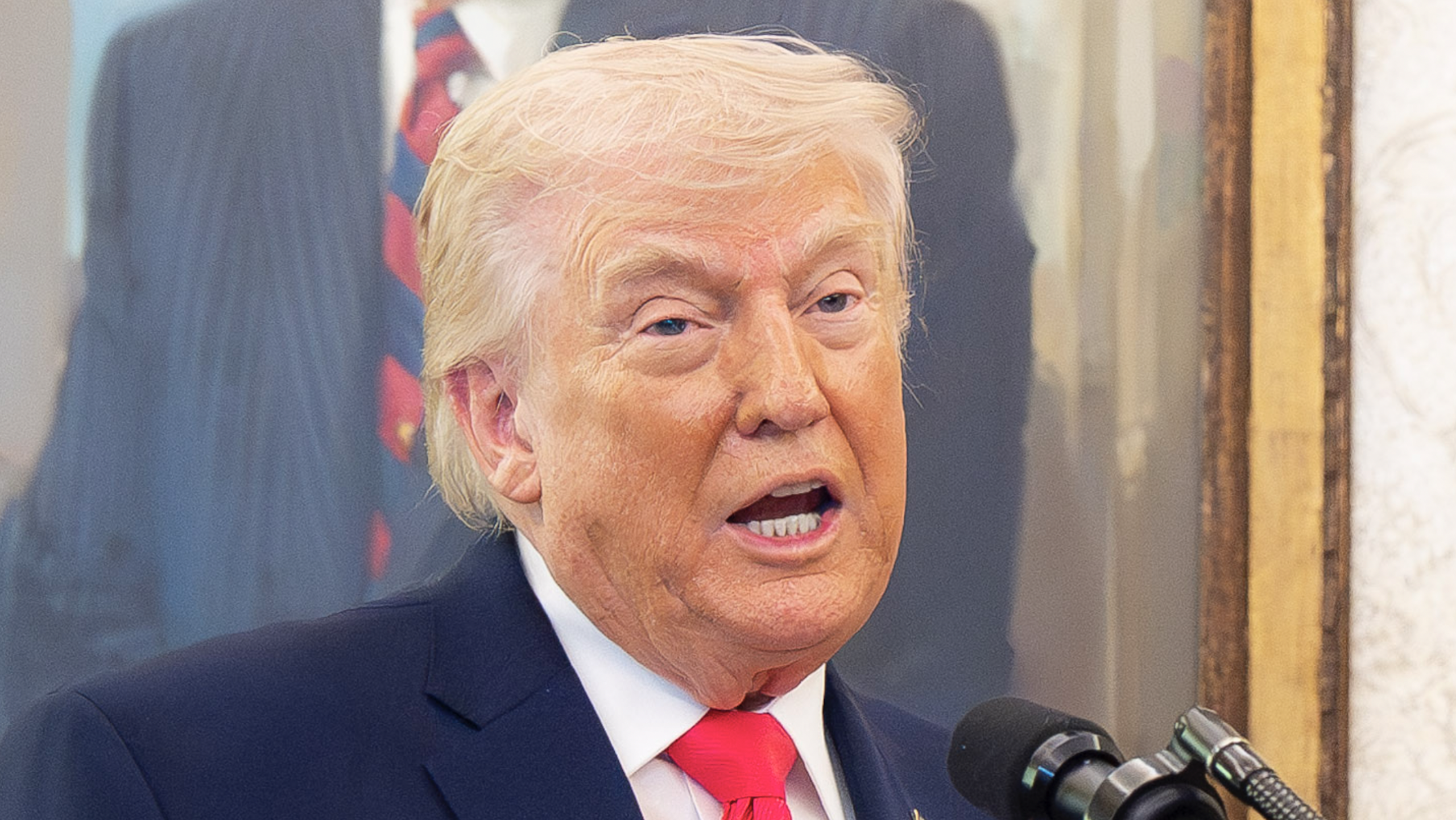
President Donald Trump used his April 1, 2026 address to the nation to call on foreign governments to take direct control of oil transit through the Strait of Hormuz, arguing that U.S. military operations against Iran have already neutralized the primary threat. His remarks come amid ongoing disruptions in the waterway, where Iranian attacks on commercial tankers have effectively halted or restricted global energy shipments.
Trump framed the situation as a consequence of Iran’s recent actions, noting that the closure of the strait has contributed to rising fuel prices and supply instability. He argued that the United States, despite leading the military campaign, should not bear sole responsibility for restoring access to one of the world’s most critical energy corridors. Instead, he urged nations that rely heavily on the route to take independent action.
Trump: So to those countries that can't get fuel… Go to the straight and just take it, protect it, use it for yourselves. The hard part is done, so it should be easy. pic.twitter.com/Nj36TBOrXG
— Acyn (@Acyn) April 2, 2026
“The countries of the world that do receive oil through the Hormone Strait must take care of that passage. They must cherish it. They must grab it and cherish it. They can do it easily. We will be helpful, but they should take the lead in protecting the oil that they so desperately depend on. So to those countries that can’t get fuel, many of which refuse to get involved in the decapitation of Iran, we had to do it ourselves. I have a suggestion. Number one, buy oil from the United States of America. We have plenty. We have so much. And number two, build up some delayed courage. Should have done it before. Should have done it with us as we asked. Go to the strait and just take it, protect it, use it for yourselves. Iran has been essentially decimated. The hard part is done. So it should be easy. And in any event, when this conflict is over, the strait will open up naturally”
The comments align with statements made a day earlier by Pete Hegseth, who signaled a broader shift in U.S. defense posture during a Pentagon briefing. Hegseth emphasized that allied nations must assume greater responsibility for securing key maritime routes and defending their own interests, warning that reliance on American military intervention alone is no longer sustainable. His message reinforced the administration’s position that partners should contribute more directly to global security operations.
Reporter: Is opening the straits an essential objective to operation epic fury?
— Acyn (@Acyn) March 31, 2026
Hegseth: I think other countries should pay attention when the president speaks. He's proven that when he speaks, he means something and he's pointing out, you know, you might want to start learning… pic.twitter.com/ddreavfEjI
These calls come as U.S. forces continue executing Operation Epic Fury, which the administration says has significantly degraded Iran’s military capabilities. The campaign has involved thousands of combat flights and strikes on critical infrastructure, alongside the elimination of senior Iranian leadership, including the country’s supreme leader and dozens of high-ranking officials. The White House has characterized these actions as having “decimated” Iran’s ability to project power in the region.
Trump’s remarks suggest that, with Iran weakened and its ability to disrupt maritime traffic reduced, the responsibility for reopening the Strait of Hormuz now shifts to the countries most affected. By urging them to “take it” and secure the passage themselves, he framed the current moment as an opportunity for allied nations to assert control over their energy supply lines without waiting for further U.S. intervention.