
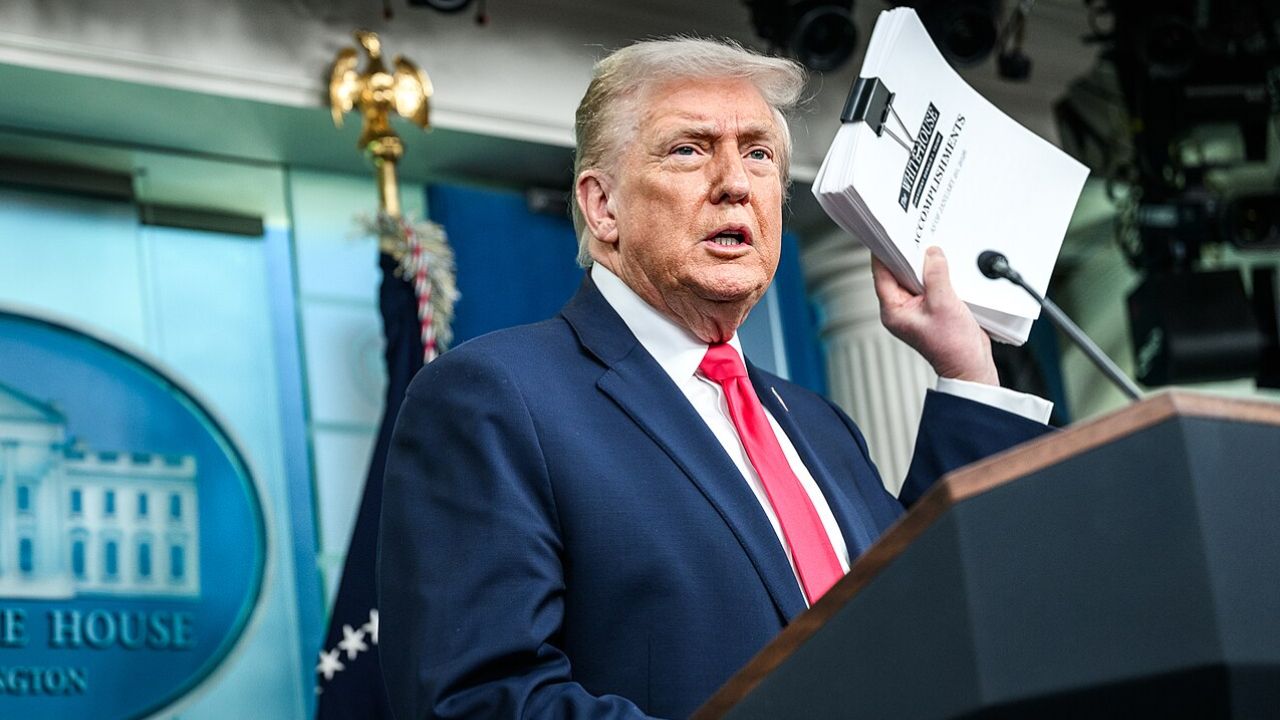
President Donald Trump has moved to place critical minerals at the center of United States security policy, unveiling a multibillion dollar reserve meant to shield the country from supply shocks and geopolitical pressure. The initiative, framed as a direct response to China’s dominance in key materials, is designed to guarantee that American industry and the military can access the metals that underpin everything from smartphones to missile systems. By tying the stockpile to broader economic and strategic goals, the administration is signaling that resource security now ranks alongside energy and technology as a core pillar of national power.
The new reserve, backed by a $12 billion commitment, is intended to function as both a buffer against crises and a lever in global competition. It reflects a growing recognition in Washington that the supply chains for rare earths and other specialized minerals are as consequential as oil pipelines once were. The question now is whether the United States can build this safeguard quickly enough, and with enough domestic capacity, to blunt the leverage that foreign suppliers have accumulated over decades.
The $12 billion bet on mineral security
The centerpiece of the announcement is a plan to create a federal stockpile of critical minerals worth $12 billion, a figure that underscores how seriously the White House views the risk of disruption. Trump is set to launch the $12 billion program as a national asset aimed at reducing exposure to foreign suppliers that could disrupt supplies during a crisis. Officials describe the reserve as a strategic warehouse of metals that are essential for defense systems, advanced electronics, and clean energy technologies, structured so that the government can release material into the market if commercial flows are interrupted.
The initiative is being formalized through an executive order that directs agencies to prioritize the acquisition and storage of these materials. In a statement shared as the plan was rolled out, President Donald Trump said the order would prioritize keeping the United States strong and the country safe, casting the stockpile as a shield against coercion. The announcement triggered market reactions, with mining company shares rising amid expectations of increased federal demand for domestic production. By anchoring the reserve in a formal directive, the administration is attempting to lock in a long term framework that future governments will find difficult to unwind.
Countering China’s leverage over critical minerals
Behind the new reserve is a clear strategic concern about China’s grip on the global supply of rare earths and other specialized metals. Trump’s team has repeatedly highlighted the risk that Beijing could use its position to squeeze the United States, and the stockpile is explicitly framed as a tool to counter China in this arena. Policy concerns intensified in 2024 when China restricted antimony exports to the United States, directly affecting missile and munitions production and highlighting how supply chains can be weaponized.
Officials now describe the reserve as a way to blunt reliance on a single dominant supplier and to give Washington more room to maneuver in any future confrontation. Trump’s plan to reduce reliance on foreign suppliers extends beyond stockpiling and is intended to signal that the United States is prepared to invest heavily in its own economic and strategic resilience. By tying the reserve to broader efforts to diversify supply, including new contracts with producers outside China, the administration is attempting to shift the balance of power in a market that has long tilted toward Beijing.
From California mines to federal vaults
The physical backbone of the reserve will depend on a network of mines, processing plants, and storage facilities spread across the country. One focal point is a rare earths operation in California, which has been highlighted as a key domestic source for materials that have historically been imported. By channeling federal purchasing toward such sites, the administration hopes to create a stable demand signal that justifies new investment in extraction and processing, sectors that have struggled to compete with lower cost producers abroad.
The operational details are being coordinated across agencies, with the White House emphasizing that the stockpile must be ready to respond to sudden disruptions. In remarks following the rollout, Trump announced the critical mineral reserve in February, describing it as a safeguard against shortages that could disrupt the broader economy. The plan envisions federal vaults and contracted storage sites that can hold strategic quantities of minerals, with clear rules for when and how those stocks can be released to stabilize markets or support defense production.
Economic stakes for American industry and workers
For American businesses, the reserve is being pitched as an insurance policy that will keep factories running even if global trade is strained. Trump stated that the stockpile is intended to protect American businesses and workers from shortages, linking the policy to job security and industrial competitiveness. That message is aimed at sectors such as automotive manufacturing, aerospace, and electronics, where even short interruptions in the flow of specialized metals can halt production lines and trigger layoffs.
The financial architecture around the reserve is also designed to pull in private capital and support new projects. Trump has framed the initiative as part of a broader effort to keep the American economy strong, with the government acting as a buyer of last resort for materials that might otherwise struggle to secure long term contracts. As the administration prepares to fully launch the stockpile, industry groups are closely watching how purchase agreements, pricing mechanisms, and environmental standards are structured, as these decisions will determine whether the reserve drives domestic growth or becomes a costly storage program.