
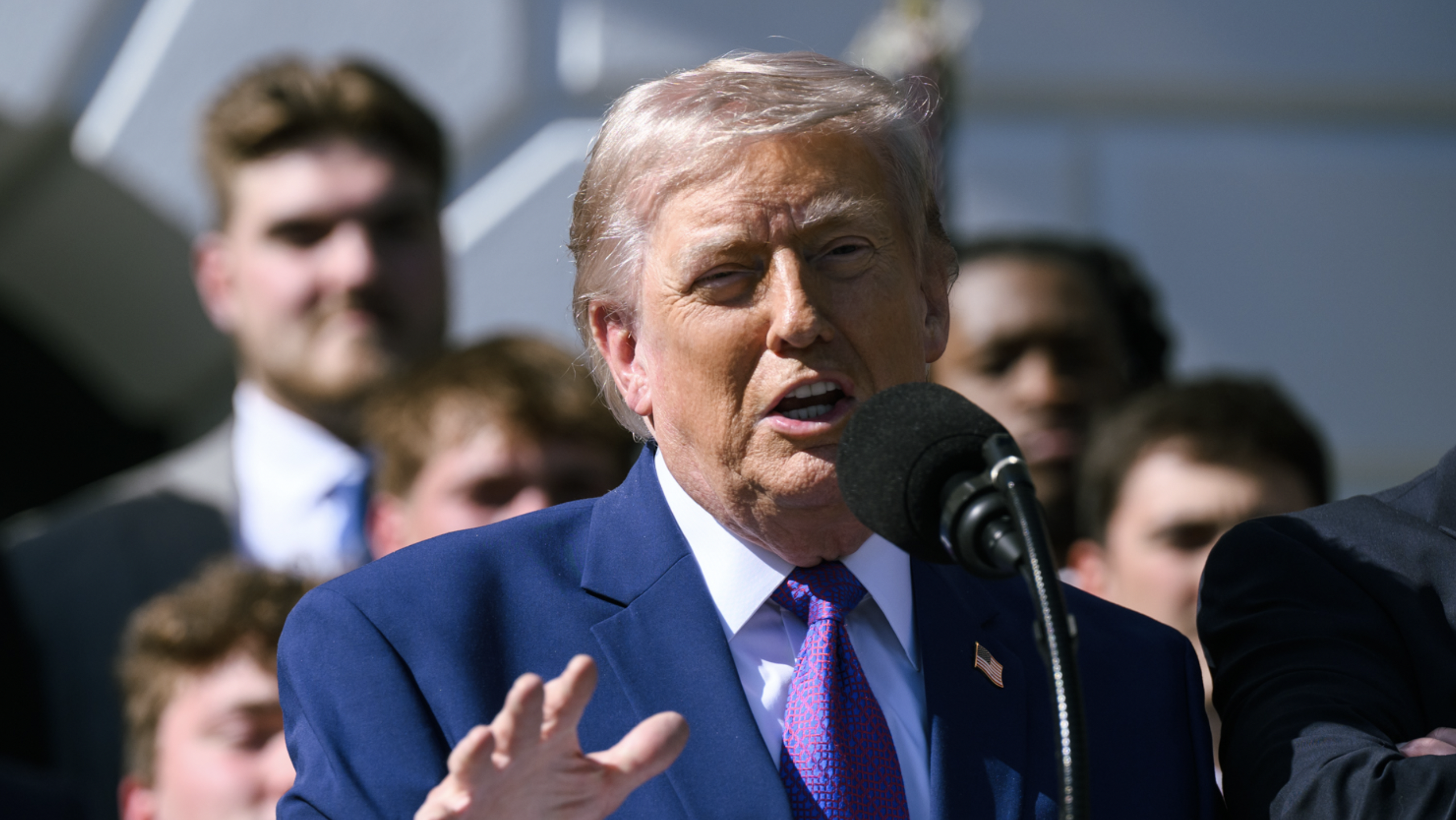
President Donald Trump used a sweeping interview with Fox News’ Sean Hannity from Beijing on May 14, 2026 to declare that America is now the world’s most sought-after nation — and took a direct shot at his predecessor in the process, claiming former President Joe Biden would not have been granted a meeting with Chinese President Xi Jinping.
“We’re the hottest country right now anywhere in the world,” Trump told Hannity in the pre-recorded interview, conducted at the Four Seasons Hotel Beijing following Trump’s first day of talks with Xi at the Great Hall of the People. “If Biden came here, I don’t even think he would get a meeting with President Xi. I don’t think they’d even meet with him. He wouldn’t come here.”
The Summit
The interview aired the same day Trump and Xi held their first round of talks at the Great Hall of the People — the first face-to-face meeting between the two leaders since October 2025 and the first visit by a U.S. president to Beijing since Trump’s own trip in 2017.
The visit had originally been scheduled for April but was postponed due to the 2026 Iran war, which broke out in late February after the United States and Israel launched military operations against Tehran. The conflict has closed the Strait of Hormuz and triggered what the International Energy Agency has described as the worst energy crisis in recorded history.
Trump arrived in Beijing aboard Air Force One on the evening of May 12, accompanied by Secretary of State Marco Rubio, Defense Secretary Pete Hegseth, Treasury Secretary Scott Bessent, and a delegation of top American corporate executives including Apple CEO Tim Cook, Tesla CEO Elon Musk, and Nvidia CEO Jensen Huang.
The Pageantry
Trump drew a pointed contrast between his reception in Beijing and what he suggested would have been a far cooler welcome for Biden, leaning heavily on the ceremony that greeted his arrival. Chinese officials rolled out an elaborate welcome featuring a brass band, marching military units, and children waving American and Chinese flags.
“If I got out of a plane and nobody was there to greet me, I would say that wouldn’t be so cool,” Trump told Hannity. “Our country is respected.”
Hannity noted that he had video of Barack Obama’s visit to China, suggesting the pageantry was less prominent. Trump agreed without elaborating, saying only that his own delegation was treated “very well.”
Some analysts offered a more complicated read of the summit’s optics, noting that Xi used the first round of closed-door talks to issue a stinging warning about Taiwan — telling Trump that mishandling the issue could lead to “clashes and even conflicts” — and that the Chinese president’s framing of a “constructive strategic stability” framework pointedly stopped short of the warmer language of partnership.
The Relationship With Xi
Trump described his personal relationship with Xi as central to the summit’s success, characterizing the Chinese leader as a warm but intensely focused negotiating partner.
“We have a relationship, he and I, and we’ve been working together a long time,” Trump said. “He’s a tremendous leader. He’s been here a long time. Very powerful. Very strong. We have a friendship, really.”
He also praised Xi’s willingness to accommodate an unplanned addition to the day’s schedule — Trump’s decision to bring roughly 30 of America’s top business executives into the meeting room for brief introductions. “It wasn’t scheduled,” Trump said. “They looked around and said, ‘Well…’ And then we had everybody. I think it was all good.”
No Clear Breakthroughs
Despite Trump’s upbeat framing, the summit produced no major signed agreements before he departed Beijing. NBC News reported that Trump hailed “fantastic” trade deals and said “a lot of different problems” were settled, but no formal agreements or breakthroughs were announced.
The Center for Strategic and International Studies assessed the visit as a “relatively modest step toward greater stability and predictability” in the U.S.-China relationship, noting that China felt confident enough to push back on Washington on several key issues including sanctions, technology controls, and Iran.