
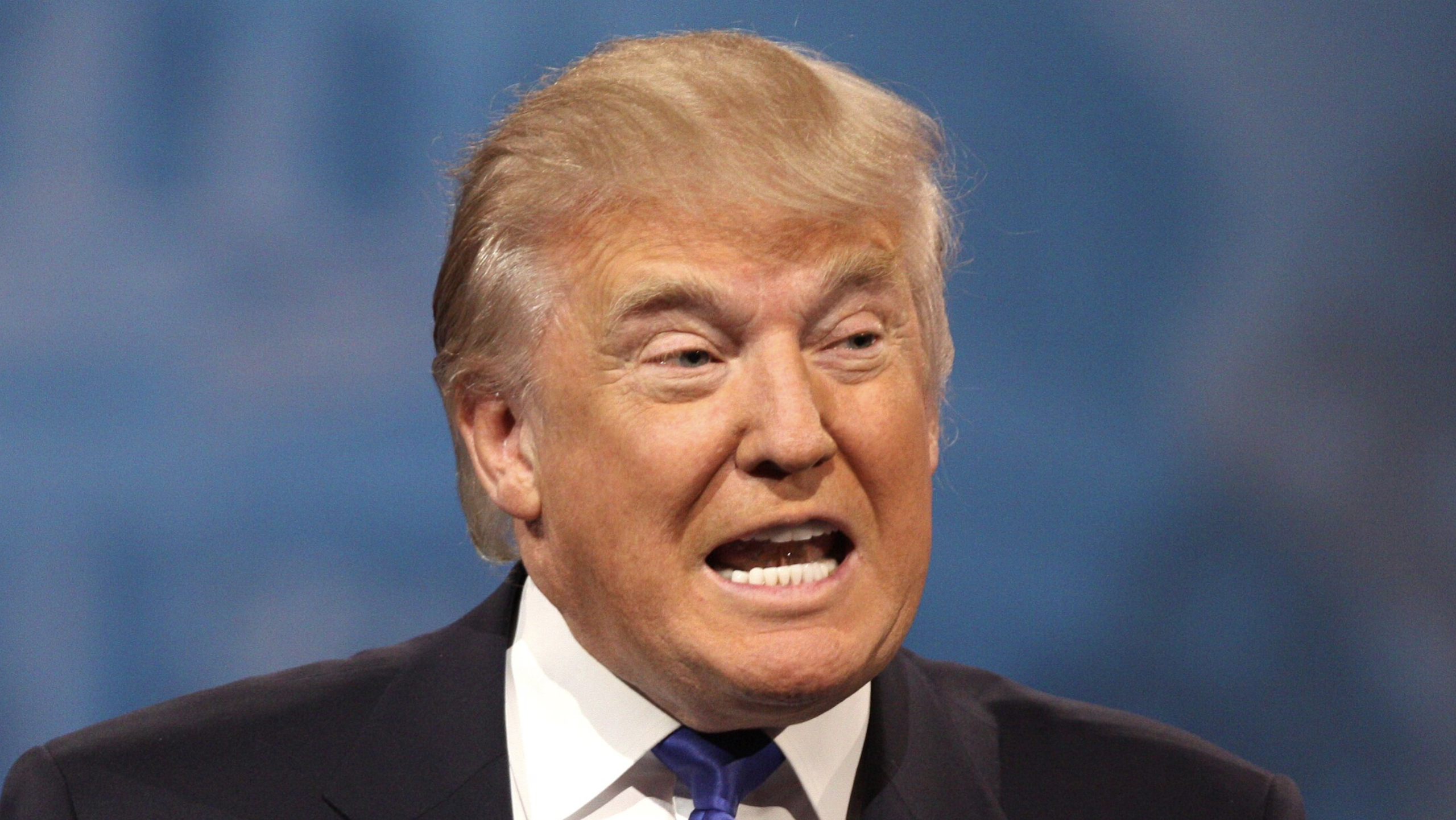
WASHINGTON, July 13 — President Donald Trump accused American news organizations of treason on Monday, telling reporters gathered in the Oval Office that the press “would rather see us lose the war than win the war” against Iran, remarks he made while signing executive orders shrinking two Utah national monuments and fielding questions on the monthslong conflict.
The comments came during an extended exchange with reporters after the signing ceremony, in which Trump defended the four-month military campaign against Iran and pointed to what he described as mass killings of protesters inside the country as justification for continued U.S. pressure on Tehran.
“They killed our people, but the protesters, what they’ve done to the protesters,” Trump said. “They killed 52,000 protesters. And on my watch, they can’t do any of that.”
Trump argued that Iran’s military had been so degraded by U.S. strikes that Tehran no longer posed a conventional threat, leaving it, in his telling, with only its narrative in the press as a remaining tool. “So we have them in a position that they don’t have any military,” he said. “There’s not a thing they can do about it. All they have is fake news.”
He then escalated the charge, saying outlets covering the war skeptically were undermining the U.S. war effort itself. “Because they have the fake news would rather see us lose the war than win the war, which is really treasonous,” Trump said. “Which is really treasonous in a certain way.”
The remarks extended a pattern established earlier in the same appearance, when Trump singled out CNN by name over its coverage of Iran’s economic condition, dismissing reporting that suggested the Iranian economy was holding up despite the war. He countered that Iran’s inflation rate had surged past 300%, up from about 5% four months earlier, though he did not cite a source for the figure.
Trump’s claim of 52,000 killed protesters was repeated multiple times during the appearance, including in response to a separate question about whether the United States bombing Iran had become “the new normal.” He said the deaths occurred at burial sites he suggested reporters had not scrutinized. Reuters has not independently verified the death toll cited by the president, and it was not immediately corroborated by outside human rights monitors or the Iranian government.
The president’s account of a nearly defeated Iranian military tracked with a formal war-powers notification his administration sent to Congress the same day. In a letter dated July 10 and reviewed by Reuters, Trump told lawmakers that hostilities with Iran resumed on July 7 after Tehran violated a memorandum of understanding the two countries had signed on June 17, an agreement Trump said Iran broke by attacking commercial vessels transiting the Strait of Hormuz.
That letter opens a new 60-day window during which the administration has argued it can continue military operations without additional congressional authorization, an interpretation Democratic and some Republican lawmakers have disputed. The House and Senate both passed resolutions last month directing Trump to withdraw U.S. forces from the conflict, a rare bipartisan rebuke that Trump dismissed at the time as providing “comfort” to Iran.
Monday’s Oval Office appearance also touched on the broader state of the war. Trump told reporters the United States had destroyed Iran’s navy within a month of renewed strikes, wiped out its air force, and eliminated roughly 92% of its drone manufacturing capacity and 89% of its missile production capability, figures that could not be independently confirmed.
The exchange over media coverage was not the first time Trump has accused journalists of favoring America’s adversaries in wartime; he has leveled similar accusations against outlets during past military engagements, framing critical coverage as disloyalty rather than scrutiny of his administration’s claims.
News organizations covering the conflict, including CNN, have not issued a formal response to Monday’s remarks. Wire services and network reporters present for the exchange, several of whom pressed Trump on the duration and legal basis for the ongoing strikes, continued to seek clarification on troop posture and the administration’s endgame in the region.
The Monday briefing occurred against the backdrop of a naval blockade the administration reinstated on Iranian ports and coastal areas, set to take effect this week, alongside a proposed 20% surcharge on cargo shipped through the Strait of Hormuz — a policy the White House has described as a way to recoup the costs of the military campaign.
Trump’s comments came one day after he ordered American flags flown at half-staff nationwide following the death of Senator Lindsey Graham, a close ally who had pushed for an assertive U.S. posture toward Iran throughout his Senate career. Trump referenced Graham’s death earlier in the same appearance, calling him “a great guy” and “a great politician.”
As of Monday evening, the administration had not detailed further consequences it might pursue against news outlets over their war coverage, and no legal action tied to the treason allegation had been announced.