
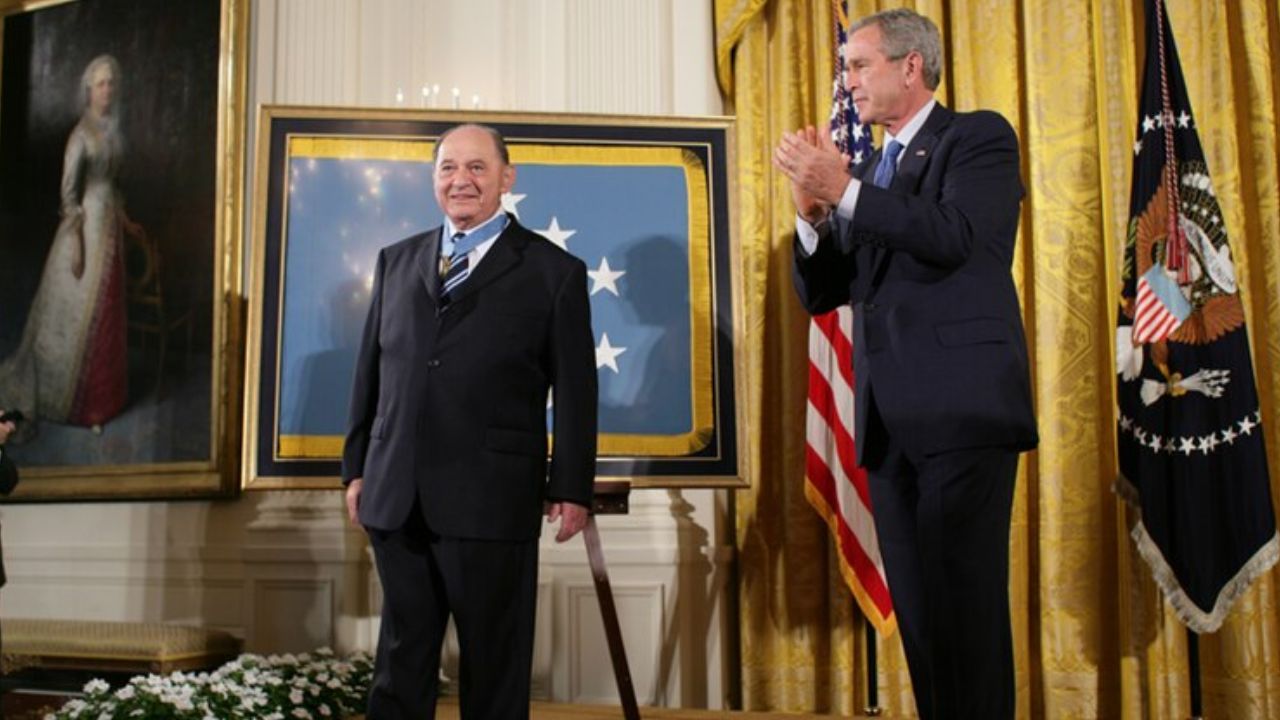
Tibor Rubin, a Holocaust survivor and Medal of Honor recipient, demonstrated extraordinary courage and resilience during his time as a prisoner of war in Korea. Despite facing unimaginable hardships, Rubin’s selflessness and ingenuity not only helped him survive but also saved the lives of countless fellow prisoners. Rubin’s remarkable story of perseverance and heroism continues to inspire people worldwide.
The Early Life of Tibor Rubin
Tibor Rubin was born in 1929 in Paszto, Hungary, a small town where he enjoyed a relatively peaceful childhood until the Nazi regime’s spread across Europe disrupted his life. At the tender age of 13, Rubin was sent to the Mauthausen concentration camp in Austria, where he endured two years of brutal conditions. The young boy witnessed the worst of humanity, yet he managed to survive, driven by an inner strength and hope that would become a hallmark of his character.
After World War II, Rubin immigrated to the United States, seeking a new beginning in a land of promise. He arrived with little more than determination and a desire to repay the country that had liberated him from the horrors of the Holocaust. Rubin enlisted in the U.S. Army, joining the fight during the Korean War. His early experiences had shaped a man of extraordinary resilience and resourcefulness, traits that would soon be tested in the most challenging of circumstances.
Capture and Imprisonment in Korea
In 1950, while serving with the 8th Cavalry Regiment, 1st Cavalry Division, Tibor Rubin found himself in the thick of the Korean War. During a fierce battle, his unit was overrun by North Korean forces, and Rubin was captured, along with many of his comrades. The prisoners were marched to a POW camp, where they faced harsh conditions, including severe cold, lack of food, and inadequate medical care.
For Rubin, the conditions in the POW camp were a haunting reminder of his time in Mauthausen. However, instead of succumbing to despair, he resolved to survive and help his fellow prisoners endure the ordeal. Rubin’s experience in the concentration camps had taught him valuable lessons in survival, and he quickly set about using those skills to improve the dire situation in the camp.
Acts of Bravery and Ingenuity
Rubin’s resourcefulness became evident as he began to gather food and supplies for the starving prisoners. He would sneak out of the camp under the cover of darkness, risking his life to scavenge for food from nearby farms and fields. His stealth and cunning ensured that his fellow prisoners had a better chance of survival, even as he faced the constant threat of discovery and punishment by the guards.
Beyond providing food, Rubin also took on the role of a medic, tending to the sick and injured with whatever limited resources were available. He fashioned makeshift bandages and used his knowledge of traditional remedies to treat wounds and illnesses. Rubin’s efforts saved many lives, and his unwavering dedication to his comrades earned him their deep respect and admiration.
Despite the ever-present danger, Rubin never hesitated to protect and support his comrades. His bravery in the face of adversity became a beacon of hope for the prisoners, inspiring them to persevere through the darkest times. Rubin’s actions were a testament to his unyielding spirit and his commitment to the well-being of his fellow soldiers.
Recognition and Legacy
Following his release from the POW camp in 1953, Tibor Rubin returned to the United States, where he continued to serve in the Army until 1953. Despite his extraordinary acts of heroism, formal recognition eluded him for many years. It wasn’t until a campaign led by his fellow soldiers and advocates that Rubin’s contributions were brought to the forefront. In 2005, more than 50 years after his heroic actions, President George W. Bush awarded Rubin the Medal of Honor, the United States’ highest military decoration.
Rubin’s story resonated with people across the globe, highlighting the importance of perseverance and selflessness in the face of adversity. His legacy extends beyond his Medal of Honor, as he became a symbol of resilience and courage. Rubin’s life serves as a powerful reminder of the impact one individual can have, even in the direst circumstances.
Impact on Fellow Prisoners
The impact of Tibor Rubin’s actions on his fellow prisoners was profound and lasting. Many of the soldiers who survived the POW camp attributed their survival to Rubin’s unwavering support and ingenuity. Testimonials from these men paint a picture of a man who was not only a hero but also a source of comfort and hope in their darkest hours.
Rubin’s ability to maintain morale and provide psychological support was as crucial as the physical aid he offered. His presence in the camp served as a constant reminder that the human spirit could endure even the harshest conditions. By fostering a sense of camaraderie and solidarity, Rubin helped his fellow prisoners maintain their dignity and humanity, which was vital for their survival.
The broader impact of Rubin’s actions on the survival rates of POWs cannot be overstated. His commitment to saving lives extended beyond mere physical sustenance; it was about nurturing the will to survive and the belief that freedom would eventually come. Rubin’s efforts left an indelible mark on those he helped, and his legacy continues to inspire generations of military personnel and civilians alike.
Lessons from Rubin’s Story
Tibor Rubin’s journey offers valuable lessons in resilience, leadership, and selflessness. His story is a testament to the power of the human spirit, showing that even in the most trying circumstances, one person’s determination can make a significant difference. Rubin’s ability to remain steadfast in the face of adversity serves as an enduring example of how courage and compassion can overcome even the most formidable challenges.
Rubin’s legacy continues to inspire not only military personnel but also civilians who face their own battles in everyday life. His story encourages individuals to look beyond themselves and act with empathy and kindness, even when faced with difficult situations. Rubin’s life reminds us of the importance of recognizing and honoring acts of valor and heroism, as they have the power to uplift and motivate others to strive for greatness.
In a world that often seems fraught with conflict and hardship, Rubin’s story stands as a beacon of hope and resilience. It challenges us to consider how we can embody the same spirit of selflessness and determination in our own lives. By learning from Rubin’s example, we can strive to create a world where courage and compassion prevail, even in the face of adversity.