
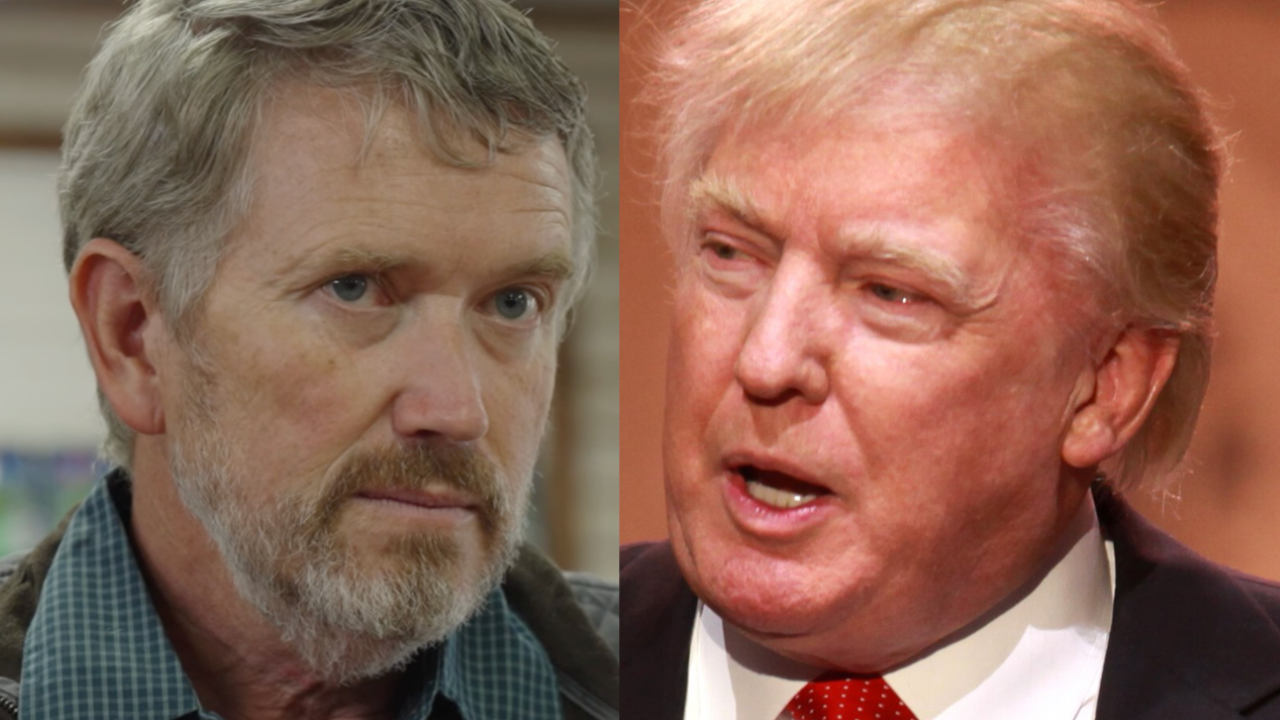
U.S. Representative Thomas Massie, R-Ky., escalated his long-running feud with President Donald Trump on Saturday, arguing in a pair of posts on X that the administration’s ongoing military campaign in the Middle East will ultimately outrank every other controversy of Trump’s second term as its costliest mistake. Massie’s remarks, posted the evening of August 8, 2026, tally the war’s price tag in the hundreds of billions of dollars and call for an immediate withdrawal.
Massie’s initial post ran through a list of grievances he has aired against the administration for months before singling out the war as the worst of them:
“Of all the stupid things this administration has done… Hiding Epstein files, trying to pass tariffs without Congress, advocating for more spending, ignoring DOGE, indemnifying glyphosate, Starting a war in the Middle East will prove to be the biggest and most costly blunder,” Massie wrote at 8:13 p.m. on August 8, 2026.
In a follow-up comment on the same post, Massie broke down what he described as the war’s toll:
“$100+ billion in direct military costs, $100+ billion in costs to consumers, incalculable political capital burned, but those insults and injuries pale in comparison to the diminished standing of our great country among the world. We should walk away from this now.”
The posts mark the latest in a series of public breaks between Massie and the White House over U.S. involvement in the Middle East, a dispute that stretches back to at least June 2025 and has hardened into one of the most visible intra-party rifts of Trump’s second term.
That rift traces back to the initial run-up to U.S. strikes on Iran. In mid-2025, Massie teamed up with Democratic Representative Ro Khanna of California to introduce a bipartisan War Powers Resolution intended to block American involvement in hostilities between Israel and Iran without congressional authorization. “This is not our war. But if it were, Congress must decide such matters according to our Constitution,” Massie wrote at the time.
Trump moved ahead regardless. Days after Massie and Khanna introduced their resolution, Trump authorized a military strike on three key nuclear facilities in Iran, escalating what had been a broader Israeli-Iranian conflict into direct U.S. involvement. Massie called the decision a betrayal of the president’s own campaign promises, telling reporters afterward that the American people did not want “another endless and costly war in the Middle East when there are so many problems at home.” He went further in later interviews, saying he felt “misled” by Trump and that the president had “engaged in war” without the authorization Massie believes the Constitution requires.
Massie has repeatedly tried, and repeatedly failed, to force Congress to formally check the administration’s war-making authority. In March 2026, a Massie-sponsored war powers resolution was defeated in the House by a vote of 212-219, one day after the Senate rejected a similar measure. During floor debate, Massie argued that any decision to shed American blood should require a difficult, on-the-record vote in Congress, telling colleagues, “I think my colleagues don’t want to go on record, because we have a terrible track record of meddling in the Middle East.” He renewed the fight months later: Massie was again one of only a handful of Republicans, alongside Reps. Tom Barrett, Brian Fitzpatrick, and Warren Davidson, who joined Democrats to pass another Iran war powers resolution roughly two weeks before his latest X posts.
Massie’s warnings about the war’s cost are not new either. Ahead of one war powers vote, he told the House that the United States had already racked up “at least $8 trillion of debt in Iraq, Libya, Syria, Afghanistan” from past Middle East interventions and cautioned that a sustained war with Iran “will radicalize new generations of terrorists” and “send more swarms of refugees into Europe and the United States.” By early March 2026, Massie was already tracking the war’s effect on ordinary Americans, noting that gas prices had risen $0.47 and diesel $0.83 in ten days, and that the conflict was costing taxpayers roughly $1 billion per day, or about $10 per family daily.
The Middle East war is only the most recent front in a broader breakdown between Massie and the White House. Massie has been one of the loudest Republican voices demanding full release of the Justice Department’s files on the late sex offender Jeffrey Epstein, at one point calling Trump’s administration “the Epstein administration” and saying, “they’re attacking me for trying to get these files released.” He has also fought the administration over agricultural and chemical policy, drafting the “No Immunity for Glyphosate Act” to undo a Trump executive order that sought to shield glyphosate manufacturers from liability, arguing the White House was choosing “corporate profits over Americans’ health.” Both fights are referenced directly in Massie’s August 8 post alongside the war.
The relationship between the two men deteriorated to the point of an open primary battle. Trump had already labeled Massie “not MAGA” over the summer of 2025 and said the movement “doesn’t want him, doesn’t know him, and doesn’t respect him,” after Massie voted against the president’s tax and spending package and criticized his authority to strike Iran without congressional approval. Trump backed a primary challenger, former Navy SEAL Ed Gallrein, and personally campaigned for him in Kentucky, telling supporters, “I’m going to use that statement in an ad.”
The race became the costliest House primary in American history. Spending topped $34 million by the eve of the vote, with more than $25.8 million coming from outside super PACs, many aligned with pro-Israel donors and groups reacting to Massie’s criticism of unconditional U.S. military aid to Israel. Massie ultimately lost the May 19, 2026 primary to Gallrein, a defeat widely read as evidence of Trump’s continued grip on the Republican Party and a warning to other Republicans considering breaking with the president on foreign policy.
Despite the loss, Massie has continued to serve out his current term representing Kentucky’s 4th Congressional District and has not softened his criticism of the administration. In the days before his August 8 post, he was drawing fire for tying rising consumer prices to the same pro-Israel spending that unseated him, posting that grocery costs were climbing “because apparently refusing to green-light more foreign aid packages is what really sent grocery prices into the stratosphere.”
Massie’s August 8 accounting places the war’s price tag — over $200 billion in combined military and consumer costs, by his own estimate — above every other flashpoint he has raised with the administration, including the Epstein files dispute, the fight over tariffs enacted without congressional approval, and the president’s glyphosate order. His closing line, “We should walk away from this now,” repeats a position he has held consistently since introducing his first war powers resolution alongside Khanna: that continued U.S. involvement in Middle East hostilities requires an explicit vote from Congress, and that the administration has sidestepped that requirement at growing financial and diplomatic cost.