
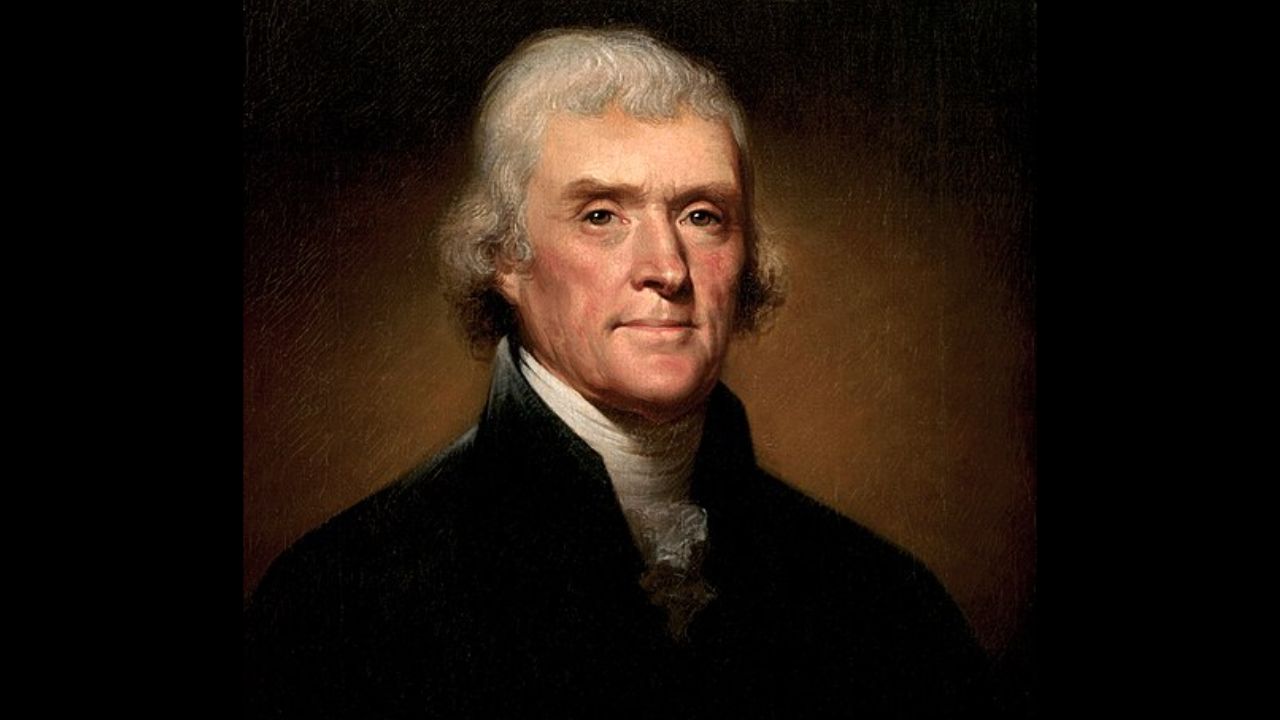
WASHINGTON — When Thomas Jefferson took office in 1801, the United States was still a young, slightly anxious experiment hugging the Atlantic coast. The country had ambition, sure, but it also had debts, political feuds, and powerful neighbors who didn’t exactly want it to grow up too fast. By the time Jefferson left the presidency eight years later, the nation was bigger, bolder, and thinking in continental terms.
Jefferson’s expansion wasn’t just about grabbing land for the sake of it. It was wrapped up in trade, security, farming dreams, and a belief—sometimes inspiring, sometimes troubling—about what the United States could become. And in one of history’s most consequential shopping sprees, he more than doubled the nation’s size in a single deal.
A country boxed in — and nervous about it
In the early 1800s, the Mississippi River was the economic lifeline for farmers and merchants west of the Appalachians. If you grew corn in Kentucky or shipped goods from Tennessee, that river wasn’t a nice bonus—it was the highway. The biggest choke point was New Orleans, where the Mississippi meets the Gulf of Mexico and the wider world of trade.
Control of New Orleans and the surrounding territory had bounced between European powers, and that made Americans uneasy. Spain had held it, then France loomed again under Napoleon. Jefferson worried that if France locked down New Orleans, the U.S. could end up economically strangled and politically cornered.
The Louisiana Purchase: the deal that changed everything
Jefferson originally sent diplomats to buy New Orleans and a slice of surrounding land—basically, enough to guarantee access. What came back was the offer of a lifetime: France would sell the entire Louisiana Territory. This wasn’t a neat little parcel; it stretched from the Mississippi River west toward the Rocky Mountains, adding roughly 828,000 square miles to the United States.
The price was $15 million, which even then sounded like a lot until you realize what it bought: land, rivers, and long-term leverage. Overnight, the U.S. gained room to grow, farm, and trade, and it reduced the threat of a major European power sitting right on its border. If you like tidy before-and-after maps, this is one of the biggest glow-ups in American history.
Jefferson’s constitutional tightrope
Here’s the twist Jefferson didn’t love advertising: he wasn’t entirely sure the Constitution allowed him to buy new territory. Jefferson was famous for a “strict construction” view—meaning he thought the federal government should only do what the Constitution clearly spelled out. And nowhere did it say, “Presidents may purchase gigantic territories when the opportunity arises.”
But Jefferson also wasn’t going to pass up a once-in-a-century chance because of paperwork anxiety. He ultimately moved forward, framing the purchase as a treaty, which the Constitution did permit. It’s one of those moments where principles met reality, and reality won—helping set a precedent for a more flexible, more powerful federal government.
Lewis and Clark: exploration with a purpose
Buying the territory was only the beginning; understanding it was the next challenge. Jefferson commissioned Meriwether Lewis and William Clark to explore the new lands, map routes, study plants and animals, and build relationships with Native nations. Their journey, starting in 1804, became a national epic—part science expedition, part diplomatic mission, part survival story.
The expedition gathered practical intelligence that mattered to policymakers and merchants alike. Where were the rivers navigable? What resources existed? Who lived there, and how might future Americans interact with them? It’s easy to romanticize the adventure, but it also served as an early blueprint for how the U.S. would extend its influence westward.
Trade, ports, and the pressure of global politics
Jefferson’s expansion story isn’t only about dirt and maps; it’s also about trade. The United States depended heavily on commerce with Europe, and the Napoleonic Wars turned the Atlantic into a geopolitical mess. American ships were harassed by Britain and France, and the young republic kept getting dragged toward conflicts it didn’t want.
Jefferson responded with the Embargo Act of 1807, which aimed to punish European powers by restricting American trade. It was a bold idea and, in practice, a painful one—especially for merchants and port cities in the Northeast. While it wasn’t “expansion” in the territorial sense, it showed how Jefferson was trying to defend American independence and economic growth in a world that didn’t particularly care about American convenience.
The West opens up — but not evenly, and not cleanly
The Louisiana Purchase made expansion possible, but it didn’t magically make it simple. Surveying, governing, and settling the new territory would take decades, and it raised immediate questions: Who counts as “American” there? How will new states be admitted? What happens to the people already living on the land?
This is where the story gets complicated in a way that can’t be smoothed over with heroic language. The expansion of the United States accelerated pressure on Native nations, often through coercive treaties, displacement, and violence. Jefferson sometimes spoke about assimilation and diplomacy, but the broader trajectory was one of Americans moving in and Native communities being pushed out.
The contradiction at the center: liberty and slavery
Jefferson’s era also wrestled with the nation’s deepest contradiction: a republic talking about freedom while enslaving people. The territorial growth raised the stakes of that conflict, because every new tract of land opened the question of whether slavery would expand with it. Jefferson personally expressed opposition to slavery in theory while remaining a slaveholder in practice, a reality that shaped both his legacy and the nation’s future battles.
Expansion didn’t just add land; it added political tension that would simmer for decades. New states meant new power in Congress, and the balance between free and slave states became a kind of national obsession. In that sense, Jefferson’s big territorial win also helped set the stage for some of America’s most painful reckonings.
Why Jefferson’s expansion still feels astonishing
It’s hard to overstate how unexpected the Louisiana Purchase was at the time. Many Americans couldn’t even picture what the country would do with so much territory, and plenty of critics argued it was reckless or unconstitutional. Yet it secured the Mississippi, reduced European threats, and gave the U.S. a path toward becoming a continental power.
Jefferson expanded the nation in a way that reshaped its economy, politics, and identity—almost like he changed the scale on the map. The purchase wasn’t just a transaction; it was a bet on the future. And for better and worse, the United States has been living with the results of that bet ever since.