
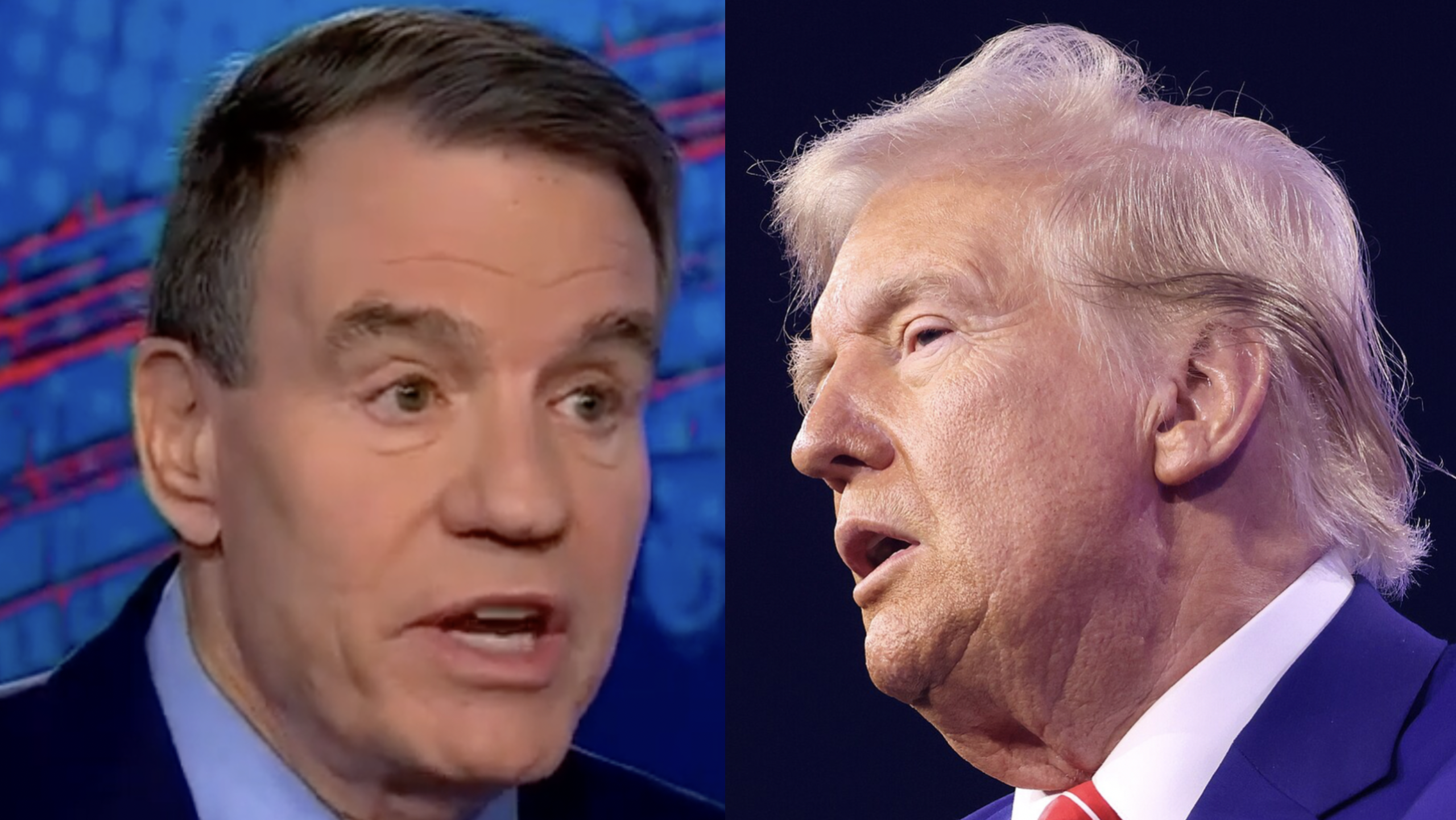
U.S. Sen. Mark Warner (D-VA) renewed his call to end the United States’ war with Iran on Wednesday, writing on X that the conflict has passed the five-month mark with no sign of resolution, rising consumer prices, and none of the Trump administration’s stated objectives achieved.
Warner, the vice chairman of the Senate Select Committee on Intelligence, posted the statement at 11:56 a.m. on July 29, 2026. The full post read:
“Over 5 months into this war, and the conflict is still escalating. Prices are still going up. And not a single one of this administration’s goals have been reached. This was always a war of choice. It’s long past time to end it.”
The post is the latest in a monthslong campaign by Warner to frame the conflict as a war Trump chose to enter rather than one forced upon the United States by an imminent threat, a distinction the senator has repeatedly said carries constitutional weight under the War Powers Resolution.
The war traces back to early March 2026, when Trump moved to aid Israel in a military campaign against Iran. Warner, who as a member of the Gang of Eight receives some of the government’s most sensitive intelligence briefings, said at the time that he had “seen no intelligence that indicated there was an imminent threat from Iran against American forces,” and argued that presidents pursuing a war of choice are constitutionally obligated to make their case to the American people and secure congressional approval before acting.
That argument has hardened into a consistent talking point over the following months as American casualties mounted. Appearing on CBS’s “Face the Nation” on July 19, Warner said 16 American troops had died in the conflict, with hundreds more wounded, following a missile strike that killed two U.S. service members and left one missing in Jordan. “I would argue, Margaret, this is what happens when you start a war of choice,” Warner told host Margaret Brennan, adding that as a member of the Gang of Eight he could “say unequivocally there was no imminent threat from Iran.”
In that same interview, Warner walked through the administration’s own stated objectives for the war and argued each had gone unmet. He said the goal of regime change had produced a government he described as worse than its predecessor, that Iran’s enriched uranium stockpile remained in place and would require a minimum of 15,000 ground troops to extract from heavily defended bunkers, and that the campaign to strip Iran of its missile and drone capabilities had not succeeded. Warner also noted the disparity in cost, pointing out that the U.S. has been firing missiles priced in the millions of dollars against Iranian drones that cost a fraction of that to produce.
Days later, in an appearance on ABC’s “This Week,” Warner reiterated that the five-month war was a war of choice and said he was hoping for what he called “a classic Donald Trump move — declare victory tomorrow and be done,” warning that continuing the war “at this pace will be a continuing disaster.”
The economic toll Warner referenced in Wednesday’s post has been building for months and is reflected in a series of official releases from his office. In April, roughly one month into the conflict, Warner’s office published congressional analysis showing Virginians had already paid $254 million more at the pump because of the war. By mid-July, that figure had grown to $1.8 billion statewide since the war began.
On July 27, Warner and fellow Virginia Sen. Tim Kaine highlighted a new congressional report showing that as oil prices hit $100 a barrel amid the war, Virginia farmers spent more than $1,500 extra to fill their farms’ onsite diesel tanks during this year’s spring planting season compared with the year before, with grain trucks and tractors each costing over $200 more to fill. “Virginia’s farmers work tirelessly to keep our families fed, and they deserve leaders who will fight for commonsense policies to lower their expenses,” the senators said in a joint statement.
Warner has also pressed the administration on the legal footing for the war itself. On June 8, he joined 37 Senate Democrats in formally challenging the Trump administration’s claim, made in a May 1 letter to Congress, that hostilities with Iran had terminated.
The war has also produced fallout inside the administration’s own national security apparatus. In March, Warner responded to the resignation of National Counterterrorism Center Director Joe Kent, who stepped down over what Warner’s office described as Trump’s war of choice, with Warner saying Kent’s record was “deeply troubling” and that he never should have been confirmed in the first place.
Market data from Wednesday underscores the pricing pressure Warner cited in his post. Brent crude surged more than 6% to above $89 a barrel, snapping a three-day losing streak, after the U.S. military said it had intercepted a surprise Iranian attack targeting American troops stationed across the Middle East. Iran-backed militias in Iraq launched drones at oil facilities in Saudi Arabia’s Eastern Region for a second consecutive day, while Yemen’s Houthi militants were reported to be considering fees on vessels transiting the Red Sea, adding to concerns over shipping costs, a step Iran has also sought to take with respect to the Strait of Hormuz. U.S. crude oil inventories fell by 3.3 million barrels last week, according to API data, pointing to continued tightness in global supply.
That volatility is consistent with the pattern Warner has described since the war’s early weeks, when the effective closure of the Strait of Hormuz became one of the conflict’s most consequential secondary effects. Warner’s office has separately noted that the war’s costs, in both American lives and consumer prices, have continued to climb even as the administration has taken steps such as temporarily lifting sanctions on Russian oil, a move Warner criticized as an inadequate response to a crisis of the administration’s own making.
Warner’s Wednesday post did not lay out a specific legislative path for ending the war, but it follows months of votes and letters from Senate Democrats invoking the War Powers Resolution and pressing for congressional authorization votes that Warner has argued the administration has sidestepped. His office has also flagged that additional war-related funding requests, including a $67 billion defense spending request from Defense Secretary Pete Hegseth, should be drawn from funds already appropriated to the Department of Defense rather than approved as new spending.
With the conflict now in its sixth month and oil markets reacting to fresh strikes and militia activity across the region on the same day as Warner’s post, the senator’s message signals that Democratic pressure to end the war is likely to remain a fixture of the national security debate heading into the 2026 midterm elections.