
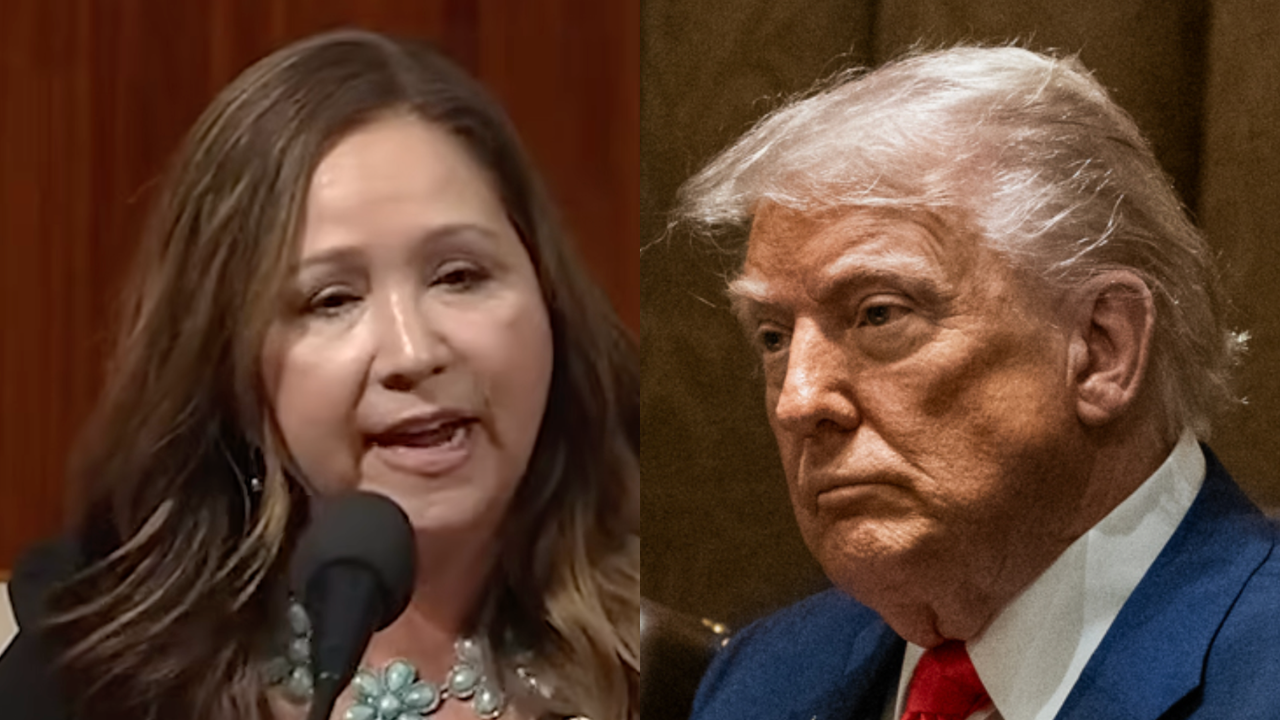
Arizona Democratic Rep. Adelita Grijalva took to X on Wednesday afternoon to condemn the House’s approval of what she called the largest Pentagon budget in American history, paired with $73 billion in additional funding tied to the ongoing war with Iran. In a post published at 4:49 p.m. on July 22, 2026, Grijalva wrote: “The House just approved the largest Pentagon budget in U.S. history + $73 BILLION more for Trump’s reckless war in Iran. While millions of Americans struggle to afford food, healthcare, and housing, Republicans are spending billions on endless wars and making it harder to vote with the SAVE Act… THIS ISN’T WHAT PEOPLE WANT!”
What the House Actually Passed
The post came on a day of significant legislative activity in Washington. The House voted 216-212 on the National Defense Authorization Act for Fiscal Year 2027, a measure that incorporates President Donald Trump’s request for $1.15 trillion in national security spending and would formally rename the Department of Defense as the Department of War. Alongside the NDAA, the House also adopted a budget resolution, H. Con. Res. 113, that opens the door to as much as $73 billion in additional military and intelligence funding tied directly to the war with Iran. Reportedly the blueprint allows for up to $60 billion in military funding and as much as $13 billion for intelligence costs.
From a $350 Billion Ask to a $73 Billion Package
The $73 billion figure represents only a fraction of what the Trump administration originally floated. According to CNN, the White House had previously sought as much as $350 billion for the Iran war as part of a broader $1.5 trillion defense budget request. That larger figure was scaled back after fiscal conservatives on the House Budget Committee pushed to reduce the ask. “In the budget committee we have driven down the excess ask,” Indiana Republican Rep. Erin Houchin told CNN. Even at the reduced level, the resolution passed by a narrow 216-214 margin, with Republican Reps. Thomas Massie of Kentucky and Warren Davidson of Ohio joining all Democrats in opposition, along with independent Rep. Kevin Kiley of California.
A War That Keeps Growing More Expensive
The spending push follows testimony a day earlier from Defense Secretary Pete Hegseth, who told the Senate Appropriations Committee that the war with Iran has cost approximately $37.5 billion so far — more than the $25 billion estimate the Pentagon had given lawmakers back in April. The Washington Post reported the same day that the Pentagon is facing an “urgent budget shortfall,” with some funding lines expected to run dry within weeks even as Trump continues to escalate the conflict. Trump announced “major combat operations” against Iran on February 28, 2026, and U.S. forces have continued regular strikes since, including a eleventh consecutive night of strikes reported by U.S. Central Command this week.
The SAVE Act Rider
Grijalva’s post also tied the defense spending fight directly to voting rights, referencing the SAVE America Act — formally the Safeguard American Voter Eligibility Act — which would require Americans to present documentary proof of citizenship, such as a passport or birth certificate, in order to register to vote. According to the Campaign Legal Center, House Republicans voted on July 21, 2026, to attach the SAVE America Act to the very same National Defense Authorization Act that passed the following day. Critics, including the Brennan Center for Justice and the Center for American Progress, have argued the measure would disenfranchise millions of citizens who lack easy access to passports or certified birth certificates, effectively ending most online and mail-in voter registration.
Grijalva’s Pattern of Opposition to Iran War Spending
Wednesday’s post was not an isolated statement. Grijalva has repeatedly used her platform to criticize military spending on the Iran conflict throughout 2026. In floor remarks delivered on March 19, 2026, after reports surfaced that the Pentagon intended to request an additional $200 billion for the war, Grijalva said the conflict “alone has cost us $22.8 billion,” adding that the money “could have provided Medicaid to over 6 million children, funded Head Start for 1.3 million families, canceled $20,000 in student debt for one million borrowers, or funded the ACA premium assistance that Republicans refused to extend.” She went on to say that “the American people want healthcare, not warfare,” and argued that “instead of putting billionaires first, Congress should focus on policies that make people’s lives better.”
A Vote Against the War Powers Resolution’s Repeal
Grijalva has also gone on record opposing the administration’s legal justification for the conflict itself. In a statement released after voting in support of a War Powers resolution directing the president to terminate U.S. military hostilities in Iran, Grijalva said “this administration’s blatantly unconstitutional military intervention in Iran has already cost the lives of U.S. troops and innocent school children.” She added that “the Middle East is now more unstable and Iran is at risk of a bloody civil war that could entangle the U.S. into yet another endless conflict,” arguing that “the answer is not more escalation — it is urgent diplomacy and serious engagement with our allies to prevent nuclear proliferation.”
Democratic Colleagues Echo the Criticism
Grijalva was not alone among House Democrats in opposing Wednesday’s vote. Washington Rep. Adam Smith, the ranking Democrat on the House Armed Services Committee, said on the floor that “as we support anything in the defense area, we are de facto supporting this war with no end in sight,” according to Time. Smith noted that this year’s NDAA debate rose “above the normal flow of partisan divide,” citing both the scale of the proposed defense increase and the unresolved war in Iran. The NDAA, historically one of the more bipartisan bills Congress considers annually, passed almost entirely along party lines this year.
Republican Infighting Over the Bill’s Path Forward
The legislative process leading up to Wednesday’s votes was far from smooth. Time reported that on June 30, a bloc of House Republicans stalled the NDAA and related legislation in an effort to force stronger action on the SAVE America Act, with one GOP lawmaker calling an earlier procedural rule a “procedural head fake” out of concern the Senate could later detach the voter ID provisions from the defense bill. Senate Majority Leader John Thune has indicated he does not plan to bring the House’s broader budget resolution up for a vote in the near term, according to ABC News, meaning the fight over the $73 billion Iran war package and the accompanying SAVE Act provisions is likely far from over.
The Price Tag in Context
The scale of the spending has drawn scrutiny beyond Grijalva’s office. Defense Secretary Hegseth’s own testimony this week acknowledged that cost estimates for the war have more than doubled since the spring, and administration officials had earlier floated a request for $200 billion in supplemental war funding as far back as March, according to a report from Newsonair, in which Hegseth reportedly told reporters “it takes money to kill bad guys” when asked to confirm the figure. That request came as the national debt surpassed $39 trillion. The administration’s full fiscal year 2027 budget proposal, released earlier this year, sought $1.5 trillion in total defense-related resources, including $1.1 trillion in base Pentagon discretionary spending and $350 billion specifically for the Iran war effort, according to The Express, which also reported the proposal called for a 10 percent cut, or roughly $73 billion, in nondefense discretionary spending.
What Happens Next
With the NDAA now passed and the budget resolution adopted in the House, both measures move to the Senate, where their fate remains uncertain. The Senate is expected to push for a larger defense allocation than the House-passed figures reflect, according to CNN, setting up a potential clash between the chambers over both the size of the Iran war supplemental and the fate of the SAVE Act provisions attached to it. For now, Grijalva’s Wednesday post stands as one of the most direct public rebukes from a House Democrat of the administration’s spending priorities, framing the vote as a choice between funding “endless wars” abroad and addressing affordability pressures — food, healthcare, and housing costs — that she and other Democrats argue are being ignored at home.