
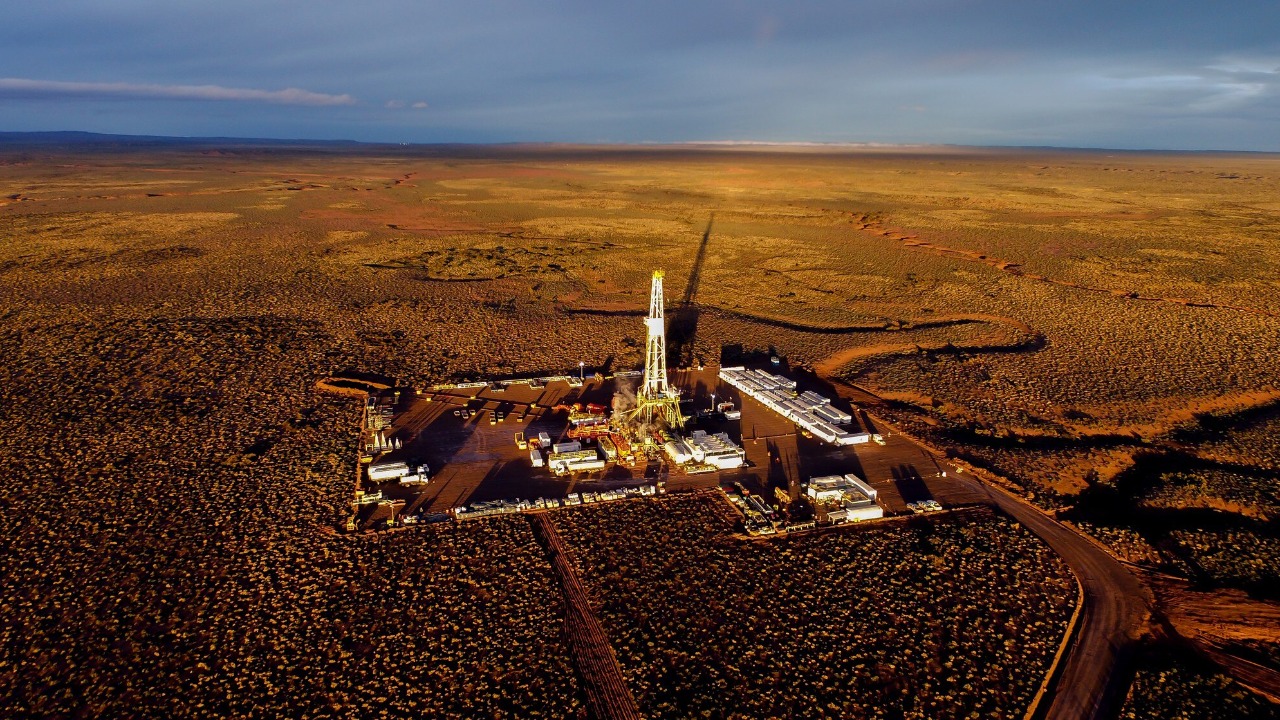
The United States is preparing to turn mountains of discarded industrial magnets into a new domestic stream of high-purity rare earth elements, using a sprawling 1,800 acre site as the centerpiece of that effort. The project aims to recover critical materials from “dead” magnets that already entered the economy once, cutting waste while reducing dependence on imported supplies that underpin electric vehicles, wind turbines, smartphones, and advanced weapons systems.
At stake is whether the country can build a resilient supply chain for rare earths fast enough to match its clean energy and defense ambitions. Senior officials have already warned that the United States is “absolutely” behind on supply chain independence from China, and the magnet recycling complex is emerging as a test of how quickly that gap can be closed.
A massive magnet graveyard becomes a strategic resource
The new 1,800 acre facility is designed to do something that once sounded like a niche recycling project at industrial scale, strip rare earths out of end-of-life magnets and upgrade them into material pure enough to feed high performance manufacturing. According to recent reporting, the site will deploy patented magnet recycling technology to produce high-purity critical rare earths for high tech supply chains in the United States, turning what used to be scrap into a strategic feedstock.
Instead of relying solely on new mining, the project treats the existing stock of “dead” magnets in motors, generators, and electronics as an above ground ore body. The process is intended to separate and refine elements like neodymium and dysprosium from complex magnet assemblies, then deliver them in a form that can go straight into new magnet production. By concentrating operations on a single, very large site, the developers aim to capture economies of scale and create a hub that can serve multiple downstream manufacturers that are racing to localize their own supply chains.
Federal money and policy are steering rare earth recovery
Washington is backing this shift with a growing stack of targeted funding programs that treat magnet recycling and rare earth recovery as national security priorities. The Energy Department has outlined a funding process for domestic rare earth element supply chains, signaling that projects which can recover and refine these materials inside U.S. borders will be eligible for support under a dedicated program described in the agency’s funding announcement. That framework explicitly targets the full chain, from recovery and separation to the production of usable oxides and metals.
In parallel, the Energy Department has offered $134 million to boost rare earth recovery projects, a pool of money that can help magnet recyclers scale up pilot technologies into commercial plants. That federal push sits alongside a broader industrial policy shift, including a $1.4 billion agreement with Two rare earth magnet startups to expand domestic production and keep critical minerals from leaving the country. Together, these moves show how public money is being used to de-risk private investment in facilities like the 1,800 acre magnet recycling complex.
Private players race to build an ex-China magnet chain

While the government sets the direction, private companies are moving quickly to occupy key links in the emerging magnet ecosystem. USA Rare Earth is positioning itself as a cornerstone of an ex-China magnet chain, with plans to build a sintered neo magnet manufacturing facility in Stillwater, Oklahoma, described in its Magnet Production overview. Analysis of the company’s strategy notes that USA Rare Earth holds $400M+ cash and targets 1,200 M magnet capacity by end-2026 through its Stillwater facility, a scale that would make it a major domestic buyer of high-purity rare earth feedstock.
Other firms are focused squarely on the recycling side of the equation. Cyclic Materials has announced plans to invest over $20 million in its first U.S. magnet recycling plant, with CEO Ahmad Ghahreman stating that the company is excited to begin commercial operations in the U.S. in early 2026, according to company statements. That timeline aligns closely with the ramp up of the 1,800 acre site, suggesting that a network of recyclers and magnet makers could be operating at scale within the next few years if execution matches ambition.
From mine to magnet: new refineries and separation tech
Recycling alone cannot meet projected demand, so the United States is also trying to rebuild upstream capacity to mine, separate, and refine rare earths. MP Materials Corp is a central player in that effort, with plans to Start Rare Earths Plant operations in 2026 at a facility backed by the Pentagon, as detailed in federal contracting reports. Separate analysis notes that MP Materials plans to commission its heavy rare earth (HREE) refinery by mid-2026, with company management presenting that as an achievable goal in the Promising Signals review of its strategy.
On the processing side, new separation technologies are emerging that could complement both mining and recycling. ReElement Technologies Corp has developed a process that Stacks separate rare earths at its Noblesville, Ind plant, using advanced chemistry to isolate individual elements more efficiently than traditional solvent extraction, according to recent coverage. That kind of technology can be applied to material coming from mines or from shredded magnets, making it a potential bridge between the 1,800 acre recycling hub and the broader rare earth value chain.
Geopolitics, risk, and the race to catch up
The push to extract high-purity rare earths from dead magnets is not just an industrial story, it is a response to geopolitical risk that has been building for years. A top White House advisor has acknowledged that the United States is “absolutely” behind on supply chain independence from China, warning that the country has rapid catching up to do if it wants reliable access to critical materials, as reported in recent interviews. Rare earths sit at the center of that concern, because they are embedded in everything from F-35 fighter jets to Tesla Model Y motors, and supply disruptions would ripple across both civilian and defense sectors.
By turning an 1,800 acre magnet graveyard into a source of high-purity rare earths, the United States is trying to build a buffer against those shocks while buying time for new mines, refineries, and magnet plants to come online. The combination of federal funding programs, large private investments, and new technologies suggests a more diversified supply chain is possible, but the execution risk is real, as analysts of USA Rare Earth’s Stillwater plans have noted when they describe ambition as high and execution still the test. If the recycling complex and its companion projects deliver as promised, they could mark the moment when the country stopped treating rare earths as an imported vulnerability and started treating them as a domestic asset.