
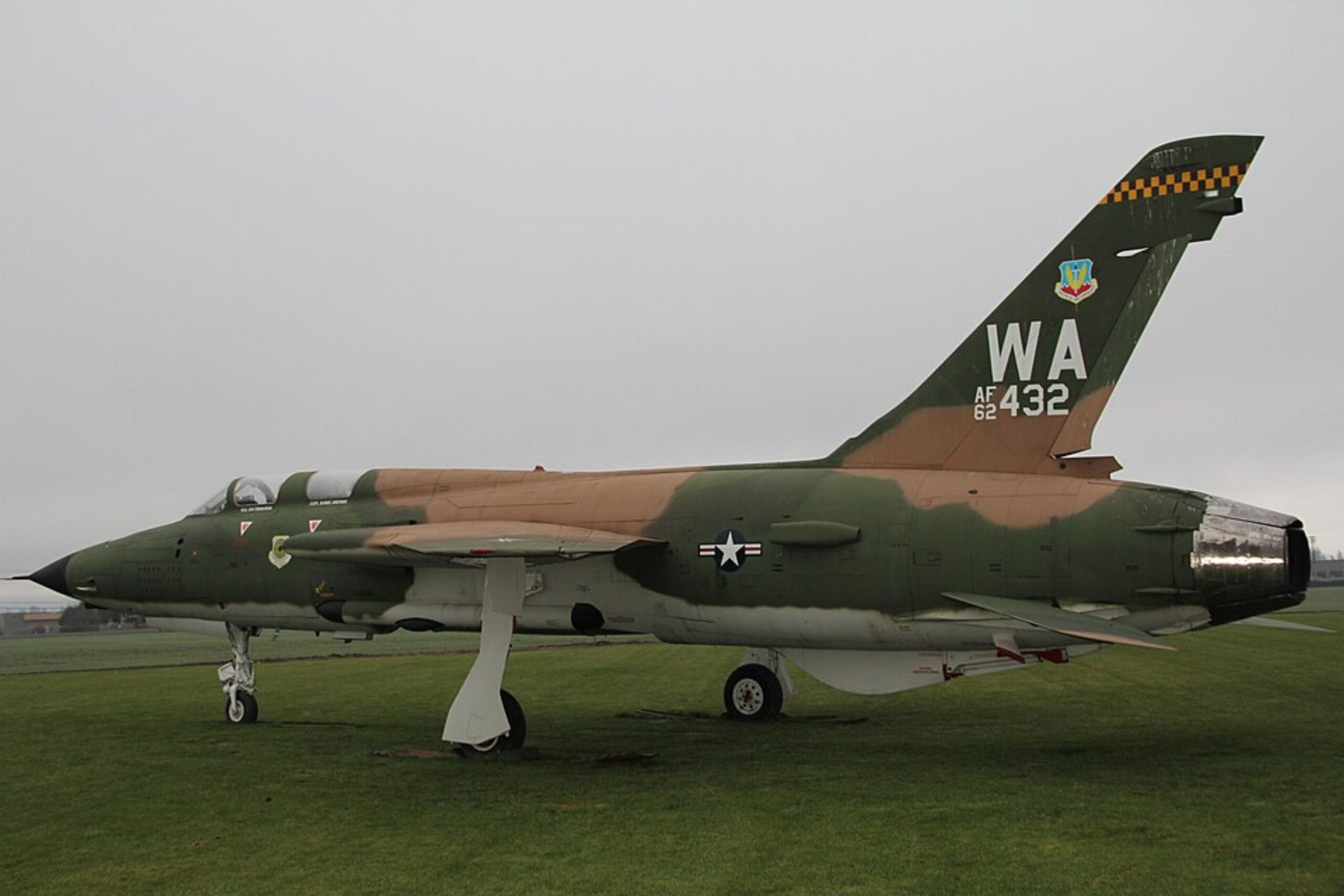
The F-105 Thunderchief, affectionately known as the “Thud,” played a crucial and challenging role during the Vietnam War. It stood out not only for its unique design and capabilities but also for the intense demands it placed on its pilots. The aircraft’s journey from conception to combat offers insights into military innovation and the realities of aerial warfare.
Development and Design of the F-105 Thunderchief
The origins of the F-105 Thunderchief trace back to the early 1950s when the Cold War was at its zenith. Designed by Republic Aviation, the F-105 was initially conceived as a nuclear strike aircraft capable of delivering nuclear bombs over long distances. The engineering innovations incorporated into the F-105 were groundbreaking for the era. With a sleek profile, the aircraft featured a powerful Pratt & Whitney J75 engine, enabling it to reach speeds exceeding Mach 2. This was a significant leap in performance, allowing it to outpace many contemporary fighters.
The F-105’s substantial size and payload capacity set it apart from other aircraft of its time. It could carry up to 14,000 pounds of ordnance, making it one of the most heavily armed aircraft in the U.S. Air Force’s inventory. Its main armament included a 20mm M61 Vulcan cannon and a variety of bombs and missiles. As geopolitical tensions shifted, so did the role of the F-105. Originally designed as a tactical nuclear bomber, the aircraft was adapted for conventional bombing roles as the United States’ military strategy evolved. This transition underscored the aircraft’s versatility and the need for adaptable military assets in a rapidly changing world.
The F-105 in Combat: Vietnam War Missions
During the Vietnam War, the F-105 Thunderchief became a key player in Operation Rolling Thunder, one of the most intense bombing campaigns in history. The operation aimed to weaken North Vietnam’s industrial capacity and was marked by sustained aerial bombardment. The F-105, with its high speed and substantial payload, was instrumental in executing these missions. However, the aircraft faced numerous challenges, including formidable anti-aircraft defenses and the complex terrain of Vietnam.
Pilots and engineers had to innovate constantly to improve mission success rates. Tactical strategies evolved, such as flying at lower altitudes to evade radar detection. Additionally, modifications were made to the aircraft to enhance its survivability. The F-105’s performance was marked by notable missions and acts of heroism. For example, Colonel Leo K. Thorsness was awarded the Medal of Honor for his actions during a mission in 1967, where he demonstrated extraordinary skill and bravery while flying the Thunderchief.
The Physical and Psychological Demands on Pilots
Operating the F-105 Thunderchief demanded exceptional skill and endurance from its pilots. The training programs were rigorous, designed to prepare pilots for the extreme conditions they would face. Training included intensive simulations and physical conditioning to ensure pilots could handle the aircraft’s high-speed maneuvers and the stress of combat missions.
The intensity of combat sorties took a significant toll on pilots, both physically and mentally. The high-risk nature of bombing runs, often under heavy enemy fire, led to a high casualty rate among F-105 crews. Pilots had to cope with the constant threat of being shot down and the psychological pressure of repeated missions. The camaraderie among pilots and their shared experiences helped mitigate some of the stress, but the emotional impact was profound and lasting. Many pilots have shared their stories, emphasizing the mental resilience required to endure such challenging conditions.
Technical Challenges and Maintenance
The F-105 Thunderchief was not without its technical challenges. The aircraft’s complex systems and frequent exposure to harsh combat environments meant that maintenance was a constant concern. Mechanical issues, such as hydraulic failures and engine problems, were not uncommon, necessitating a robust maintenance program to keep the aircraft operational.
Ground crews played a crucial role in ensuring the F-105’s readiness. They developed innovative repair techniques and adapted to the challenging conditions of Vietnam’s climate. This adaptability was critical in maintaining the aircraft’s performance despite the demanding operational tempo. Technological advancements during the war also contributed to overcoming some of the F-105’s vulnerabilities, with improvements in radar systems and avionics enhancing its capabilities and reliability.
Legacy and Impact of the F-105 Thunderchief
The F-105 Thunderchief left a lasting legacy on modern air combat strategy. Its deployment during the Vietnam War provided valuable lessons in the use of tactical airpower and the importance of adaptable aircraft. The F-105’s design and performance influenced the development of future aircraft, emphasizing the need for speed, payload capacity, and versatility in combat scenarios.
Today, the F-105 is remembered and preserved in various memorials and museums across the United States. The National Museum of the United States Air Force and the Smithsonian National Air and Space Museum both feature exhibits dedicated to the Thunderchief’s role in military history. Veterans and historians continue to reflect on the aircraft’s significance, often highlighting the bravery of its pilots and the technological advancements it represented.
Lessons Learned from the F-105 Experience
The experience of the F-105 in Vietnam provided several insights into military and political strategy. The challenges it faced highlighted the need for comprehensive planning and adaptability in military operations. The aircraft’s deployment underscored the importance of understanding geopolitical shifts and adjusting military assets accordingly.
The evolution of air combat roles, informed by the F-105’s experiences, has influenced subsequent developments in military doctrine. The lessons learned from its operational challenges have informed the design and strategy of modern aircraft, emphasizing the need for resilience and adaptability. Despite its challenges, the F-105 Thunderchief remains a symbol of innovation and determination, with its myths and realities continuing to be explored and clarified by those who study its history.