
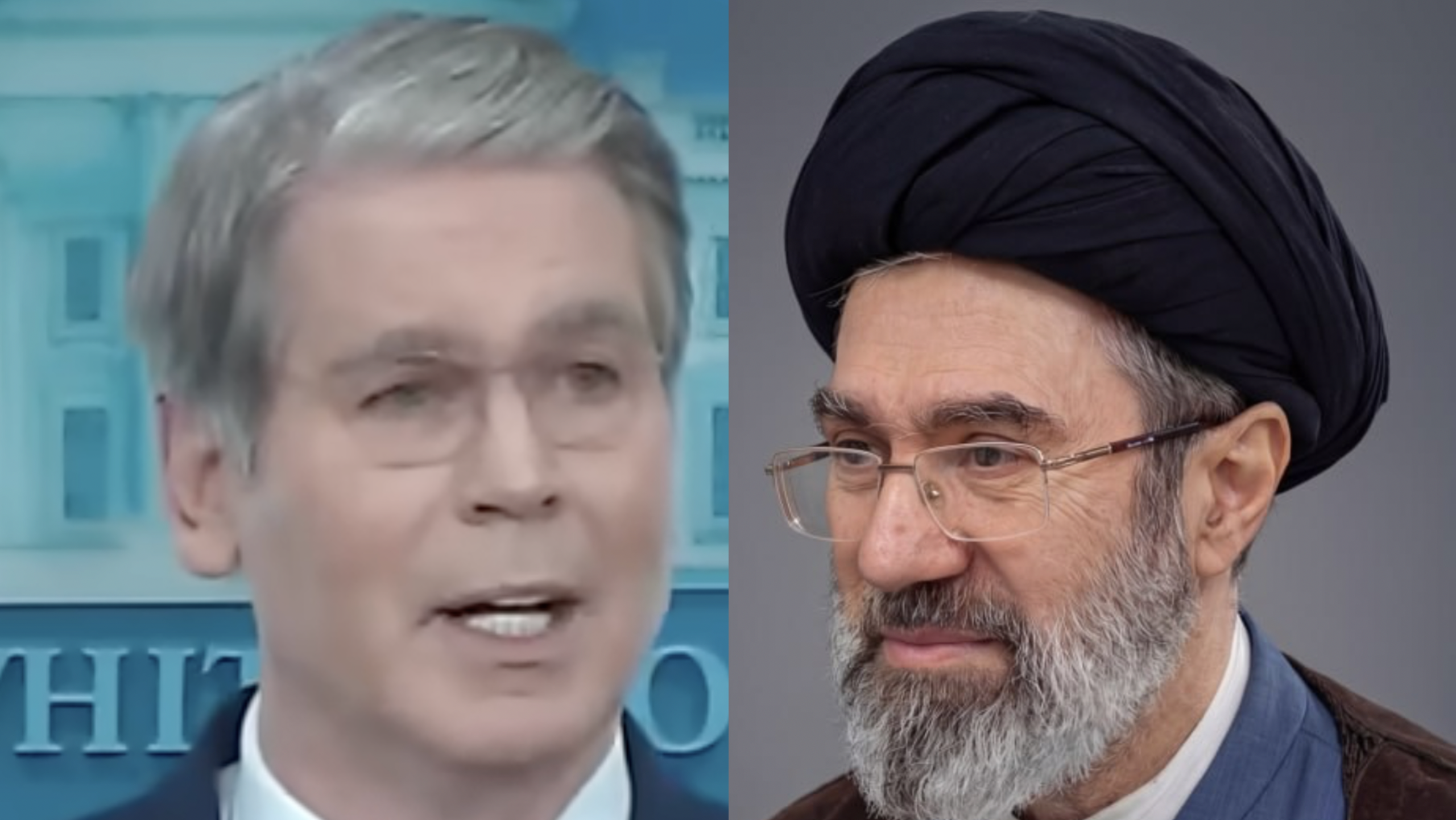
Treasury Secretary Scott Bessent used a Friday afternoon post on X to deliver a pointed public rebuke of Iran’s Supreme Leader, accusing him of hiding from public view as his government collapses around him. The statement, posted at 1:46 p.m. on July 10, 2026, came in direct response to a U.S. Treasury Department announcement one minute earlier confirming a fresh round of sanctions against key financial figures propping up the Iranian regime.
“The so-called Supreme Leader is hiding in seclusion while his regime crumbles,” Bessent wrote. “Treasury will continue using every tool at its disposal to isolate him and other regime elites from the global financial system. We will preserve these assets for the Iranian people.”
The post was published on Bessent’s official X account, and mirrored language the Treasury Department had used in its own statement moments before. The Treasury Department’s account wrote: “Today, following Iran’s resumption of attacks on international shipping in the Strait of Hormuz, Treasury’s Office of Foreign Assets Control (OFAC) sanctioned an Iranian financial facilitator who has effectively institutionalized large‑scale embezzlement within the Iranian regime, diverting publicly funded wealth offshore. OFAC today also targeted key Iranian exchange houses that move billions of dollars annually on behalf of sanctioned Iranian banks.”
The sanctions action, detailed in a Treasury press release titled “Treasury Targets Key Supreme Leader Financier and Iran’s Shadow Exchange Houses,” was issued after Iran resumed attacks on international shipping through the Strait of Hormuz, a vital chokepoint for global oil traffic. The Office of Foreign Assets Control (OFAC) designated Dubai-based Iranian national Ali Ansari, along with a network of exchange houses that Treasury says move billions of dollars annually on behalf of already-sanctioned Iranian banks.
According to the Treasury Department, Ansari has built a sprawling global network of investment properties and financial holdings that ultimately benefit Iran’s current Supreme Leader, Mojtaba Khamenei, along with other regime elites and senior figures within the Supreme Leader’s Office. Ansari previously owned and directed Ayandeh Bank, a now-defunct institution that the United States had already sanctioned before Iran forced its dissolution in mid-October 2025 after it accumulated billions of dollars in debt tied to loans backed by the Central Bank of Iran.
Treasury officials say Ansari used shell companies and bank accounts across multiple jurisdictions to accumulate holdings under Smart Global Limited, a Saint Kitts and Nevis-based entity established in 2011 under the former name Ziba Leisure Limited. Through that vehicle, Treasury alleges Ansari funneled Iranian public wealth into real estate and commercial properties across Germany, Luxembourg, Spain, the United Kingdom, Cyprus, and the United Arab Emirates.
Ansari was designated pursuant to Executive Order 13876, which targets the Supreme Leader of Iran and his affiliates, as well as the counterterrorism authority under Executive Order 13224, as amended, for his ties to the Islamic Revolutionary Guard Corps. Smart Global Limited was designated under the same authorities for being owned or controlled by Ansari.
Beyond Ansari, Treasury’s Friday action also targeted three Iranian currency exchange houses that officials describe as critical to keeping the country’s sanctioned banking sector connected to foreign currency. Mohammad Darbani and Partners Exchange General Partnership Company, Lavasani and Partners General Partnership Company, and Mohsen Khandan and Partners General Partnership Company were each designated under Executive Order 13902 for operating within Iran’s financial sector. Treasury says the Khandan exchange alone holds more than $117 million in foreign currency on behalf of sanctioned Iranian banks, while the Lavasani exchange has contracts with eight separate sanctioned Iranian banks, including Bank Melli, Bank Saderat, and Bank Mellat. Two front companies used to obscure these transactions, Hong Kong-based CDM Trading Limited and UAE-based Naba Alzaki Raw Materials Trading LLC, were also designated.
Bessent’s public characterization of Khamenei as hiding “in seclusion” reflects a broader pattern that has defined the younger Khamenei’s tenure since he was named Iran’s third Supreme Leader on March 9, 2026, following the assassination of his father, Ali Khamenei, during the 2026 Iran war. Mojtaba Khamenei was reportedly wounded in the same February 28 strike that killed his father, and he has not been seen publicly since. Statements attributed to him have instead been read aloud on state television or posted to social media, with Iranian state media at times relying on AI-generated video to depict him delivering messages.
Friday’s sanctions build on a pattern of Treasury actions against the Iranian regime’s finances that Bessent has overseen for more than a year. In January 2026, Bessent said publicly that Iran’s economy was “crumbling” under the weight of sanctions, describing what had once been an affluent society with a high standard of living as unraveling in real time. That same month, Treasury disclosed that Iranian leaders had wired millions, and in some cases tens of millions, of dollars to financial institutions around the world, part of a broader pattern of asset flight among regime elites even as ordinary Iranians faced deepening economic hardship.
The Treasury Department noted that Friday’s designations build on a series of earlier OFAC actions targeting Iran’s shadow banking networks and currency exchange houses, including prior rounds of sanctions referenced in the department’s own release. Treasury said the goal of the sanctions regime is not punitive but aimed at driving a change in regime behavior, and that any designated person or entity may petition OFAC for removal from the Specially Designated Nationals list if circumstances warrant.
The financial pressure campaign comes amid renewed hostilities between Washington and Tehran. Iran’s resumption of attacks on shipping in the Strait of Hormuz, cited by Treasury as the trigger for Friday’s sanctions, followed a period of fragile de-escalation. President Donald Trump said separately on Friday that he had agreed to continue talks with Iran at Tehran’s request, but insisted that the ceasefire previously in place was “over,” signaling that Washington viewed the shipping attacks as a serious breach.
Bessent’s statement did not specify further sanctions actions to come, but his language — describing a Treasury effort to use “every tool at its disposal” — underscored an intent to continue isolating the regime and its leadership from the international financial system in the weeks ahead.