
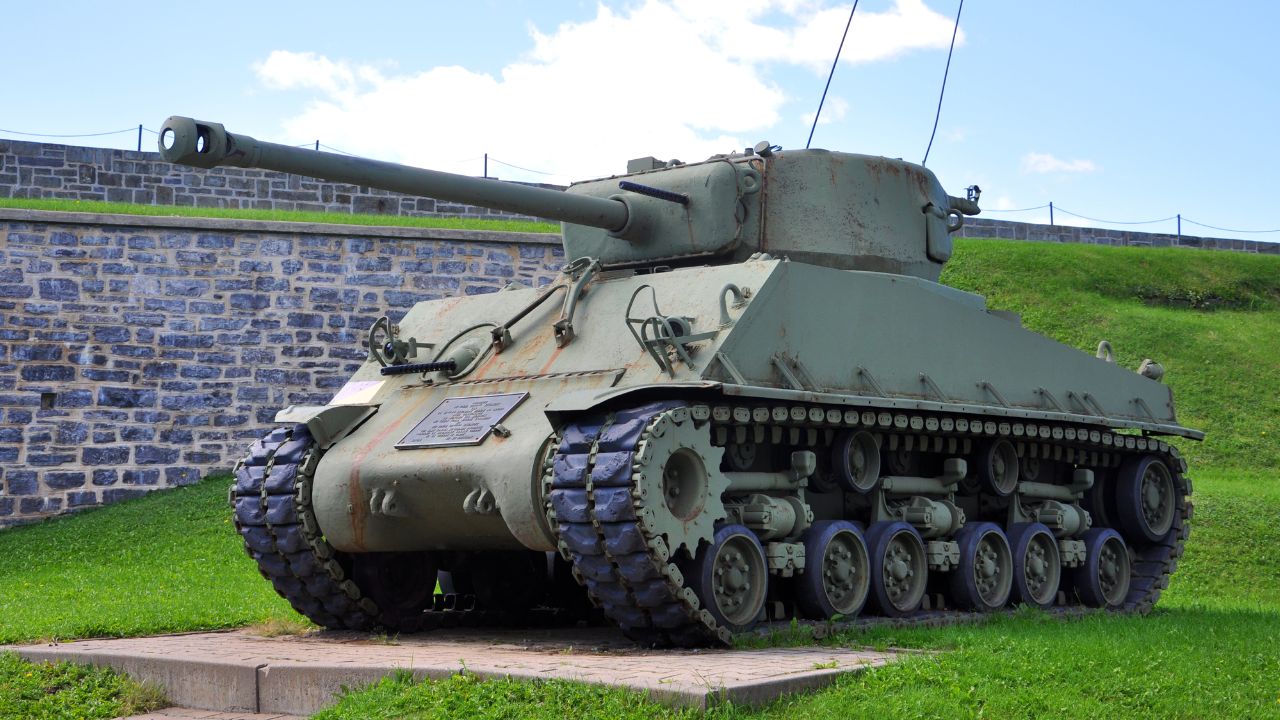
The Sherman Firefly emerged as a pivotal innovation during World War II, transforming the British arsenal by converting the standard Sherman medium tank into a formidable adversary against the feared German Tiger tanks. It played a crucial role in the Allied forces’ efforts to counter the heavily armored threats posed by Nazi Germany. This exploration delves into the strategic upgrades and battlefield impact that made the Firefly a critical component in the Allied victory.
The Genesis of the Firefly
The Allied forces faced significant challenges when confronting German tanks such as the Tiger and Panther, which were renowned for their thick armor and powerful weaponry. The existing medium tanks in the Allied inventory, including the standard Sherman, lacked the necessary firepower to effectively penetrate the armor of these formidable adversaries. This created an urgent demand for an upgraded tank that could level the playing field in tank engagements.
To address this need, British engineers embarked on a project to retrofit the Sherman tank with a more potent armament. The key modification was the integration of the 17-pounder anti-tank gun, a weapon known for its exceptional armor-piercing capabilities. This required significant design alterations to the Sherman chassis, including modifications to the turret and internal layout to accommodate the larger gun and its ammunition. The development of the Firefly was a testament to the collaborative efforts between British innovation and American manufacturing capabilities, resulting in a tank that combined the best of both worlds.
Technical Enhancements
The centerpiece of the Sherman Firefly’s enhancements was the 17-pounder anti-tank gun, a formidable weapon capable of penetrating the thick armor of German tanks. This gun offered superior range and penetration power compared to the standard Sherman armament, allowing the Firefly to engage enemy tanks with greater effectiveness. The 17-pounder’s ability to fire high-velocity armor-piercing rounds made it a game-changer on the battlefield.
Installing the 17-pounder required substantial reconfiguration of the Sherman tank. The turret had to be modified to accommodate the larger gun, which involved altering the gun mantlet and recoil mechanism. Additionally, ammunition storage within the tank was restructured to safely store the larger shells used by the 17-pounder. Despite these modifications, the Firefly managed to retain much of the original Sherman’s mobility, allowing it to maneuver effectively on the battlefield while delivering a powerful punch.
Battlefield Impact
The Sherman Firefly proved its worth in numerous key battles across the European front. Its ability to take on German Tiger and Panther tanks head-on provided the Allied forces with a much-needed boost in firepower. In the Battle of Normandy, for example, Firefly tanks played a crucial role in countering German armored thrusts, significantly contributing to the success of the Allied invasion.
Strategically, the Firefly was often deployed alongside standard Sherman tanks, creating mixed units that could exploit the strengths of both. Tactics were developed to use the Fireflies as tank destroyers, engaging enemy armor from strategic positions while the standard Shermans provided support and covered flanks. This synergy not only enhanced battlefield effectiveness but also boosted the morale of Allied troops, who now had a weapon capable of standing up to the feared German armor. The psychological impact on German forces, knowing they faced a tank that could pierce their armor, cannot be overstated.
Legacy of the Sherman Firefly
The innovations introduced with the Sherman Firefly had a lasting influence on post-war tank design. The successful integration of a powerful gun into a medium tank chassis informed future developments in armored warfare, emphasizing the importance of firepower and adaptability in tank design. The lessons learned from the Firefly project contributed to the evolution of subsequent generations of tanks, which continued to prioritize a balance between firepower, mobility, and protection.
Today, efforts to preserve surviving Sherman Fireflies serve as a testament to their historical significance. Military history museums across the world display these tanks as symbols of engineering ingenuity and wartime adaptability. These preserved vehicles not only honor the legacy of those who fought in them but also provide invaluable insights into the technological advancements that helped shape the outcome of World War II.